Sunday, November 20, 2011

In praise of Obituary: Forgoing the space race


"We did the same thing on the new album [as] we normally do. We don't try too hard. We stick to what we are good at. We know that Obituary has a sound and a style, and we want to preserve that, so when the fans buy these albums, they know that they're getting a good Obituary album."—Obituary drummer Donald Tardy, 2010 interview with Art ’N’ Roll WebZine

I've been a fan of the Florida death-metal band Obituary for something like 20 years. A friend passed me 1992's The End Complete at school, and I was immediately sucked into its slow, tortured soundworld. I stuck around for 1994's World Demise—I distinctly remember participating in an Obituary rite of passage around this time: developing my own comical-yet-reverent impression of frontman John Tardy's soul-vomit growl—but I got off the train after that.

As a young listener, I regarded Obituary—along with bands like Deicide and Cannibal Corpse—as part of my death-metal phase: in other words, great at what they did but not really a band you could grow up with. They'd always be there if I needed a little shot of nostalgia, but I didn't think of them the way I regarded, say, Morbid Angel, i.e., as a band I could count on to evolve, to present me with new information over time, and/or to compose material that was so strong and compelling that it transcended the genre entirely.

Over the past few weeks, in advance of last night's Obituary show at Santos Party House, I made a point of catching up on all the Obituary full-lengths I missed, i.e., 1997's Back from the Dead through 2009's Darkest Day, and found that I wasn't necessarily amiss in letting my real-time fandom of the band lapse. It was almost shocking to me how little their sound had progressed. If you'd played me Darkest Day blind, I'd have had a hard time dating it as a post–World Demise release. Still the same mix of excruciating doom-groove passages and bottom-heavy, hardcore-infused thrash (still no blastbeats, a key distinguishing feature of this band); still the same ghastly John Tardy vocals. Obituary was, to borrow the title of their 2005 comeback record (the band was dormant between Back from the Dead and that release), frozen in time. (To be fair, guitarist Ralph Santolla's florid, virtuoso leads, heard on Darkest Day and 2007's Xecutioner's Return, did constitute a modest new wrinkle.)

Before seeing Obituary live last night, I'm not sure that I would've regarded the above quote from Donald Tardy (John's brother) as a particularly admirable one. I'll fully admit that I've often favored artists, musical or otherwise, who placed a premium on evolution, bands where every album provides a new plot wrinkle, where the obligation to the fan is not, as Tardy suggests, to deliver the familiar, but to move forward at the risk of baffling or even losing the listener altogether. I've had the idea of relentless progress on the brain lately in light of the exemplary Death reissues on Relapse. In terms of a death-metal career arc/track record, there really is no greater one than Death's. Once the band really started evolving in earnest, there was no looking back; trying to square the band's very good, very primitive 1987 debut, Scream Bloody Gore, with, say, 1995's Symbolic—a true progressive-metal masterpiece—is next to impossible. The band was still called Death, but leader Chuck Schuldiner (RIP) wasn't going to let that constrain his ever-heightening interest in dynamics, fluidity, technicality, beauty.

After seeing Obituary live, though, I think I need to reconsider the idea of holding every band to this standard. The fact of the matter is, if a band feels creatively satisfied tending to a small, well-defined garden year after year—and if you watch the video quoted above in full, you'll see that Don Tardy feels just fine about it—and if the audience supports that in full, what's the harm?

Working in the quartet line-up of the Tardy bros, guitarist Trevor Peres and bassist Terry Butler (no Santolla), Obituary put on an outstanding show last night, one of the best extreme-metal shows I've seen. And one of the major reasons for this was that their staunchly untechnical compositions—it's not too much of a stretch, nor is it a dis, to say that for the most part, the songs all sounded the same—made 100 times more sense onstage, to the extent that I had a kind of "Ohhhhhhhh, now I get it!" reaction. What I mean to say is that I can't tell you how many times I've gone to see a more technical extreme-metal band and been disappointed that the mindblowing level of detail I'd grown to love on their records was lost in the deafening blur that is the live metal show. These songs, on the other hand, are designed to be played live in front of a rabid, possibly intoxicated crowd. Obituary's songs are anthems; they are groovefests; they are the death-metal equivalent of great, catchy pop tunes. Whether you know them or not, they move you right on the spot; you dance; you mosh; you headbang; you marvel at how well John's vocal spew complements Peres's caveman riffage and Don's straightforward, borderline funky pummel. At Santos, this music sounded beautifully clear.

That's partly a credit to the club's excellent sound system, but it's also a credit to Obituary: Don Tardy's "We stick to what we're good at" took on a whole new meaning. To him, Obituary is like a really reliable family-owned pizza joint, let's say, that you can confidently patronize year after year. As it should be for just about any metal band, the point is to tour and put on great, fun and, yes, accessible shows. This means crafting material that will work onstage, and super-technical metal often doesn't work onstage. Obituary's material, on the other hand, comes screaming to life at their shows. They are playing for the kids, both in the audience and in their hearts.

This is a band that has never seen fit to compete in death metal's ongoing space race: the largely unspoken, but clearly very real competition to be the fastest, chopsiest, most complex. There's nothing inherently wrong with the progressive impulse, but the trouble is that it only favors the absolute elite, the handful of bands in the genre that can evolve without losing the plot. (Again, Death might be the pinnacle of this practice—the band that has done the most convincing job of upping its technicality while forsaking neither its extreme-metal-ness nor its compositional coherence.) In the end, the long-running band has no responsibility other than to itself, and at the core of that is Don Tardy's idea of knowing what one is good at.

Chuck Schuldiner was good at progressing, at pushing himself and the genre forward, and that's why Death never made the same album twice; Obituary on the other hand is more like any other great genre band: a great hard-rock group, a great bluegrass ensemble or jazz combo. They defined the parameters early on—the key ingredients were all there on the band's first record, 1989's Slowly We Rot—and they've thrived within those parameters ever since. See them live today, 22 years on, and you'll understand that there's no shame in that. Every member of the band was having as great a time as every kid in the pit. (I especially loved watching a clearly psyched John contribute guest floor-tom work on a few passages, as Don handled the rest of the kit—a modest curveball that yielded maximum charm.) These musicians found—some would say founded—death metal in their youth and they've held onto it like an elixir ever since.

The beautiful thing about the underground is that their fans feel the same way, by and large. They don't want Obituary to change. The message from the pit is "You're perfect just the way you are," and Obituary has no complex about that. They're close enough to their life force (i.e., the headbangers who attend their shows and buy their records) to understand that "progress" isn't for everyone. It holds no inherent value, only what you bring to it. If you can make a living as an artist, if you can satisfy yourself and your audience, churning out a uniform, high-quality product, then you are as successful as the artist who makes headlines by turning his/her aesthetic on its head every time out. As Obituary proved to me last night, staying still doesn't necessarily equal stagnation; for some creative entities, it's the smartest thing they could possibly do.

Monday, November 14, 2011

Containing Multitudes


Last night, my band, STATS, shared a bill with fellow Brooklyn trio Multitudes, our second time doing so this year. The show commemorated a new Multitudes full-length, the digital-only Twelve Branches, which you can stream below or on Bandcamp. At $4, the record is a steal; you should buy it.


The band plays a kind of instrumental hardcore, with a progressive edge. Concise themes, tons of movement and sweat but also a math-rocky attention to detail and rhythmic twists that keep you on your toes. The band's greatest achievement is an ability to "jam" while keeping the kinetic energy at skateboard-friendly levels, ensuring that the tension stays taut.

There's enormous swing, rawness, abandon to the Multitudes approach. I definitely hear some mid-'80s SST going on—and a healthy amount of Bad Brains worship—but even more so than, say, the instrumental Black Flag material, Multitudes hits on an honest-to-God full-band looseness. These are vamp structures—two members holding it down while a third goes off—but totally nonrigid. They breathe together, bleeding outside the lines, rejoicing in the blur.

Multitudes' drummer, Alex Lambert, astounds me. He somehow injects an beautifully organic feel into various extreme-rock percussion styles, namely grindcore-ish blastbeats (which he peppers with jazzy ride accents) and classic turbo-punk patterns. Brian House offers a fat, strummy bass presence, and guitarist Pat Foley brings the shimmering fuzz. When the three musicians align (check out "Boar," one of 12 Chinese-zodiac-based compositions on the new record), it's a crunchy, brain-invading blurt, with chaos creeping all around, but not that annoying phenomenon my bandmates and I like to refer to as "thingin'," where there's an in-jokey pretense of "messing up" or "awkwardness." This is simply an expanded-mind version of hardcore, where locking in and deconstructing are two sides of the same strategy.

Twelve Branches is a straight-up representation of the Multitudes vibe. It sounds totally live, totally amped, both gross and gorgeous, just like the band's shows. I feel like for all the punk-jazz and the noise-fusion and whatever other hybrids have come down the pike, this is the true thing I want to hear from a group with an awareness of all these styles, where we're really seeing what it means to follow the thread from, say, Mahavishnu to Black Flag and beyond, and leave all the egghead cleverness out and just make it about pure sweat and exaltation, to borrow a phrase from my Tony Williams Lifetime post.

On Twelve Branches, you're hearing a genre being interrogated, widened, advanced, but you're not hearing any of the tedious weighty Thoughts and Concepts behind that process. You're hearing total rock, with all the doom of Sabbath, the searing catharsis of Sonny Sharrock (I'm hearing both at once on "Ox" right now)—all the right raw gods, fully digested and shooting out like electricity bolts from the fingers of some comic-book hero. I am awed and inspired by the loudness, the obnoxiousness, the aliveness, the inner sensitivity, the joy of this music. Multitudes is the best kind of writhing rock organism, one of the most convincingly unhinged (but NOT abstract or meandering) I've heard in a long while. For those in search of the real punk fusion, it has been achieved with totality on Twelve Branches. Nonthinking, unstinking—amen.

Saturday, November 12, 2011

Go see Bill McHenry


Bill McHenry is playing at the Village Vanguard tonight and tomorrow with Orrin Evans, Eric Revis and Andrew Cyrille. Having caught a set last night, I strongly recommend that you go.

I've been following McHenry for a few years. I think it was 2006 when I first heard him live, playing at the Vanguard with the same band on his ’07 record, Roses: Ben Monder on guitar, Reid Anderson on bass and Paul Motian on drums. (McHenry's new record, Ghosts of the Sun, features the same personnel, and I'm pretty sure it comes from the same sessions as Roses.) In ’09, I caught McHenry in a very different context—a freeform duo with Monder, which you can hear on the album Bloom.

The band he's playing with this week is extraordinary. You've got pianist Evans and bassist Revis—both hailing from Tarbaby, who blew my mind at this year's Undead Jazzfest—and Cyrille, longtime Cecil Taylor collaborator and all-around jazz-drumming badass, behind the kit. I guess what struck me overall is this group's versatility, its refusal to align itself with any particular jazz faction. The band has no "angle," no spin, no gimmick; its M.O. is simply to commit fully to whatever tune McHenry calls, to get deep into it, to execute. The set was beautifully constructed: It opened with a stirring free-time piece, and I also remember a midtempo swinger, a funky soul-jazz stroll, an easygoing ballad. There was no channel-changing vibe at play though; it was just smart pacing.

"La Fuerza," a piece from Ghosts of the Sun, sticks out in particular. McHenry led the band through its floating theme—which for me paints a picture of a proud matador (as the title suggests, it's definitely got that Spanish flavor)—and then stepped aside to give Evans and later Revis some space. Each player built up from a misty cloud to a shuddering, super-physical climax. When those storms died down, Cyrille began an unaccompanied solo, constructed of little taps and clicks. Revis joined in, striking the wood frame of his bass; McHenry, sitting off to the side, started pressing down the keys of his horn, getting a percussive effect, and for a few minutes, the Vanguard stage became a makeshift drum circle.

Here and throughout the set, McHenry seemed delighted by the invention of his bandmates. After his solos, he'd retire to the bench at stage right and sit and listen, looking like a wide-eyed boy. There was a lot to hear. Evans was simply excellent: tasteful, minimal, bluesy at times, but breaking also into seismic, full-keyboard runs, episodes of zoned-out minimalism or full-on classical-styled romance. As he was when I heard him with Peter Brötzmann at this year's Vision Festival, Revis was both tough and songful, using his brief solo spots to advance the music rather than trot out technique. And Cyrille was a model of understated gravity; he swung and propelled with airy funkiness, the pulse sliding and gliding, and you felt no less buoyed by his out-of-meter colorations, which gave off a deep feeling of careful intent.

As so many have written, McHenry has this one-in-a-million tone, gauzy yet robust. It just sounds so classic, well-aged, the sonic equivalent of his tenor's tarnished gold finish. He sings through the horn with no agenda, assured rather than chopsy, no show-offiness. But like Evans, he has these sudden devilish impulses; he might let out a series of brief screeches, or a booming foghorn sound, or get caught up in a tic of fingering, a little OCD figure that he repeats and repeats.

This is that rare brand of jazz that has no name. No one seems to know where it came from. (Is is the Motian-Frisell-Lovano band, maybe?) It's the kind of jazz where the classic and the experimental bleed together and seem as one. Neither aspect feels perfunctory and both are heightened by exposure to the other; you listen harder to the "straight-ahead" swinging, sense more form in the open-ended blowing. It is not a noncommittal middle ground. It is an aesthetic of making calm, mature peace with the full spectrum of available materials. It does not draw attention to its own breadth and range. It is about using each strategy and sitting with it, making it genuine, so that it's not putting on a different hat for every tune, so that it all feels gracious and above board and non-intellectualized, non-"clever." Hear this band and you're not hearing a style of jazz; you're hearing players who take themselves out of the way of the music and just let the songs in, discovering on the spot what they want to sound like.

/////

*NPR graciously streamed Wednesday's 9pm set by this band. Check it out in archived form here.

*As a P.S., here's a 2003 All About Jazz profile I wrote on Andrew Cyrille. I have fond memories of interviewing him; aside from his patience and thoughtfulness, I recall that he was the one who put me in touch with the late, great Walt Dickerson.

*As a P.P.S., I should note that I sent a few live-Tweet dispatches from this show, as well as from a performance by the great Texan black-metal band Absu, which I also caught last night, via the Time Out New York Music Twitter page. I'm still getting the hang of this practice, but I encourage you to follow our channel to check out further on-the-spot concert impressions from me and my esteemed colleagues.

Friday, November 04, 2011

Oceanic


UPDATE: Everything I wrote below is still true, except for the part about Frank Ocean playing an NYC show tonight (Sunday, 11/6/11). He has cancelled the performance. I'm really bummed about this…

Via Time Out NY, a preview of Frank Ocean's NYC headlining debut, which goes down this Sunday. I'm psyched. As I said in the piece, Ocean's Nostalgia, Ultra is pretty much a lock for my album of the year. If you haven't heard "Novacane," please: I implore you to check it out. (I suggest audio only; the video is too literal for my tastes.)

Monday, October 31, 2011

Halloween edition


Via the Time Out NY blog, a review of Saturday night's Danzig Legacy event at Hammerstein Ballroom.

And above, a vintage Danzig performance from The Jon Stewart Show. (Hearing J.S. pronounce the title of Danzig's Thrall—Demonsweatlive EP makes my day.)

Friday, October 28, 2011

Into the Void; Buildings on Fire


I'm happy to share my Pitchfork review of Dischord's new Void rarities compilation, Sessions 1981–83. If you're looking for a quick intro to these guys—at their best, possibly the most off-the-rails hardcore band of them all—try "Think", from the immortal Faith/Void. If you're already a fan, you will eat Sessions up.

/////


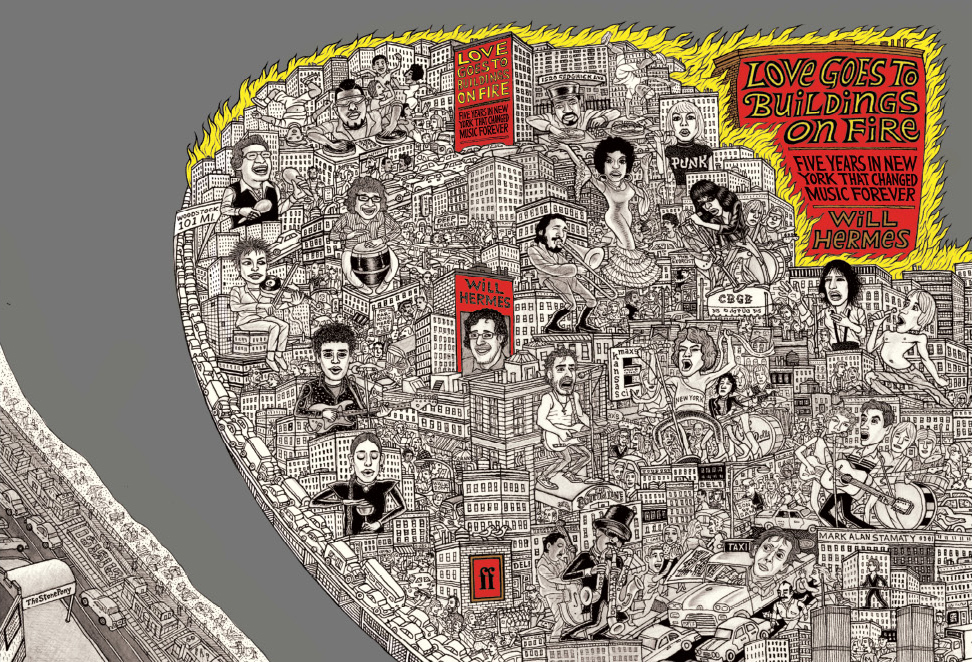
I'm loving the new Will Hermes book, Love Goes to Buildings on Fire. It's a panorama of NYC music from 1973 through 1977, touching on rock, punk, jazz, salsa, classical, hip-hop, disco and more. In other words, you get to see how, e.g., Bruce Springsteen, Television, Rashied Ali, Eddie Palmieri, Steve Reich, Afrika Bambaataa and Tom Moulton (the latter's name is new to me, and the story of how he originated the modern dance mix is fascinating) played on the same field during the same era. I can't think of too many writers who could juggle all these narratives while keeping the blend brisk and reader-friendly. This book gets you visualizing history and thirsting for the records in question.

Monday, October 24, 2011

Loutallica speaks


I was fortunate enough to interview Lou Reed and Lars Ulrich for GQ. (Many thanks to Will Welch for the opportunity.) You can read the transcript here. As several have commented, yes, Mr. Reed was intent on giving me the third degree; that's okay—it made for a lively interview. Mr. Ulrich, on the other hand, was a sweetheart—one of the more patient, thoughtful folks I've had the opportunity to speak with on the record.

The occasion is, obviously, Lulu, the new Reed/Metallica collaborative LP. Folks are already lining up to drub this release, and that saddens me a bit. The fact is, it's a significant work that deserves your time and effort. I only got to hear it twice before my interview, and the first time through, I was put off by it; it seemed underorganized, underedited—a failed experiment. On the second spin, though, I felt differently: This big, shaggy thing started to cohere, and I began to admire the ballsiness of the endeavor. Lulu is awkward in spots, and it is in many ways a taxing listen, but it is emphatically not crap. Spend some decent time with it before you write it off.

I think this record is going to be an interesting litmus test: I can see Metallica die-hards hating the Reed aspect, and Reed fans scoffing at Metallica's contribution. Who is it for then? I'm not really sure, but I admire the follow-through all the same. As far as my own perspective, I'm obviously a lifelong Metallica freak, but Lou Reed (both solo and with the Velvet Undeground) has never really clicked with me. I relished the opportunity to try again in preparation for this interview, and I found a few records that really spoke to me, including The Blue Mask and, yes, Metal Machine Music. My opinion of Lulu is still in flux, which is a good thing; the highest compliment I can pay the record is that I'm excited to spend more time with it.

Why not listen for yourself?

Wednesday, October 19, 2011

CMJ +3


Looking for lively, polyphonic CMJ coverage? Follow Time Out NY Music on Twitter. A bunch of writers, including myself, will be out, about and Tweeting madly all week.

/////

Also, three blogs I've been enjoying lately:

ugEXPLODE
Anything-goes creator and connoisseur of challenging sounds Weasel Walter (late of the Flying Luttenbachers, currently free-jazz-focused) blogs eloquently, unpretentiously. This close reading of Beefheart's "Hair Pie: Bake 2" blew my mind.

That's How Kids Die
Neck in neck with Invisible Oranges (currently in the midst of an impressive reboot after the departure of site guru Cosmo Lee) for the title of my favorite metal blog. Josh Haun is a passionate, open-minded listener and a clear, forceful writer. His nascent "Top 100 Metal Albums"—unlike so many of its counterparts, a totally freeform affair—looks like an extra-meaty long-term blog-ject. Here's a great entry on Type O Negative's October Rust.

Burning Ambulance
Phil Freeman is all over his beat—jazz, metal, etc.—and I admire that. He writes for a bunch of other publications, but this site (and its accompanying print journal) is his baby, and he makes sure to keep it well fed. He's been especially strong lately on reissues, including those of Death's Human and Julius Hemphill's Dogon A.D. These are the kinds of pieces that will bring new listeners on board re: such classics.

Friday, October 07, 2011

Review: The Miles Davis Quintet


Via Pitchfork, a full-length review of that Miles Davis Quintet archival set I was raving about earlier.

Monday, October 03, 2011

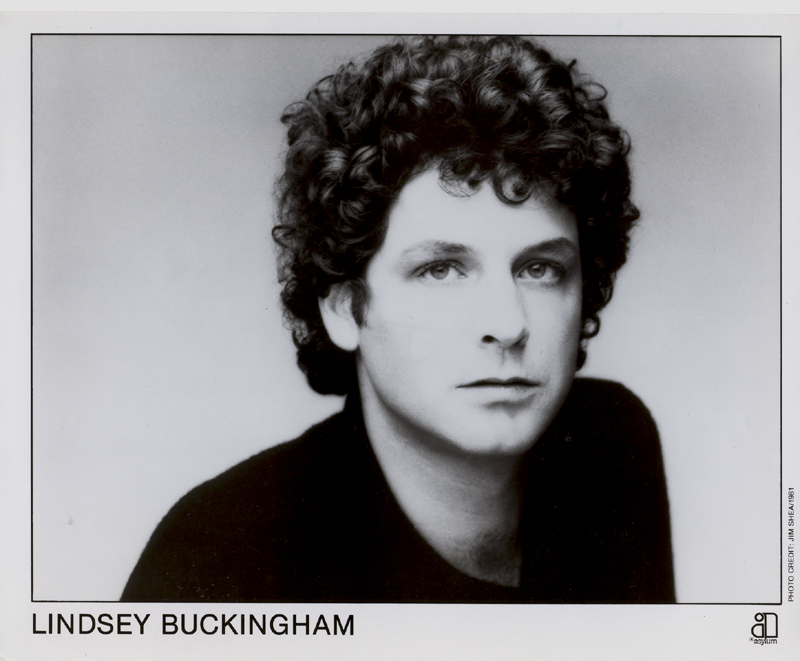
First Hand News: Lindsey Buckingham live


Laal and I have been on a major Fleetwood Mac kick over the past few weeks, so it was a treat for us to be able to check out the Lindsey Buckingham show at Town Hall last Tuesday. Despite some isolated tepid spots, a seriously intense performance. Vocally and guitar-wise, the man still has that old snarl. Here's my review. Can't wait to investigate Lindsey's solo stuff more.