Friday, December 29, 2006

We don't read poetry / Fahey's epics / Some Scorn


have returned to the city and there is a flurry of activity, or at least it feels that way. am at present looking for a new roommate and pinning down details for an upcoming Stay FKD show that will feature such fine bands as Baltimore's Yukon, who i raved about below, and Brooklyn's Animal. this will be for fans of the math rock and details are forthcoming.

still sorting through all the media that flew my way in Kansas City and that was a lot. finally managed to get a look at the latest book (number two) from young Kansan poet Ben Lerner who is a friend of a friend, and i was immediately very, very psyched. this book is called "Angle of Yaw" and was named a National Book Award Finalist. (a "yaw" is, according to Dictionary.com, "a movement of deviation from a direct course, as of a ship"--so i guess it's something like a list or a swerve or a lean.)

forgive my generalization, but allow me to tell you something about yourself: you do not read new poetry, except for perhaps the occasional bit of verse in "The New Yorker." hey, i don't either; it's nothing to be ashamed of. it's just something that reading Lerner made me think about. you also don't attend dance performances, or theater, or readings of any sort. your main sources of entertainment/culture are movies and live music. i'm describing myself, but i'm also describing a lot of people i know. i'm not criticizing anyone; all i'm saying is that there seems to be a hierarchy of the arts. (if you're in grad school or something like that, you don't count, b/c you have a lot more time for media intake.)

now you may not read poetry, or go hear people read it, but you may very well read novels. for some reason, novels are still relevant. as are timely nonfiction books. why don't people read poetry? i don't know, really. how are they supposed to find out about it, for one? people don't read new poetry unless they are poets and people don't listen to new jazz unless they are nerds like me or are jazz musicians.

i say all this by way of nominating Ben Lerner as a poet that people might actually, god forbid, read. like young people, people like you or me. there are a few reasons for this, but i guess the most concise way i could put it is that Ben Lerner's poetry makes sense. god forbid, right?

of course it's experimental, but you can read many of his poems once and get a very charming, concrete, witty idea. try this one, one of the prose poems that make up part two of "Angle of Yaw":

"If it hangs from the wall, it's a painting. If it rests on the floor, it's a sculpture. If it's very big or very small, it's conceptual. If it forms part of the wall, if it forms part of the floor, it's architecture. If you have to buy a ticket, it's modern. If you are already inside it and you have to pay to get out, it's more modern. If you can be inside it without paying, it's a trap. If it moves, it's outmoded. If you have to look up, it's religious. If you have to look down, it's realistic. If it's been sold, it's site-specific. If, in order to see it, you have to pass through a metal detector, it's public."

i guess a lot of people wouldn't think of this as a poem. it's not in verse, for one. but more importantly, i don't think people are used to reading poetry, especially after the advent of modernism and it's after-effect of fashionable obscurity, and having it make immediate sense. it's sort of startling in fact. one of the reasons people like to listen to music so much is that it acts on you whether you work to figure it out or not. people respond to artworks that make statements, that are gettable--more importantly, they respond to artworks that they can agree or disagree with.

in that way, the above thing is more like a collection of aphorisms. pretty much anyone could grasp what Lerner is saying in the above work, and pretty much anyone could conceivably disagree with any one of these aphoristic statements. they're theses as much as anything else, arguments. it's a refreshing thing for a poem to be concrete enough to disgree with, rather than simply having to say, abstractly, "i like it" or "i don't like it."

also, of course, it's funny as hell, in a droll way. does literature have to be funny to be popular among the young urban intelligentsia? the McSweeney's hegemony would seem to suggest that, yes, it does have to be funny, sarcastic, postmodern, wry, droll, self-referential, ironic, etc. etc. etc. humor is huge because it draws people in. for some reason, people seem to like their music (indie rock, namely, which is the prevailing "genre" among the young, hip music-consuming public) very, very serious. it's ok to be really serious, like Joanna Newsom or TV on the Radio or who have you, if you're singing, but if you're writing, you'd better be funny, witty, etc. this is just a sense i have.

so Ben Lerner is funny. hilarious in fact. i would in no way peg him as related to the McSweeney's cadre but i think his work has the potential to thrive in a world where, for better or worse, they seem to make up the prevailing paradigm--if that makes any sense. check this one out, also from part two of "Angle of Yaw":

"Child actors are not children, that much we know. Their reputation for viciousness is, by all accounts, deserved. Napoleon and Liszt were child actors. In situation comedies, child actors are black. Some child actors have never been off-camera. If you build a set and start filming, a child actor will come downstairs. Some doctors believe it is the constant surveillance that stunts the growth of the child actor, the pressure of the viewing public's gaze, while in fact a child actor off-camera is like a fish out of water. He cannot breathe."

i love the matter-of-factness of the tone. each of these poems is like a little essay--you come away with a concept. it may be largely a witticism, but it's still a wonderfully concrete idea. it is no exaggeration to say i laughed out loud reading "If you build a set and start filming, a child actor will come downstairs." how great is that?

you read Lerner because you want to, not because you feel lofty doing so. you could read "Angle of Yaw" on the subway. these aren't poems; they're just ideas and since there's no such format as "the briefly asserted idea," we have to call them poems. i honestly feel like Ben Lerner could be read. by actual people. and he is a young poet. this, to me, seems like a big deal.

i know you don't read new poetry. i don't either. but i read Ben Lerner and i think you might enjoy doing the same. buy "Angle of Yaw" here.

*****

John Fahey is still where it is proverbially at. i'm fixating on his longer works, the total-music fantasias that were starting to really cook in the late '60s and early '70s.

i really heartily recommend "America," recorded in 1971. weirdly, huge chunks--and good chunks--of this album went unreleased when Fahey originally put it out, but the Takoma/Fantasy reissue restores it to a glorious 79 minutes. the first half of the record is cool but a little underwhelming. what you'll want to do is listen to the album in reverse, or better yet, just skip to the awesome 15-minute "Voice of the Turtle" near the end. it's a gorgeous, savage revery, and coherent all the way through. Fahey could ramble on his longer tracks and some of the lengthier early pieces--such as "The Transcendental Waterfall," which appears on the reissue of "The Legend of Blind Joe Death" and the title track of "The Great San Bernardino Birthday Party"--are sorta rambling and only contain a smallish kernel of good material. but "Voice of the Turtle" and the track right before it, "Mark 1:15" (which contains this refrain that reminds me of Queensryche's "Silent Lucidity" in the best possible way) are both seriously deep and awe-inspiring and worthy of their epic lengths.

as is "When the Fire and the Rose Are One," the first track on the obscure 1973 release "Fare Forward Voyagers." this is an absolutely gorgeous record and completely unavailable (unless you want to pay $70 to some joker on Amazon). i downloaded it and i suggest you do the same. the aforementioned track is this lengthy multipart thing with a strong Indian vibe. dunno if it's authentic, but it sure is effective.

"Fare Forward Voyagers" is dedicated to a swami/guru dude of Fahey's and in a 1994 interview, the maestro had this to say: "Probably the primary reason I got involved with [Yogaville West] was that I fell in love with Swami Satchidananda’s secretary Shanti Norris. So I was doing benefits for them, hoping to score points with her, and along the way I learned a lot of hatha yoga." gotta love this guy. anyway, this is a seriously deep album; wish it was more around/known/circulated. tracks are too long to post unfortunately.

but i will give you something completely different: a track by Scorn, this weird so-called "ambient dub" project spearheaded by Mick Harris, original drummer for Napalm Death and also of Painkiller. it's awesomely bassy and atmospheric electronic beat music; kinda tries real hard to be spooky, but it's lovable that way. i loved the shit out of Scorn's 1994 disc "Evanescence" (this one too is outta print) in high school and it still sounds pretty damn rad to me. for the record, it has absolutely nothing to do with John Fahey and/or Ben Lerner.

Scorn - "Silver Rain Fell"

Thursday, December 28, 2006

"3 Women": Whoa, man


sorry for the lag, but have been winter-breaking in my hometown of Kansas City. indulging in the usual media saturation that occurs whenever i come home. i have a few very close friends here who (like me) enjoy nothing more than to sit around and watch movies and listen to music all day, with breaks for Mexican food.

as discussed below, Altman's death had set off something in me and it had done the same for my pals, so we planned to do some sort of tribute once i got in town. this took the form of a double feature of "3 Women" (1977) and "The Long Goodbye" (1973), two prime '70s specimens.

this was my third time viewing the latter movie, and though i really love it, it was the former one that really freaked me out. and i mean that pretty literally. as one of my friends put it, it's both totally horrifying and totally mesmerizing.

a lot of Altman's movies are artsy, impressionistic, what have you, but this one is really pretty much a full-blown art film. the look and mood are way more important than the story, though there's just enough narrative to keep you intrigued as to what's going to happen. basically it tells the story of how this mysterious youngish woman, Pinky (Sissy Spacek), comes to work at a sort of health club/spa for old people. she befriends Millie (Shelley Duvall), who has worked there for a while, and becomes her roommate. the movie is basically about the weird symbiotic/dysfunctional relationship between them. (yes, there is a third woman, as the title promises, but she's sort of a minor character in a way.)

if you've seen anything from around this time with Spacek and/or Duvall, you know that they share this sort of weird catatonic presexual vibe--very alien- or robot-like. since they're the main characters here, the entire movie has that vibe and it's immensely creepy. both Spacek and Duvall are basically impossible to read; the characters seem to have only a very tenuous grasp on reality.

Pinky is entirely obsessed with Millie, always staring at her adoringly and saying things like, "You're the most perfect person I ever met," and Millie is entirely obsessed with trival McCall's-ish lifestyle stuff, like giving dinner parties and that sort of thing. the sequence where the two painstakingly plan a dinner party--complete with pigs-in-a-blanket--only to be stood up by their guests is almost unwatchably pathetic.

just as important as the characters are a few weird formal elements: the original music and the murals that Altman uses as a motif throughout the film. Gerald Busby's score--this plodding, angular, dissonant modern-classical thing--isn't really all that odd in and of itself. what's really strange is how it clashes with the setting. i doubt i'll ever forget the opening sequence: Altman scans slowly across a pool where these catatonic-looking young women in bathing suits are leading these equally out-of-it old people through a wading pool at the health club. everything is tinged with blue and the music is just sort of creeping along. right from the start, it sets this alien, vaguely menacing mood.

the murals, credited to some person or entity named Bodhi Wind, totally dominate the film's look. basically they're these cave-painting-like scenes of stylized, expressionistic figures in violent and/or sexual poses. you see the murals in the opening credits and in the movie they're painted by the aforementioned "third woman," the wife of Pinky and Millie's lecherous landlord. they don't really serve a narrative function, but Pinky fixates on them whenever she sees them, which creates a weird sort of tension, since Pinky behaves in such a childlike, asexual way. i don't want to give away too much, but Pinky's behavior changes drastically later in the film and you wonder how much she's been influenced by these images.

there's a bunch of other odd formal stuff, like how you occasionally see the action through these sloshing blue waves that are apparently outside the world of the film. it sounds gimmicky--as does the score, the murals, and a lot of what goes on in "3 Women--but for me, it all totally works, maybe because Altman really seems to just be going for a mood-setting effect rather than trying to convey any sort of message.

there is definitely a narrative climax, which i won't give away, and around this time the film threatens to become overly arty, but fortunately sheer what-the-fuck-ness prevails. after you watch the film, it's like you've received all these disjointed subliminal messages; the overall feel of "3 Women" is just really, really potent--almost more like a piece of music than a movie. it's definitely related to all those good-but-dated arty '60s and '70s movies--like "Rosemary's Baby," "Don't Look Now" and that sort of thing--but i think it's held up way better than anything else that i've seen of that general period and vibe.

*****

in other news, i endured "Dreamgirls," which was just excruciatingly, horrifically bad. it's like this ersatz-Motown musical that's plagued by a non-sequitur-filled narrative, totally unmemorable and overblown original songs, and bafflingly wooden acting. (to single out just two culprits, which is very difficult, i simply do not understand what Eddie Murphy and Jamie Foxx think they're getting across in these performances.) i was just really shocked by how much of a failure this thing was, and i'm even more shocked by the general critical consensus that it's good, even great. has anyone else seen this damn thing? i feel like i'm going crazy.

*****

been also working through the Fahey Takoma discs in a systematic fashion. if you're ready to check out Fahey beyond the Rhino comp, go here. all the CD reissues have Fahey's original versions, plus the ones he re-recorded (something he insisted on doing every couple of years for his first few releases; as far as i can tell, there are even three versions of his debut record). all the records are good, but Volume 2, "Death Chants, Breakdowns and Military Waltzes," and Volume 5, "The Transfiguration of Blind Joe Death," are especially beautiful and coherent.

Saturday, December 23, 2006

Damonic possession


gettin' ready to head home to KC for the "holidays," whichever those might be. as usual, most of my extensive packing time has been given to choosing what CDs to bring along. despite my former reflections on taking/giving recommendations, i still feel the need to bombard my dear KC friends with music everytime i descend. Cheer-Accident, Steely Dan, All, these and others are the most important recent discoveries and the ones i'm stowing.

if your family wants to go to the movies, go see "The Good Shepherd." it'll give you all that sprawling Hollywood drama you're looking for and it takes up a lot of time that you'd otherwise have to spend making small talk with your relatives. as you prolly know, it's a fictionalized retelling of the birth of the C.I.A. starring Matt Damon and directed by Robert De Niro.

it's a really Hollywood-ish movie, covering a whole bunch of the bases you'd expect for a government thriller and for a period drama, and kind of pat in places, but really meaty at the same time. basically it's got this time structure that flip-flops between the "present" (1961, in the immediate aftermath of the Bay of Pigs invasion) and the past, where we see the personal history of Damon's character, C.I.A. main dude Edward Wilson.

at bottom, it's a classic deep cover story, about how being involved in shady government dealings makes you a stranger to yourself, your family, your peers and your friends. there's all kinds of awesome actors on board and like "The Departed," the flick often feels like a pangenerational parade of Hollywood's awesomest and most cynically knowing, from William Hurt and Alec Baldwin to Damon and Billy Crudup to John Turturro and even De Niro himself.

honestly a lot of the spy stuff, which begins in WWII and goes from there, confused the shit out of me. but the drama still holds up even if the history is throwing you for a loop. there's tons of memorable scenes, such as Damon's surreal Skull and Bones initiation--one of the film's major notions is that S&B is basically the farm team for the insidery-est wings of the U.S. government; it's not a particularly radical idea, but it plays out really convincingly in the film--plus a superbrutal, out-of-nowhere interrogation scene, and more ultrasmug uber-WASP good-old-boy back-slapping than you'd ever want (i devour that shit like hotcakes, myself, so i was in heaven).

there's also some really intense romantic stuff, with Damon throwing over this deaf girl he dates at Yale for Angelina Jolie, playing this "hottie" (though i think her lips are sort of grotesquely large at this point), who he sleeps with and then makes his shotgun bride. he goes off to Europe and they get super-estranged, making for some really caustic domestic spats near the end.

there's a million subplots, the most wrenching one involving Damon's son, who he totally ignores for years on end. but the kid grows up wanting to be just like dad, "Cats in the Cradle"-style, and Damon has that to deal with, on top of the agency's increasingly sordid dealings and his inability to trust any of his associates/informants/etc.

as my friends Joe and James pointed out, the movie feels slightly wooden at times, a little too tidy and biopicky, with every little Rosebud hint that's dropped getting nicely resolved. but it's like comfort food in that way, just sort of an airtight narrative. even though at the same time, it's really confusing in that international intrigue sort of way. but for such a sprawling film, it never feels like a mess, just a little bit harried, like De Niro needs to cram all these actors and dramatic signposts and historical events and themes and stuff in, and make sure they all come back around to where they need to get to.

Matt Damon is weirdly lifeless, but that's sort of who his character is. he was kind of wooden in "The Departed" too, but overall, i'm pretty happy that he's sort of become the artsy mainstreamers' favorite leading man. i've been a big fan ever since the labored Bahston bit began with "Good Will Hunting"--i just love that Damon grin, and though there ain't much smiling in this movie (nothing like that incredible date scene in "The Departed" when he's making fun of the schmancy dessert), he still works as the movie's center of gravity.

also, Alec Baldwin comes in and does one of his by-now-obligatory film-stealing bit parts, just like in "The Departed." in a lot of ways this movie is like a more buttoned-down, overserious version of that movie. comparing them, you see how Scorsese goes for glitz and sleaze, while De Niro is more into the tight-lipped-solitude thing. both movies deal intensely with corruption, and both are very tragic. but "The Departed" is obviously a much more fun movie, with Scorsese just letting the actors rip. De Niro fits them all into their little slots, but their awesomeness still shines through. anyway, i was thoroughly entertained, not to mention narratively baffled, by both. you gotta see them, really.

[Joe described "The Good Sheperd" as "The Godfather" meets "Quiz Show" and i thought that needed to be mentioned here, b/c it's absolutely dead on and gets at the diverse appeal of this film. the latter flick might be my favorite movie ever, with all its heavy good-old-boy schmoozing and that intense as hell disillusionment-of-America period vibe. that's an awesome bet for holiday rental if you're looking for subtle-as-shit ideological heartbreak, Hollywood sprawl and an insanely detailed '50s New England vibe, which i pretty much always am.]

Friday, December 22, 2006

Tight and shiny


this is something i've been putting off for awhile b/c it seemed like too big an undertaking. i've learned that blogging must not be too thought out in advance though, and i need to just get this damn thing off my chest. i don't even know if i have anything insightful to say on this topic, but here goes...

basically, what's happening is that I just finished reading "The Shining." yes, Stephen King's "The Shining." you might be laughing and that wouldn't surprise me, since i've gotten a lot of askance looks since i started toting this thing around in public. i can't exactly say that doesn't bother me, but my desire to read the damn book sort of trumped that. it couldn't have helped that the edition i have is bright freaking yellow with a dumb wanna-be-scary picture of a scowling boy on the front. that old edition, the silver and black one with the faceless head on the cover was supercool. wish i had that one.

anyway, the whole time i was reading i was, as you might guess, thinking about the differences between the text and Kubrick's film version, which happens to be one of my favorite movies of all time. as you prolly know King was famously dissatisfied with Kubrick's version. i wish i could find a more extended version of King's critique, but all that seems to be floating around is this pithy statement: "I have my days when I think I gave Kubrick a live grenade on which he heroically threw his body."

now maybe i'm dumb, but in all honesty, i have no real clue what this actually means. at the same time, it sounds real nice and is highly quotable, so i felt like i should include it here. i don't think i'm going to try to interpret it just yet (or maybe at all) but i just wanted to talk a little about the differences between the two versions.

i guess the main thing that struck me about the book was how--and to say this sort of thing about a horror story has sort of become a cliche, but in this case it's really true--the book isn't really about supernatural stuff at all but basically about the personal demons that can destroy a family. King goes into excruciating detail about Jack Torrance's alcoholism and temper problems, examining them from all sides: where they came from (his dad, who had seriously abused his mom), how they affect his marriage and his career, and most of all, how they affect his son.

Danny, Jack's son, is a really intense character. basically King uses this whole idea of "shining" or mind-reading to portray what its like for a kid to have to grapple with grown-up thoughts. he reads his parents' thoughts when they fight and sees the word "DIVORCE" and becomes terrified, or he can sense when his dad is longing for a drink ("the Bad Thing," as he calls it). King does an amazing job of portraying how tragic it is when a kid has to deal with these sorts of adult issues. i like this passage in particular. Danny thinks,

"But grownups were always in a turmoil, every possible action muddied over by thoughts of the consequences, by self-doubt, by selfimage, by feelings of love and responsibility. Every possible choice seemed to have drawbacks, and sometimes he didn't understand why the drawbacks were drawbacks. It was very hard."

so basically it's this idea of sort of knowing too much, of being cursed with knowledge. this carries over into the whole Overlook hotel setting, b/c everyone who stays there has to grapple with the entire sordid history of the place. anyway, so Danny is a great character and you get a little more sense of his vulnerability in the book, whereas the kid that plays him in the flick kind of makes him seem like this weird dispassionate alien boy.

another thing i noticed is that the movie gives you no sense whatsoever of any chemistry whatsoever between Jack and Wendy. basically for the entire film, Nicholson acts like a sarcastic asshole and Shelley Duvall acts like a total wet blanket. they both quickly become repulsive and you get no sense of there ever having been any happiness in their marriage. King paints a pretty grim picture of their relationship, but there are a few pretty intense sex scenes and talk of their courtship that show they actually have something meaningful together.

on the subject of the Jack character, i'd have to say that while Nicholson doesn't do the greatest job of conveying his conflicted nature, he does get the sardonic-rage part absolutely right. in the book, there are some scenes of real remorse--such as when Jack almost gets in a car accident and swears off drinking--but you just don't really see those in the movie. the closest thing is when he's sort of catatonically telling Wendy that he dreamed he was murdering his family.

but yeah, Nicholson nails the asshole part of the character, obviously. a lot of what you get in the book is this real sense of bitterness and entitlement, stemming from Jack being both a frustrated writer and an alcoholic. King and Kubrick both really get this fundamental thing about Jack's character, which is the romantic notion of the literary alcholic, the writer who gets wasted and spews out this sort of pretentious allusive crap which is supposed to pass for poetry or be some kind of badge of intellectualism.

Kubrick is wise to lift a lot of King's dialogue during the famous bar scene where Jack talks to Lloyd the bartender. but there are a few lines he leaves out, such as, "Lloyd, you're a wonder... Set up already. Your speed is only exceeded by the soulful beauty of your Neapolitan eyes. Salud." that's a great one.

another detail that sticks out for me is the "dogman" that you see for just a second in the movie. remember when Danny is running through the halls and he sees that dude in a bear suit going down on some guy in a tux? obviously that just registers as sort of this subliminal perverted detail there, but in the book that whole business is fleshed out in a really creepy way.

King tells us that the dogman is the gay lover of Horace Derwent, the mogul who originally built the hotel. Derwent is only sort of half interested in this guy, but he likes to lead him on. so at the hotel's opening costume ball--which is the party that Jack finds himself immersed in during his hallucinations--Derwent tells his lover that he might sleep with him if he comes dressed as a dog. the dude does and Derwent spends the whole night tormenting him, like making him do somersaults and bark and do all kinds of degrading crap.

meanwhile, Jack is dancing with a beautiful woman (or hallucinating that he's doing so) and he starts to notice Derwent tormenting this poor guy, who by this time has failed at somersaulting and smacked his head against the ground and begun to bleed. so that's when the whole ball hallucination becomes sort of nightmarish. it's just a really cool detail that King throws in; it really captures the perverse debauchery that the hotel represents.

i guess the other thing i feel like i should mention is the character of Dick Halloran, the hotel cook, who's much more endearing in the book than in the movie. as played by Scatman Carrothers, he's like this Louis Armstrong sort of caricature, but you spend a lot of time inside his head in the book, and he's a little bit more rounded out.

the following passage is, yeah, sorta ridiculous, but in the context of the book, it really works: "...[Dick] had reached a sunny plateau after years of struggle. He had good friends. He had all the references he would ever need to get a job anywhere. When he wanted fuck [ed.--!!!], why, he could find a friendly one with no questions asked and no big shitty struggle about what it all meant. He had come to terms with his blackness--happy terms. He was up past sixty and thank God, he was crusing."

say what you will about King, but he can do characters really well. if he had written this about Halloran right up front, it would've been really lame, but this comes near the end of the book, after we've already spent a lot of time with the character. by the time it comes, you believe this summation, however pat it is.

yeah, the book ends sort of happily. no dramatic freezing-to-death-in-the-hedge-maze stuff (or "Heeeeeere's Johnny!" either, for that matter). i won't lie; i was sorta choked up at the end of the King. there's plenty of lame stuff--i couldn't really deal with the hedge animals constantly coming to life--but i was really impressed by how gritty and detailed the book was. as i said, it's a very believable portrait of a dysfunctional family. all the horror is built on that, and the way the trials of Jack, Wendy and Danny are interwoven with the sordid history of the hotel is pretty masterful. if nothing else, it's a hell of an imaginative story.

have to say, tho, Kubrick wins for most resonant image, which is that final shot of Jack in the Overlook photo from the '20s--that's just an intense encapsulation of this whole idea that he and everyone else who's ever stayed in the hotel sort of exists in this weird simultaneous limbo. King alludes to this concept and Kubrick drives it home with that closing shot.

so i guess overall i'd say i don't think either version is better per se. in fact they complement each other really well. as for the grenade comment, i'm still kinda clueless. is he almost congratulating Kubrick for how far he went in depicting the Torrance's mania? is he faulting him for playing up the sensational aspects of the story over the realistic ones? i just can't figure out what the "heroically" part is alluding to. any insight into this would be appreciated. anyone ever seen the full interview this was taken from? i guess having read the book, i can't really see how it could've been filmed all that much better, but hey, i didn't write the damn thing.

John 1:1

a comment that Phil Freeman posted in response to my Fahey thing below got me a little worried. he wrote that the only Fahey he had heard was a track of detuned experimental guitar, something that JF was experimenting with a bit in his late career. basically during this time, Fahey was throwing a lot of stuff against the wall to see what stuck and though most of it's very rewarding, i'm worried that all some folks know of him is this late stuff, which in my opinion really needs to be heard in context of his early awesomeness, which is obviously very experimental for its time, though not in the least bit difficult to listen to.

as i said below, the hands-down best intro to Fahey and the thing that i'd recommend to anyone who hadn't checked him out, is Rhino's 2-CD anthology "Return of the Repressed." it's plenty available on Amazon. buy it, ok? i'd go so far as to say that it's the best single-artist compilation i own. it covers an enormous amount of ground and doesn't become useless once you start buying up the original discs, as so many comps do.

anyway, though, as an expedient alternative, if you've only heard late Fahey or (gasp) never heard him at all, please enjoy this YouTube clip of a 1978 performance in Germany. he plays one of his most gorgeous pieces, "On the Sunny Side of the Ocean," which originally appeared on 1965's "The Transfiguration of Blind Joe Death" (you didn't really need to know that; i just really wanted to type that title). the playing will kill you, but also check out a) his thick-glasses-and-elbow-patches look and b) his hilariously dry pregame patter, delivered in that high, wobbly voice of his, which made everything that came out of his mouth sound sarcastic. anyway...


ok, more soon, including King vs. Kubrick.

Monday, December 18, 2006

Late transmissions from my late hero


am kinda dazed and under the weather after the weekend's travels. the Tylenol Sinus caplets i purchased and swallowed this morning didn't work, but the John Fahey i've been listening to for a good portion of the day sort of did.

John Fahey is kind of a biggie for me. he's been in my untouchable pantheon of "holy shit" artists since i discovered him in high school. (this was as a result of Jim O'Rourke saying in an interview that his two favorite guitarists were Fahey and Derek Bailey. i bought Rhino's marvelous Fahey primer and was smitten; as for Bailey, i bought the Dexter's Cigar reissue of Aida, couldn't make heads or tails of it and promptly sold it. i've since come around on Derek, but he could never touch Fahey for me.) there's no real point in intro'ing Fahey here, b/c so much ink has been spilled on him in the past decade or so. David Fricke's obit is as good a summary as any, i suppose, hitting all the key points: smitten w/ folk early, canvassed the South for records, "rediscovered" bluesman like Skip James, fused roots styles w/ love of Bartok, went into the wilderness of drink and madness in the '70s and '80s, was himself "rediscovered" by the Thurston/Coley/O'Rourke cabal in the '90s, etc. etc.

anyway, the occasion for my thoughts is Sea Changes and Coelacanths: A Young Person's Guide to John Fahey, a new two-CD reissue of the late-'90s stuff he did for Table of the Elements records. along with City of Refuge, these recordings--originally released as Womblife and Georgia Stomps, Atlanta Struts and Other Contemporary Dance Favorites--were the latest and most readily available ones around the time that Fahey started to get hipster hype. so for a lot of people, including moi, they were among the first ones heard and purchased. i think City of Refuge was my first Fahey and while i kind of dug parts of it, i found it long-winded and somewhat obtuse. it wasn't until i started digging into the classic Takoma stuff--via the aforementioned Rhino comp, The Return of the Repressed (which is *****absolutely the best intro to Fahey, both musically and annotationally, that there will ever be****** ), that i started to revere this guy as a complete fucking genius/inspiration for the ages, etc. etc.

so yeah, i had these TOTE discs at the time, and i remember developing a pretty intense fondness for Georgia Stomps and sorta hating Womblife. listening back, i'm finding that i'm simultaneously really enjoying them both and also understanding why they may have been frustrating. basically, i would classify these albums as post-technique records, a concept i'll define in just a sec, but one which is captured sorta by some lines in the essays that accompany Sea Changes: Fricke writes that by the time of these discs, Fahey was "all but deserted by his original virtuosity," while Byron Coley says, "It's true that he may not have been physically playing enough right then to have all of his chops, but that's besides the point. He was playing what he wanted to play."

any way you slice it, the message is clear: these were not the sort of Fahey recordings that made you sit up and go, "Holy crap, is that one guy playing all that guitar at once?"--which was definitely one of my original reactions to hearing his awesome fingerpicking technique. what the records do display is Fahey's wonderfully pure melodic gift, completely intact and even maybe deepened. hence "post-technique"--the emotional intelligence is there even if the execution is less brilliant. i'd compare this with what Dave Burrell has been doing lately or what Miles did throughout much of his later career--it's the kind of playing where you're no longer proving anything about your instrumental skill or genre facility, you're just playing. it's a pretty intense place to be, and it's not always going to be satisfying to people who were with you from the beginning.

and indeed, these aren't my favorite Fahey discs. i'd never recommend that someone start with them--hence my objection, even despite it's probable sarcasm, to the subtitle of the Sea Changes set, which is "A Young Person's Guide to John Fahey"--and yet i am definitely happy going back to them. Georgia Stomps, now simply "Part 2" of Sea Changes, is still the stronger of the two. it's a live set from Atlanta recorded in August of '97 and captures the sort of thing Fahey was doing the only time i saw him play, which was in (i think ) '99 or 2000 at Tonic. that thing was, as best i can describe it, long impressionistic, reverbed-out electric guitar suites weaving together back-catalog favorites with standards-ish stuff and some oddball selections. like with peak Dave Burrell, you get the sense on Georgia Stomps of an encyclopedic musical mind just roaming where it pleases. Fahey takes his sweet time dancing around melodies before actually playing them, and despite the somewhat off-putting twang of his tone, it's a joy to stroll along beside him. this is the strongest late Fahey disc i think.

Womblife is more of a sound-collagey type of thing that's almost like John Fahey remix album. his guitar is really just another texture in this sonic soup that Jim O'Rourke helped him put together. it's a really interesting experiment, but this one is a bit harder to stomach than Georgia Stomps b/c it bears very, very little resemblance to pure solo Fahey, which is obviously his most awesome setting. as Coley smartly argues in his liners, though, why would we expect or even want a facsimile of early Fahey from a dude this far into his career?

Womblife contains psychedelic soundscapey thingies of a very high order, and i'm probably overstating the disparity between them and classic Fahey. that melodic rapture is still there, even though it's more textural and minimal, sometimes merely a minor element in the midst of some whacked-out ambient collage. but i agree that he does deserve credit for pushing at this late inning of his life. Hitomi is the other one from this late period. i don't know that one so well, but now i'm curious to revisit it; i remember it being, noisy, eclectic and improv-ish, but we'll see.

as i've got Womblife on in the background, i'm struck by the sense that Fahey seems to be just sort of communing with the guitar and kind of unlearning it, as cheesy as that sounds. his technique was so fully formed on his early recordings that we never heard any sense of wandering or uncertainty. here he's just sort of scraping away in a trance, sort of transfixed by the weird sounds he can get out of the ax. it's a more stoned, or hyper-aware sort of playing, the kind that a child--or for that matter an old man--unburdened by technique would do. i'm liking this more and more and though i'm still very wary of Fahey's dismissive attitude toward his back catalog, i can see why he would've been frustrated that people couldn't take this stuff for what it was, which was pure experimentation of a very challenging and rewarding stripe.

and then there's "Juana," which is this lovely jaunty little carefree melody thing, played on acoustic on Womblife and electric on Georgia Stomps. Fahey treasures the melody, bandying about all these pre-themes before actually getting to the core of the tune.

anyway, most of these tracks are too lengthy to really work as mp3s. maybe i'll do a Fahey primer via mp3s sometime, but for now, i'll just say, as Walt Dickerson did about John Coltrane, "I hear you, John." at least i think i do.

(think i should mention real quick that on Georgia Stomps, you get some awesome snippets of Fahey's amazingly wry stage patter. on the disc, he says something like "If I take off my sunglasses for too long, the world will explode," in that awesome warbly, sarcastic tone of his. when i saw him at Tonic, i remember him stopping dead in the middle of some epic passage to fixate on a particular chord and wryly state, "Wow, that chord is so ominous. What an ominous chord that is. It's like an omen." he just sort of obnoxiously cycled through statements like that for an uncomfortably long time, totally killing the mood but cracking everyone up. what a weirdo.)

Sunday, December 17, 2006

Yukon always get what you want


just got back from a so-much-fun weekend of shows, including the insane 10-band marathon in Philly yesterday that i mentioned previously. so many people to thank for all this, including all the bands listed in the last post, plus Jesse Moynihan for the use of his wondrous Avant Gentlemen's Lodge space, plus Brooklyn's Animal for hanging with us on Friday, plus the Octagon and Shaka Zulu Overdrive for the fun on Thursday night. all this blabbing is obviously more related to my band than to my blog, but that's kind of the mode i'm in right this minute.

all the bands we saw and hung out with were amazing, but one stands out for me. to commemorate the weekend, i give you a track by the mighty Yukon, who we were fortunate enough to have played with at both shows; they are Baltimore's finest and really one of my very favorite active rock bands. they play intricate and propulsive math rock that falls somewhere between the Don Cab and Dischord schools; at times the sound is almost retro, since that stuff was so rampant in the '90s, but Yukon pulls it off with unbelievable chops and energy. the songwriting is phenomenal and every member plays a vital role. there is no b.s. whatsoever in this music. the drummer, Nick Podgurski, is a total monster; dig how tight and oddly constructed his beats are. he sounds like no one else i've ever heard. and the guitars are completely gnarly, always swarming around each other in these weird interlocking patterns. just total pro music all around. here's a track from their first full-length, Mortar, which you can get from Terra Firma Records. if you like heavy and complex rock, this is a happy day for you.

Yukon - Formation Prevention

and check their MySpace page for some wonderful live videos.

ok, enjoy. happy times all around.

Thursday, December 14, 2006

DFSBP fest


don't wanna overshadow the just-posted Dave Burrell ode, which you'll find right below this bulletin. and i don't wanna bore you with self-promotional crap, but here's some info on a little (ok, big) festival i'm co-putting together this Saturday in Philly, if you happen to be anywhere near there...

Saturday, 12/16/06

"Dark Forces Swing Blind Punches" fest

The Avant Gentlemen's Lodge
4028 Filbert St, Philly
5pm, $10; sorta shortish sets

featuring performances from:

Dysrhythmia

Ocrilim (Mick Barr from Orthrelm)
Zs
Yukon
Knot Feeder (feat. Mike Banfield, formerly of Don Caballero)
Stay Fucked
Kuru Kuru Pa
Calabi Yau
Clan of the Cave Bear (subbing for Child Abuse, who unfortunately can't make it)
Normal Love

Wednesday, December 13, 2006

And then there weren't two...


was hoping to come home tonight and rattle on a little bit about two old-timers who haven't lost their spark. i will in fact be discussing a pair of veterans, but unfortunately, only one of them is still really in the game.

i'm talking about trombonist Grachan Moncur III and pianist Dave Burrell, two musicians who came of age in the '60s. Moncur was more associated with the edgier faction of the Blue Note crowd, while Burrell was more part of the Impulse/BYG free jazz crew, but the two did cross paths on several Marion Brown and Archie Shepp sessions in the '60s and were both part of Beaver Harris's 360-Degree Musical Experience, though they don't seem to have ever recorded together as part of that group.

anyway, so a lot has happened in the meantime, both to jazz and to these two, but circa now, they're both still active, at least in some respect. Burrell is, frankly, kicking ass--he's got a great new label, High Two, and is really challenging himself to keep evolving. i wrote about his latest disc, Momentum, in the preceding post--look for a full review soon in Time Out--and i highly recommend it; definitely one of the most engaging jazz discs of the year.

Moncur on the other hand has been plagued by chops problems and has, again frankly, barely been showing up to recent gigs. i saw him play a few years back with Archie Shepp and Roswell Rudd and he sat out most of the time and played very tentatively whenever it was his turn. a more recent gig w/ Jackie McLean and Bobby Hutcherson--with whom he made a series of unbelievable records in the mid-'60s--was a bit better, if only because it featured a version of Moncur's devastating ballad "Love and Hate," from the record Destination Out. Moncur took a beautiful solo on that; i think he fared better b/c the tempo was slow, and speed and stamina seem to be his main issues.

anyway, i just returned from a really unsatisfying Moncur appearance at the Stone and as much as i hate to say it, i'm not sure i'll be giving him another chance for a long while. basically, i was very excited about the show b/c it was advertised as an all-horn affair, with Moncur, Michael Blake and James Spaulding, the latter saxist being an awesome yet underrated sideman on a ton of great '60s Blue Notes. but it was not to be: a note posted on the door of the Stone before the show said that Blake and Spaulding wouldn't be there and that was a big letdown. from those previous gigs, i got the feeling that Grachan was pretty reticent to take on a challenge and i was hoping that playing with serious dudes like Blake and Spaulding would draw him out more.

the fill-ins were a keyboardist and a drummer whose names i didn't catch. they weren't bad musicians, per se, but in all honesty, the gig was pretty terrible--just tepid, Kind of Blue-style swingin' with some very tentative solos from Moncur. it was remarkably safe, unchallenging and unengaging. the most frustrating thing about this and many of Moncur's latter-day performances is that he completely avoids performing any original compositions. and if you know Moncur's tunes, you know this is a HUGE letdown, because he's honestly one of the most engaging jazz composers i've ever heard, even if he's only got a few albums out of his own stuff. a while back, i gushed about his record Evolution and the Jackie McLean dates One Step Beyond and Destination Out, for which he wrote a whole bunch of eccentric, haunting and just staight-up gorgeous tunes. but he comes to gigs now with nothing more than the desire to blow tepidly over "So What." that pretty much sums it up right there.

i mean no disrespect, but it pains me to see this. there are a million alternatives. why not just get a killer band to play his tunes and take the solo burden off him, like on the 2004 session Exploration? this guy's music needs to be heard, and if he can't play it, someone else should. Andrew Hill has recently been reclaimed by Nels Cline, now i challenge some ambitious young jazz dudes to take a stab at "Air Raid," "Evolution," "Ghost Town," "Love and Hate," etc. it's essential jazz, and just straight-up some of the coolest music i know.

ANNNNNNNNNYway, now for what i really meant to write about, which is something of an addition to that whole '70s/'80s jazz business that will henceforth be called the DIS(that's Douglas, Iverson, Smith)canonization of '06--that whole long-overdue reclamation of the '70s and '80s as fertile periods for jazz. so while researching my review of the new Burrell disc, i was reminded of his older stuff and in particular, Windward Passages, a 1979 live solo piano thing on Hat, which i must say is one of the most gorgeous musical phenomena i've ever frickin' heard.

so Dave Burrell is one of that whole crew of what i'd call TOTAL pianists. you know what i mean, the whole Jaki Byard/Bobby Few/Don Pullen axis of dudes that can play absolutely anything and love to mash together all of jazz history in these crazy juxtaposition-filled apotheoses of total music. i think Randy Weston may be sort of on this tip too, but i haven't heard enough to say. anyway, Windward Passages is Burrell's definitive statement, the place where he really shows that he can do it all.

so basically Windward Passages is some sort of jazz opera that is meant to be this big multimedia thing with dancers, singers, an orchestra, the whole works. but as far as i know, a version like this has never been recorded, and i'm not even entirely sure it's ever been performed, but don't quote me on that (or anything else). but that's fine by me, b/c i can't ever imagine wanting to hear it any other way than the way it's done on this record.

here's the deal with Burrell: he's a consummate romantic. he writes these impossibly gorgeous, swooning themes that make you feel like you're in some kind of period drama, but you don't really know what period--it's just grand, sweeping, gorgeous, swooning music that brings up images of spinning around in a field or a ballroom with your hands pressed to your chest, just this dizzy feeling of pure emoting. and then he mixes that together with percussive flurries and these irreverent free squiggles and jaunty 2/4 swing, with the left hand just jiving away on this old-timey jazz tip. it all happens in rapid succession and you just feel like you're inside Burrell's mind.

i was thinking about the whole genre juxtaposition thing and how thanks to John Zorn and others it's become this whole rib-nudging thing of "Look how cute i can be." and yeah, ok, sometimes with Burrell there's the slightest sense that the "sabotaging" of the gorgeous stuff with the free stuff is obligatory, but i have to say that most of the time, you feel like you're being carried along on the stream of his thoughts. for him ragtime suggests free, which in turn suggests swooning melody, which in turn suggests percussive thunder. he has a total mind and this is music outside of style and fashion and genre. it is certainly not jazz or classical or soundtrack music or anything else. it's just real.

my friend recently burned me a Terry Riley disc called Lisbon and even though i wouldn't yet say i hold Riley in as high esteem as Burrell, i got to thinking the same thoughts, about dudes who play music rather than style. there sure aren't a heck of a lot of them. i'll say that i think John Fahey is one--he's ostensibly a folk musician, just the way that Burrell is ostensibly a jazz one. but really they're both total musicians, who have all history in their brains and at their fingertips. these are the real gods, the ones who can do everything in a solo setting. i'm not even sure i'd put Cecil in this category.

you need to be able to go to a conventional place, to meet your audience halfway, give them something to latch onto, in order to really touch their hearts. with Cecil, it's always you going to him, and i'm totally happy to do that. but with Burrell, you often get your pleasure buttons pushed in very conventional ways and then there's that immense tension in knowing that he could snatch that beauty away and wondering when that's going to happen and when it does, then comes the unbearable tension of when he's going to bring it back. this is the experience of listening to Windward Passages, my next humble nomination to the DIScanon. Amazon has two copies for like $20, which is a steal for something of this magnitude, but it's hard one to find otherwise [note, there is a Burrell/David Murray duo disc that's also called Windward Passages, and even though i'm sure it's good, don't mistake it for the solo one]. i'm going to give you a taste here, the first and probably most potent track, in which is contained the kernel of the entire recital, but you really need to dig the whole thing.

before i forget, i need to tell you that one of the tracks--not the one i'm posting-- is called "I Want to See You Everyday of Your Life," which i find to be one of the most awesomely beautiful verbal statements i've ever heard, just a deep, deep concept. and even though that's not the one you'll hear here, that title sums up the deep, heady beauty that's contained on this disc. so anyway, here's "Overture: Windward Passages," an absolutely vital statement of total music that ought to make you ravenous for the whole session:

Dave Burrell - "Overture: Windward Passages" (1979)

ps: another Burrell that i'm still digesting is La Vie de Boheme, his adaptation of the Puccini opera made for BYG during the great blowup of '69. so while everyone else was doing balls-out, Pan-African free jazz, Burrell was doing Puccini--figures. what a crazy, awesome dude; like i said, he's a romantic at heart.

Tuesday, December 12, 2006

Top 10-ology


have been working on my year-end Top 10 list for "Time Out." prolly shouldn't reveal all contents until they go to press next week, but i've got some thoughts. last year, it being my first year on staff at the magazine, i definitely had some sort of point to prove about how esoteric my tastes were--it's kind of embarrassing to admit, but i'm kind of a contrarian at heart, or an obscurantist or what have you, i.e., i enjoy pursuing active interests in things that no one else gives a shit about and i wear that as sort of a badge. i can't imagine anyone who writes about art for a living not having at least a little bit of that quality.

anyway, but this year was a bit different. making my list, i decided to use the guiding principle of simply determining what records i returned to the most, and more importantly, which were the ones that i decided to make part of my collection. as for that last part... like anyone who writes about music for a magazine, i receive a shitload of free CDs. obviously the vast majority of these are releases that i would never in a million years have purchased. i'm obliged on a daily basis to give records a spin in order to evaluate or at the very least describe them, and most discs fall into that category, i.e., they're simply data to process. even a lot of the CDs that i do larger pieces on become mere obsolete research tools once i'm done with them--i have no real emotional investment in them and i wouldn't in a million years throw them on in my free time.

but there are the select few CDs that actually make it home with me, and if they're really special, they get filed alphabetically with my other CDs. yeah, i know, know--Oooh, how very special! But for me that gesture has become somewhat meaningful: it's like i'm promoting a CD from the status of data, or work fodder, to that of a work of art that i choose to own, much as if i had bought it. there's a huge pile of CDs in my room that are sort of in limbo--the ones from work that i don't want to toss, but that aren't quite part of the real collection either. if i was really honest with myself, i'd probably throw these in the garbage right now, but i'm still not into the idea of disposing of smaller releases that indie labels or individual artists take the time to get into my hands. but that will probably change; it sort of has to, given the sheer amount of product i receive on a daily basis.

anyway, though, re: the Top 10, every CD that ended up on there was one that i took home and upgraded, made into "a real boy," so to speak, or something like that... it only happens a few times a year, honestly. it's a very powerful thing for me to actually take a CD home after i review it; because let's face it, as cool as the job is, i'm still listening to a lot of stuff merely because i have to produce music-related copy on a weekly basis. something has to hit me hard for me to pluck it out of those huge stacks on my desk and rescue it from anonymity.

anyway, i don't want to give away any of the records that made it, but here are a few honorable mentions that i couldn't find a slot for but nevertheless really enjoyed:

Carnival Skin - s/t (Nemu)

this is a really nice new collective jazz group with clarinetist Perry Robinson, trumpeter Peter Evans, guitarist Bruce Eisenbeil, bassist Hill Greene and drummer Klaus Kugel. you see very few jazz bands where everyone pulls their weight compositionally, but this is one of those scenarios--everyone writes. the pieces are fun and the playing is mostly awesome, especially from the Robinson/Evans tandem. solid free-jazz features, but smart organization too.

speaking of Evans...

Peter Evans - More Is More (psi)

i've gushed so much about Peter in TONY that i feel like i've run out of stuff to say, but he's an amazingly focused and dedicated improviser, and this debut solo set doesn't disappoint at all. yep, killer focus and drive on this one.

Deicide - The Stench of Redemption (Earache)

ah, Deicide. loved the shit out of these guys in high school, but they got into some really shitty, stagnant crap in the late '90s and early aughts. this new one really rips, thanks to these two badass new guitarists, Jack Owen (formerly of Cannibal Corpse, who also have a pretty killing straight-up-death-metal CD out this year called, uh, "Kill") and Ralph Santolla, who do these awesome clutch-the-hand-of-your-creator leads that are just unapologetically shred-tastic, just really noodly and catchy and fun. kind of sounds hilarious pressed up against Glen Benton's gruff vocal nonsense. but really heavy and relentless shit here, even if it ain't really that special songwise.

Peeesseye [pronounced "Pee Ess Eye] - oo-ee-oo (Evolving Ear)

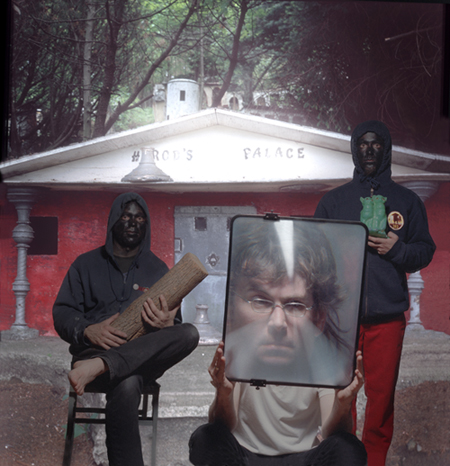
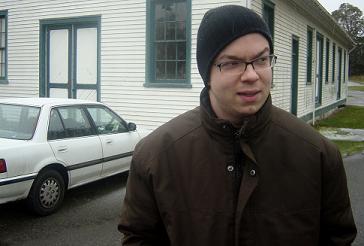
i love these guys: Fritz Welch, Jamie Fennelly, Chris Forsyth (that's them looking all krazy up there at the top of this post). they've been doing weirdo conceptual electroacoustic improv around NYC for years with great success (well, aesthetic success, at least). but they sorta turned a corner recently and this is the first document of that. basically they're doing an all-acoustic thing now, with Forsyth swapping his electric axe for an acoustic and Fennelly switching from electronics to...drumroll...harmonium. a lot of their music is now strummy and droney and almost dreamy, but with plenty of good, old Peeesseye unsettlingness to it, e.g., Fritz's guttural speaking-in-tongues, which has a really awesome juxtapositional effect with the pretty, dreamy surroundings. this is a hot disc. ring Evolving Ear for a copy.

Dave Burrell - Momentum (High Two)

a really strange, strange record. very prickly, much like Burrell's last for High Two, "Expansion," which is really growing on me now that i'm revisiting it. like that one, this one has impeccable sound quality, but in the service of some totally weird, static (and i don't mean that in a bad way, just in a descriptive one) musical conceptions. don't wanna spoil the TONY review i just wrote, due out next week, but i'm really impressed/baffled by the subtlety and open-ended experimentalness of what Burrell is up to these days. and the rhythm section, Michael Formanek on bass and Guillermo E. Brown on drums, is totally fucked-up rad. some weird fractured almost hip-hop-like grooves happening at times. Brown in particular is totally virtuosic and perverse and inventive in a way that i never had even the slightest inkling of during his Ware tenure. maybe the best drumming of the year right here.

hmmm, what else: sure there's a lot more. gotta reckon with that Mastodon record. hey, i've said it 1,000,000 times, here and elswhere, but here's what happened with that little mf: got it, played the hell out of it for three weeks...then lost interest completely. go figure; i really thought that had the makings of a classic metal record. ha, who am i kidding--there's only like five of those in existence. i'm exaggerating, but metal just seems to date so quickly. Metallica, Sabbath, Morbid Angel, maybe a little Pantera; nothing can touch the bread and butter, folks. anyway, i've had my ups and downs with good, old Mastodon and i just gotta say, they rock like motherfuckers, but they've got a lot of weaknesses that may yet keep them out of the pantheon. those vocals... i thought they were cool, but they're kinda bad--too close to grunge garbage. they need to get someone up front who can actually sing.

Scott Walker record... bottom line: i respect it a hell of a lot more than i actually like it. listened to it exactly once through to write my review (5/6 stars, possibly too high in retrospect) and haven't gotten through more than ten minutes of it since. this goes back to what i was saying above--when making my Top 10, it was simply about which records made that leap from data heap to home library, and which ones i actually found myself spinning. thus my list might look a little more "normalized" this year, but i think it's more honest. will throw a link up here when it goes to press. my #1 (yeah, at TONY, they're sorta ranked)? here's a hint: "The end of the line is lonely / Like a heart without a homey."