I was thinking it might be fun to
dissect this whole year-end process a bit, for anyone that might be
interested in the extremely unscientific, whim-driven process behind the
various lists, polls and reckonings I participate in each year around this time.
Let's take the general topic of jazz first. So
this year, I both published a
top 20 list on behalf of
Rolling Stone and
also submitted a top 10 list to Francis Davis' annual Jazz Critics Poll,
the full results of which I expect will be online soon the results of which can be found
here, with the annual round-up essay located
here and the full ballot tally
here. For me, the
RS
list — the first time that I know of (though I could be wrong) that the
publication has run a year-end list devoted exclusively to jazz — was an
attempt to unify my own, often idiosyncratic tastes with a more
general-purpose portrait of the "year in jazz," which, at least to some
degree, took into account intangible factors like "reach" and "impact"
(relevant factors, in my mind, given
Rolling Stone's
fundamentally mainstream-oriented purview) not to mention the
perspective of the publication as a whole. (For example, Kamasi
Washington, Cécile McLorin Salvant, Makaya McCraven, the Bad Plus, and
the London vanguardists like Shabaka Hutchings and Nubya Garcia are all
artists that other writers — including Chris Weingarten, Natalie Weiner,
David Fricke and Will Hermes, among others — have covered/championed at
RS in recent years, and given that jazz is still more or less a niche genre within the larger scheme of
RS
coverage, that kind of "track record of support" with regard to a
particular artist matters, at least in my estimation.) Again, it's an
inexact science, but I wanted this list to feel institutional, i.e.,
representative of the aggregate
RS perspective, while at the same
time — especially given that it was, in the end, written solely by me —
inclusive of my own opinions.
As an illustration of the above principles, here is the
RS 2018 jazz top 20 (again, the full annotated list can be found
here),
followed by the personal 2018 jazz top 10 that I submitted to the Davis
poll. You'll note that the rankings do not correspond exactly, and that some titles that ranked highly on the
RS list are absent from the Davis one. With the
Davis list, there's of course no attempt made to represent anything
other than my own tastes, and more specifically, the albums that I spent
the most time with this year— specifically/ideally, time that felt
purely pleasurable, non-"work"-driven; this is an elusive idea, because
the two can absolutely blur together, but over the years, I've come to
really privilege and take note of the new music that attains true
"escape velocity" within the sphere of my listening, that is to say,
becomes part of my collection, as it were; I've found that only a couple
of albums a year, if that, really satisfy this criterion in a given
year, let alone continue to do so after the year in question has passed.
Put another way, my private, purely for-pleasure listening rituals are
sacred to me, often centering on old favorites, or lesser-known releases
by artists I already love, and it's simply not that often that new
music really worms its way into that company. (Not surprising, given how
much of this for-pleasure listening centers around artists I've loved
for years, if not decades; currently, for example, I'm cycling through
the Cannibal Corpse discography for the umpteenth time, apropos of
nothing other than that I
love the band and "celebrate their entire catalog.")
Anyway, here goes…
Rolling Stone's 20 Best Jazz Albums of 2018:
1. The Bad Plus, Never Stop II (Legbreaker)
2. Cécile McLorin Salvant, The Window (Mack Avenue)
3. Wayne Shorter, Emanon (Blue Note)
4. Makaya McCraven, Universal Beings (International Anthem)
5. Brötzmann/Leigh, Sparrow Nights (Trost)
6. Charles Lloyd & the Marvels + Lucinda Williams, Vanished Gardens (Blue Note)
7. Various Artists, We Out Here (Brownswood)
8. Dan Weiss, Starebaby (Pi)
9. Ray Angry, One (JMI)
10. Houston Person and Ron Carter, Remember Love (HighNote)
11. James Brandon Lewis and Chad Taylor, Radiant Imprints (Off)
12. Harriet Tubman, The Terror End of Beauty (Sunnyside / Early Future)
13. Joe Lovano and Dave Douglas Sound Prints, Scandal (Greenleaf)
14. Kamasi Washington, Heaven and Earth (Young Turks)
15. JP Schlegelmilch, Jonathan Goldberger and Jim Black, Visitors (Skirl)
16. Hailu Mergia, Lala Belu (Awesome Tapes From Africa)
17. Anteloper, Kudu (International Anthem)
18. Kris Davis and Craig Taborn, Octopus (Pyroclastic)
19. Andrew Cyrille, Lebroba (ECM)
20. Joshua Redman, Ron Miles, Scott Colley and Brian Blade, Still Dreaming (Nonesuch)
My personal 2018 jazz top 10, plus supplementary categories, as submitted to Francis Davis' annual Jazz Critics Poll:
New Releases
1. The Bad Plus, Never Stop II (Legbreaker)
2. Wayne Shorter, Emanon (Blue Note)
3. Dan Weiss, Starebaby (Pi)
4. Peter Brötzmann / Heather Leigh, Sparrow Nights (Trost)
5. Ray Angry, One (JMI)
6. Charles Lloyd & the Marvels + Lucinda Williams, Vanished Gardens (Blue Note)
7. James Brandon Lewis / Chad Taylor, Radiant Imprints (Off)
8. Makaya McCraven, Universal Beings (International Anthem)
9. Cécile McLorin Salvant, The Window (Mack Avenue)
10. Houston Person and Ron Carter, Remember Love (HighNote)Historical
1. Charles Mingus, Jazz in Detroit / Strata Concert Gallery / 46 Selden (BBE)
[see review
here]
2. John Coltrane, Both Directions at Once: The Lost Album (Impulse)
[see review
here]
3. Beaver Harris/Don Pullen 360° Experience, A Well-Kept Secret (Corbett vs. Dempsey)
[see tweet
here and related post
here]
Vocal
Cécile McLorin Salvant, The Window (Mack Avenue)Debut
Ray Angry, One (JMI)
/////
A
few notes on the above. Just to drive home how arbitrary this whole
year-end-list process is, how governed by moods, whims, memory lapses,
etc., I'm already wishing I could revise the Davis list above, to bring
it more in line with my actual "year in music," i.e., to make it just a
bit more reflective of that "listening for pure pleasure" concept I
cited above. To be clear, I very much enjoyed all the albums I listed
above, but there are others from the
RS Top 20 pool that probably hit me harder on a personal level, one being the Schlegelmilch/Goldberger/Black disc (see
RS entry
here) and another being the Harriet Tubman (see
RS entry
here).
Don't quote me on this, but I think at the time I submitted the Davis
list, I was feeling some compulsion to get a little stricter re: what I
did and didn't consider to be "jazz," though now I realize that deeming
both of those albums — which, very much to their credit, don't fit
comfortably into any kind of genre-centric reckoning — to be "jazz" for
RS purposes and not for Jazz Critics Poll purposes seems flat-out absurd.
Oh,
well! Again, I can't stress how make-it-up-as-I-go-along this whole
process is, and in a way, I celebrate that fact, as it only drives home how
ultimately subjective and, in a certain sense, pointless these kinds of
reckonings are. The one sense in which they
aren't pointless, I'd
argue, is that they actually do allow for some kind of spotlighting of
great/worthy music made during a given time period, which, given how
short everyone's cultural memory is these days, can't really be viewed
as a bad/detrimental thing.
Anyway, yes, those two
albums are outstanding, and if I had the opportunity to resubmit the
Davis poll, I'd probably find a way to include them. While we're on the
subject of exclusions, I ought to mention that two of the albums on my
all-genres-in-play top 10, which I'll discuss in a subsequent post, were made by
artists who have been known to work in the "jazz" field but who, in
these particular cases, seemed to transcend it to the point that
labeling these records "jazz" just didn't feel right to me. I'm referring to
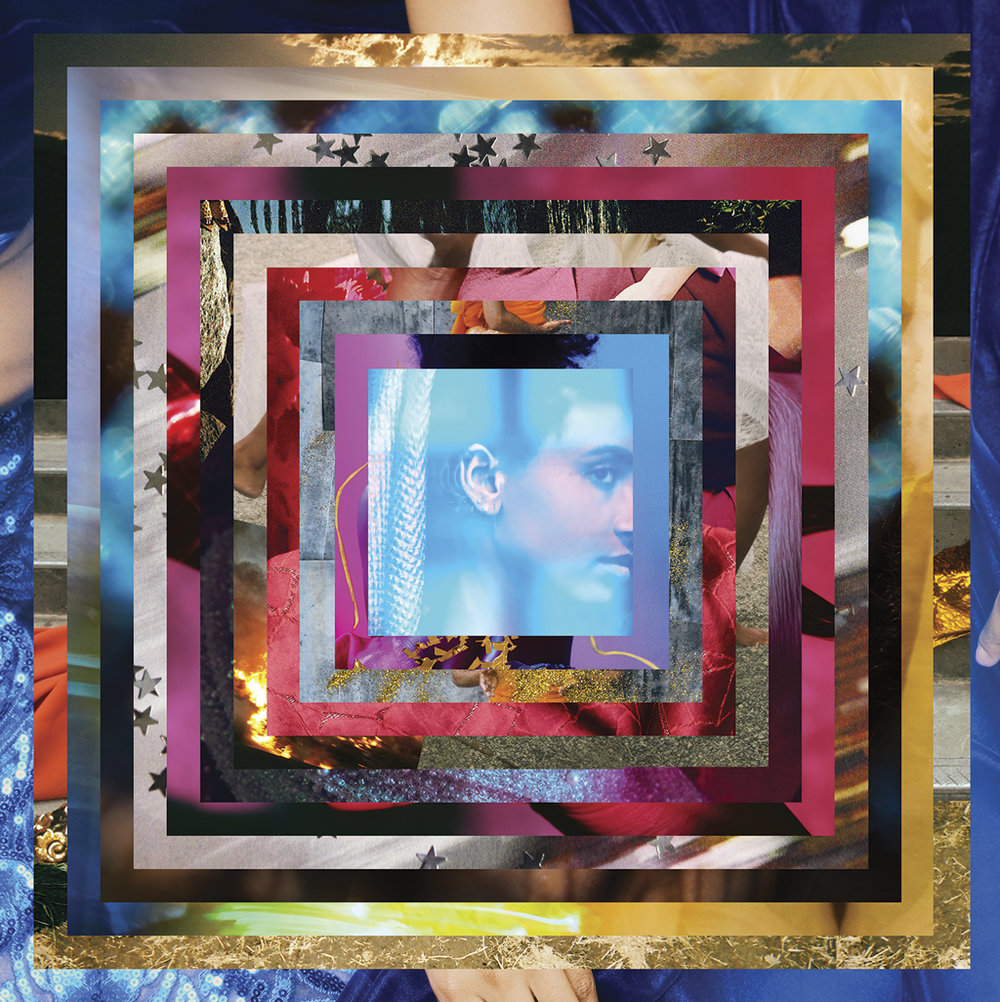
Esperanza Spalding's
12 Little Spells and Tyshawn Sorey's
Pillars.
I think that my reviews of each, linked in the prior sentence, give a
pretty good idea of why I think these records transcend not only jazz
but any kind of idiomatic thinking. (If pressed, I'd call the former
some kind of baroque art pop — honestly, I'm not sure there's a single
moment of improvisation on it, which, to me, is maybe a dealbreaker in
terms of it being labeled "jazz" — and the latter some kind of long-form
ambient trance improv?)
That said, this is just one
writer's opinion; I've seen these albums popping up on many jazz lists
thus far and expect to see both represented somewhere in the Davis poll,
to which I say, cool! However anyone wants to classify them, they're
worthy of celebration, and to sweat the details seems, again, petty and
absurd. I just feel compelled to mention them here by way of explaining
why these titles, both of which I loved, are nowhere to be found on the
"jazz" lists that I personally compiled.
There's a lot of music cited above, so I'm not going to get too deep
into an exhaustive honorable-mentions list this time around. But I will
say that I wish I had been able to spend more time with Jon Irabagon's
Dr. Quixotic's Traveling Exotics,
an outstanding, suite-like album of long-form compositions for
"postbop" quintet (maybe something like the 2018 version of Wayne
Shorter's
All-Seeing Eye?) that, like, pretty everything Jon
does, reveals new facets of his border-less, frequently revelatory art.
If the chips had fallen just a little differently, this could easily
have ended up among the titles named above. Listening back to it now,
I'm remembering how compelling and compulsively listenable this record
really is. Related: Do not miss this fascinating
interview with Jon on Jeremiah Cymerman's invaluable 5049 Podcast, in which he discusses this recording in some depth.
P.S. Speaking of the whole categorization question, I'm not sure I'd call Middle Blue's
Love Chords and Brandon Seabrook's
Convulsionaries "jazz records" either, but I really dug both!