Here's a list of my 20 favorite jazz albums of the 2010s. (Individual lists for each year can be found here.)
1. The Bad Plus, Never Stop (E1) [2010]
2. Branford Marsalis and Joey Calderazzo, Songs of Mirth and Melancholy (Marsalis Music) [2011]
3. Dan Weiss Trio, Timshel (Sunnyside) [2010]
4. New Zion Trio, Fight Against Babylon (Veal) [2011]
5. Billy Hart, All Our Reasons (ECM) [2012]
6. The Cookers, Warriors (Jazz Legacy Productions) [2010]
7. Chris Lightcap's Bigmouth, Deluxe (Clean Feed) [2010]
8. Jack DeJohnette / Matt Garrison/ Ravi Coltrane, In Movement (ECM) [2016]
9. The Bad Plus, Never Stop II (Legbreaker) [2018]
10. Angel Bat Dawid, The Oracle (International Anthem) [2019]
11. Dan Weiss, Starebaby (Pi) [2018]
12. Craig Taborn, Avenging Angel (ECM) [2011]
13. Jason Moran, Ten (Blue Note) [2010]
14. Mark Turner, Lathe of Heaven (ECM) [2014]
15. Joshua Redman and the Bad Plus, The Bad Plus Joshua Redman (Nonesuch) [2015]
16. Black Host, Life in the Sugar Candle Mines (Northern Spy) [2013]
17. Billy Mintz, Ugly Beautiful (Thirteenth Note) [2017]
18. Peter Brötzmann / Heather Leigh, Sparrow Nights (Trost) [2018]
19. Charles Lloyd & the Marvels + Lucinda Williams, Vanished Gardens (Blue Note) [2018]
20. Vijay Iyer Sextet, Far From Over (ECM) [2017]
Sunday, December 15, 2019

Thursday, December 12, 2019
Best of 2019: Jazz
Here, via Rolling Stone, is a rundown of some of the 2019 jazz releases I enjoyed most. I'm not remotely able to keep up with everything these days, so I'm grateful to The New York City Jazz Record; Downbeat; Jazz Times; The Wire; Phil Freeman's monthly Ugly Beauty column at Stereogum; Giovanni Russonello's regular coverage at The Times; the work of writers such as Seth Colter Walls, Piotr Orlov, Andy Beta, Marcus J. Moore, Matthew Kassel and Mark Richardson at Pitchfork and other outlets; some of the same writers and others at Bandcamp Daily; and The Free Jazz Collective; as well as the artists and publicists who send me music directly, for helping me keep up.
The 2019 top 10 I submitted to Francis Davis' annual critics' poll, the results of which should be online before too long, is as follows. Each of these titles is discussed at least briefly in the RS piece; there are also links there to my prior coverage of some of the artists/albums, and links to hear/buy the music via Bandcamp, where applicable. Two notes on the selections:
1) Categories ultimately mean very little to me, but yes, I do think the Messthetics album could reasonably be called a jazz record; I argue the case a bit in the aforementioned article.
2) The 10³²K album did in fact come out in 2018, but it emerged late in the year, and I was not really aware of it till this year. Regardless, I think it's fantastic, and I stand by its inclusion here. This process remains very much an inexact science!
New Releases
1. Angel Bat Dawid, The Oracle (International Anthem)
2. Branford Marsalis Quartet, The Secret Between the Shadow and the Soul (Okeh)
3. The Messthetics, Anthropocosmic Nest (Dischord)
4. Gard Nilssen Acoustic Unity, To Whom Who Buys a Record (Odin)
5. 10³²K, The Law of Vibration (self-released)
6. Joel Ross, KingMaker (Blue Note)
7. Chris Lightcap, SuperBigmouth (Pyroclastic)
8. Blacks' Myths, Blacks' Myths II (Atlantic Rhythms)
9. Steve Lehman Trio & Craig Taborn, The People I Love (Pi)
10. JD Allen, Barracoon (Savant)
Reisisues/Historical
1. Eric Dolphy, Musical Prophet: The Expanded 1963 New York Studio Sessions (Resonance)
2. Horace Tapscott With the Pan Afrikan Peoples Arkestra and the Great Voice of UGMAA, Why Don't You Listen? Live at LACMA 1998 (Dark Tree)
3. Masayuki Takayanagi New Directions Unit, April Is the Cruellest Month (Blank Forms Editions)
The 2019 top 10 I submitted to Francis Davis' annual critics' poll, the results of which should be online before too long, is as follows. Each of these titles is discussed at least briefly in the RS piece; there are also links there to my prior coverage of some of the artists/albums, and links to hear/buy the music via Bandcamp, where applicable. Two notes on the selections:
1) Categories ultimately mean very little to me, but yes, I do think the Messthetics album could reasonably be called a jazz record; I argue the case a bit in the aforementioned article.
2) The 10³²K album did in fact come out in 2018, but it emerged late in the year, and I was not really aware of it till this year. Regardless, I think it's fantastic, and I stand by its inclusion here. This process remains very much an inexact science!
New Releases
1. Angel Bat Dawid, The Oracle (International Anthem)
2. Branford Marsalis Quartet, The Secret Between the Shadow and the Soul (Okeh)
3. The Messthetics, Anthropocosmic Nest (Dischord)
4. Gard Nilssen Acoustic Unity, To Whom Who Buys a Record (Odin)
5. 10³²K, The Law of Vibration (self-released)
6. Joel Ross, KingMaker (Blue Note)
7. Chris Lightcap, SuperBigmouth (Pyroclastic)
8. Blacks' Myths, Blacks' Myths II (Atlantic Rhythms)
9. Steve Lehman Trio & Craig Taborn, The People I Love (Pi)
10. JD Allen, Barracoon (Savant)
Reisisues/Historical
1. Eric Dolphy, Musical Prophet: The Expanded 1963 New York Studio Sessions (Resonance)
2. Horace Tapscott With the Pan Afrikan Peoples Arkestra and the Great Voice of UGMAA, Why Don't You Listen? Live at LACMA 1998 (Dark Tree)
3. Masayuki Takayanagi New Directions Unit, April Is the Cruellest Month (Blank Forms Editions)
Wednesday, November 20, 2019
The Heavy Metal Bebop Podcast #10: Bill Ward
Hard to put into words how meaningful it was for me to sit down with one fourth of the original Black Sabbath. Bill's warmth and sincerity are disarming. He's just an absolute joy to speak with. I hope you enjoy this interview.
You can listen via Apple Podcasts, Spotify or the Podbean player below:
You can listen via Apple Podcasts, Spotify or the Podbean player below:
Thursday, October 31, 2019
Modern drummers
It would be hard to overstate how much of a thrill it was to speak at length with one of my musical heroes, Bill Bruford, or to be in the room while Dave Grohl and Ringo Starr — two icons I admire hugely — conversed for an hour-plus about drums and life. I hope you enjoy the results!
Saturday, October 26, 2019
The Heavy Metal Bebop Podcast #9: Pyrrhon
A really fun interview with a truly avant-garde band, and a great bunch of guys, to boot.
Please check out their music here.
Fun fact: Pyrrhon vocalist Doug Moore is also an excellent writer. Check out his take on the resurrection of craw here. He also wrote the bio for the recently released Skryptor album; scroll to the bottom here to read. And if you've ever been a death-metal fan, you need to read his classic 2013 treatise on Death Metal English.
Please check out their music here.
Fun fact: Pyrrhon vocalist Doug Moore is also an excellent writer. Check out his take on the resurrection of craw here. He also wrote the bio for the recently released Skryptor album; scroll to the bottom here to read. And if you've ever been a death-metal fan, you need to read his classic 2013 treatise on Death Metal English.
Tuesday, October 08, 2019
"Schizoid Man" at 50 // Goodbye, GB
*A deep dive into the history and legacy of King Crimson's avant-rock landmark "21st Century Schizoid Man," in two parts:
-Inside Prog's Big Bang
-50 Years in the Life of a Gamechanging Song
I'm proud of this one and hope that you will give it a read. It's saying something about the reach of this song that there easily could have been a part III.
*A quick round-up, merely scratching the surface, of tracks showing the range of the late, great Ginger Baker. His playing fascinates me more and more over time. I feel fortunate that I got to see him in person some years back. Don't miss tributes at RS by Jay Bulger, director of the definitive GB doc Beware of Mr. Baker, and Bill Frisell, a key '90s collaborator of Baker's.
-Inside Prog's Big Bang
-50 Years in the Life of a Gamechanging Song
I'm proud of this one and hope that you will give it a read. It's saying something about the reach of this song that there easily could have been a part III.
*A quick round-up, merely scratching the surface, of tracks showing the range of the late, great Ginger Baker. His playing fascinates me more and more over time. I feel fortunate that I got to see him in person some years back. Don't miss tributes at RS by Jay Bulger, director of the definitive GB doc Beware of Mr. Baker, and Bill Frisell, a key '90s collaborator of Baker's.
Saturday, September 21, 2019
Feast of the Epiphany's 'Practicing Loss': An invitation
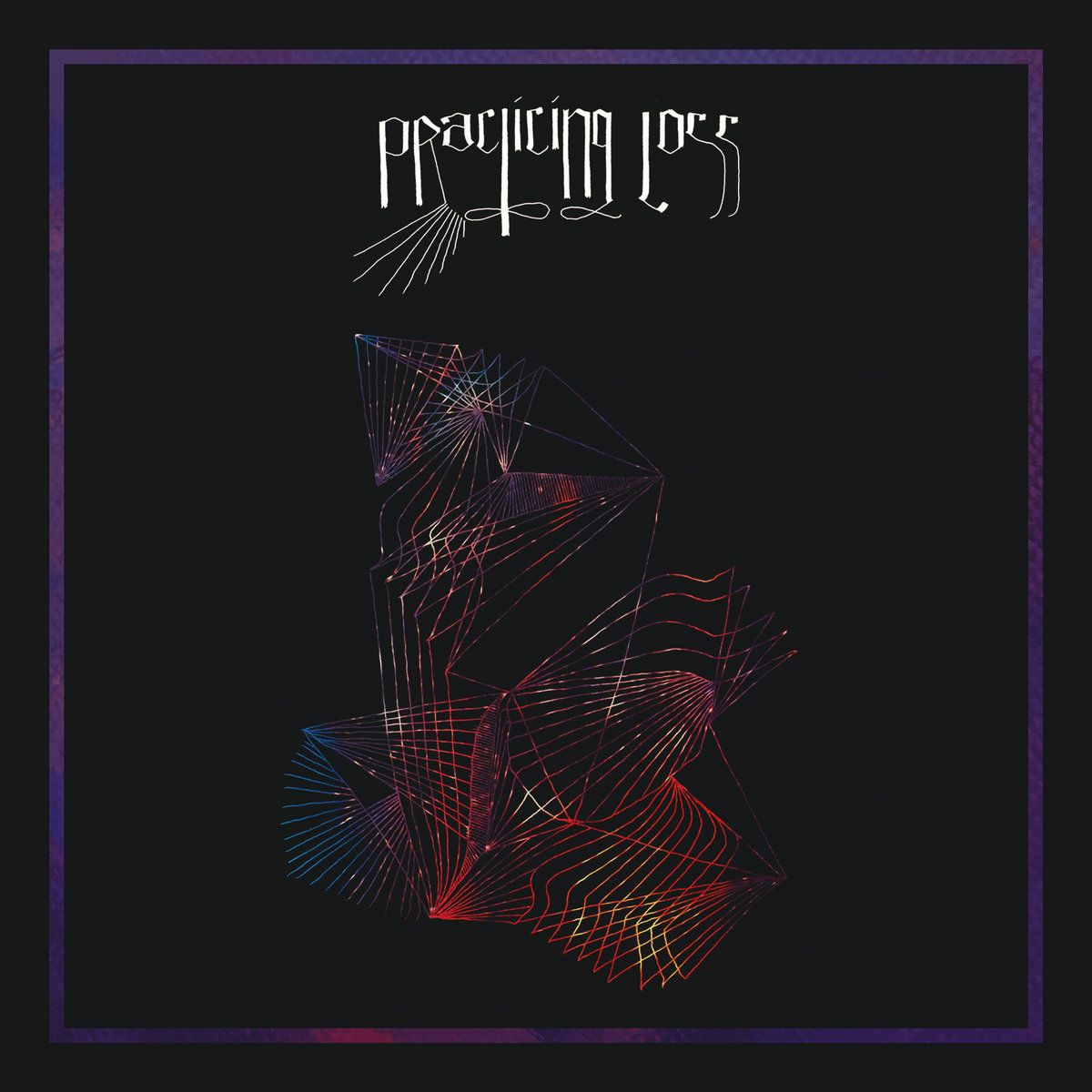
The below are some thoughts I put down last year regarding Practicing Loss, a then in-progress album by Feast of the Epiphany, one of the many musical outlets of my good friend and sometime collaborator Nick Podgurski. The album is out now, and I encourage you to explore and enjoy. (A vinyl edition is also available via Kincsem Records, a label founded by members of the excellent Couch Slut; for ordering info, write to KincsemRecs [at] gmail [dot] com.) See also this older piece, written after experiencing Practicing Loss live in 2015. -HS
/////
Blissful incomprehension: Listening to Feast of the Epiphany's 'Practicing Loss'
I don't pretend to know the meaning behind Practicing Loss, or to be able to comprehend its methods and materials. On the contrary, spending time with this music — as with much of the music my friend Nick Podgurski makes and has made under the names Feast of the Epiphany and New Firmament — is for me a process of coming to terms with its otherness. We have all these tactics of reckoning with art, and a lot of times, we grasp for the "next closest thing," drawing what it is we're hearing nearer to what we already know.
In the case of Practicing Loss, the more time I spend with it, the more I feel I would be doing it a disservice by likening it to anything else. I don't hear it as a difficult work. In fact, the less I try to bring it into some kind of familiar orbit, the more it draws me in. What at first seemed alien and impenetrable now feels serene, sturdy, utterly at ease with its own structure and presentation.
What I can say, in a very general way is that I hear roughly three extended "movements" in the work. The first is a kind of ambient ballad, in which an insistent, incandescent synth drone sort of beams itself through the center of the music, as gently unfurling "riffs," played by keyboard or guitar, move in their slow orbits. Soulful, patient vocals center the piece, orient you in its fundamental song-ness. I picture an intricate mobile, suspended from the ceiling, with four or five components each spinning on their own axes, at their own speed, the whole creation moving in exacting multifarious harmony.
The piece begins to build into a kind of refrain around the 15-minute mark ("Light and darkness both shall be burned"), leading to a brief pause and what is to me the climax and highlight of Practicing Loss. The patiently unfolding quality of the first section gives way to a brisk, dancing feel, what sounds to me like a song opening up and tumbling ahead with its own momentum. There is this gorgeous repeated refrain ("We are burned! We evaporate!) that drew me in like an efficient pop hook the first time I heard it, and still gets my fist pumping every time I put the record on. The combination of catchiness and vast, elusive complexity in this second section to me gets at the heart of the Feast of the Epiphany listening experience. I don't pretend to "understand" its order, and in fact, during any given listen, I often feel like more of its details are eluding me than not, but I feel absolutely sure of its own sturdiness within itself. I hear an inspired onrushing of ideas, a steady stream of marvelously choreographed events (for one, a totally unexpected and brilliantly situated guitar solo) that may take years to fully grasp.
The third section is to me the most "difficult," the most other — the least, for me, relatable to anything else I've heard. Again, the twisting, interlocking rhythmic feel of the first two sections, but sort of slowed and blurred, with an almost perverse play between disparate harmonic feels. Sometimes, the synth chords that underlie the piece feel curdled, almost queasy, then twisting into sudden beauty.
Practicing Loss ends with a sort of high-density coda, an echo of the more "uptempo" feel of the second part. The music glinting and rising into this sort of marchlike riff. The whole thing sounds like some sort of extended fanfare or annunciation, phrases dancing and intertwining in sublime tribute. And then a final refrain — "Lust for loss / Die trying, there is nothing else" — building in its final minute to a brief and thrilling vocal eruption, with Podgurski digging deep into his guts and testing the harsh limits of his remarkable range.
I write the above not as a roadmap but as an invitation. It's possible that the less you take in with you — preconception, will to classify or "understand" — the richer your experience with this work will be. I still couldn't tell you what Practicing Loss is on any fundamental level, but I feel confident in deeming it a marvelously rich soundwork that only seems to bloom further with each listen. You, the listener, are in good hands.
Hank Shteamer, May 2018
/////
Blissful incomprehension: Listening to Feast of the Epiphany's 'Practicing Loss'
I don't pretend to know the meaning behind Practicing Loss, or to be able to comprehend its methods and materials. On the contrary, spending time with this music — as with much of the music my friend Nick Podgurski makes and has made under the names Feast of the Epiphany and New Firmament — is for me a process of coming to terms with its otherness. We have all these tactics of reckoning with art, and a lot of times, we grasp for the "next closest thing," drawing what it is we're hearing nearer to what we already know.
In the case of Practicing Loss, the more time I spend with it, the more I feel I would be doing it a disservice by likening it to anything else. I don't hear it as a difficult work. In fact, the less I try to bring it into some kind of familiar orbit, the more it draws me in. What at first seemed alien and impenetrable now feels serene, sturdy, utterly at ease with its own structure and presentation.
What I can say, in a very general way is that I hear roughly three extended "movements" in the work. The first is a kind of ambient ballad, in which an insistent, incandescent synth drone sort of beams itself through the center of the music, as gently unfurling "riffs," played by keyboard or guitar, move in their slow orbits. Soulful, patient vocals center the piece, orient you in its fundamental song-ness. I picture an intricate mobile, suspended from the ceiling, with four or five components each spinning on their own axes, at their own speed, the whole creation moving in exacting multifarious harmony.
The piece begins to build into a kind of refrain around the 15-minute mark ("Light and darkness both shall be burned"), leading to a brief pause and what is to me the climax and highlight of Practicing Loss. The patiently unfolding quality of the first section gives way to a brisk, dancing feel, what sounds to me like a song opening up and tumbling ahead with its own momentum. There is this gorgeous repeated refrain ("We are burned! We evaporate!) that drew me in like an efficient pop hook the first time I heard it, and still gets my fist pumping every time I put the record on. The combination of catchiness and vast, elusive complexity in this second section to me gets at the heart of the Feast of the Epiphany listening experience. I don't pretend to "understand" its order, and in fact, during any given listen, I often feel like more of its details are eluding me than not, but I feel absolutely sure of its own sturdiness within itself. I hear an inspired onrushing of ideas, a steady stream of marvelously choreographed events (for one, a totally unexpected and brilliantly situated guitar solo) that may take years to fully grasp.
The third section is to me the most "difficult," the most other — the least, for me, relatable to anything else I've heard. Again, the twisting, interlocking rhythmic feel of the first two sections, but sort of slowed and blurred, with an almost perverse play between disparate harmonic feels. Sometimes, the synth chords that underlie the piece feel curdled, almost queasy, then twisting into sudden beauty.
Practicing Loss ends with a sort of high-density coda, an echo of the more "uptempo" feel of the second part. The music glinting and rising into this sort of marchlike riff. The whole thing sounds like some sort of extended fanfare or annunciation, phrases dancing and intertwining in sublime tribute. And then a final refrain — "Lust for loss / Die trying, there is nothing else" — building in its final minute to a brief and thrilling vocal eruption, with Podgurski digging deep into his guts and testing the harsh limits of his remarkable range.
I write the above not as a roadmap but as an invitation. It's possible that the less you take in with you — preconception, will to classify or "understand" — the richer your experience with this work will be. I still couldn't tell you what Practicing Loss is on any fundamental level, but I feel confident in deeming it a marvelously rich soundwork that only seems to bloom further with each listen. You, the listener, are in good hands.
Hank Shteamer, May 2018
Saturday, September 07, 2019
The Heavy Metal Bebop Podcast #8: Jan Hammer
Very proud to present two hours of conversation with the great Jan Hammer:
I found his genuine, unabashed excitement re: the music he's made over the years to be deeply charming, and I hope that comes across in this interview. Absolutely one of my favorite entries in the HMB series so far. No Miami Vice talk here, since that's covered in just about every other interview he's done; just pure jazz, rock and jazz-rock the whole way through!
You can also listen via Apple Podcasts. If you're enjoying these episodes, I'd be so grateful if you could leave a rating and/or review, and help spread the word via social media. More to come.
I found his genuine, unabashed excitement re: the music he's made over the years to be deeply charming, and I hope that comes across in this interview. Absolutely one of my favorite entries in the HMB series so far. No Miami Vice talk here, since that's covered in just about every other interview he's done; just pure jazz, rock and jazz-rock the whole way through!
You can also listen via Apple Podcasts. If you're enjoying these episodes, I'd be so grateful if you could leave a rating and/or review, and help spread the word via social media. More to come.
Saturday, August 10, 2019
The Heavy Metal Bebop Podcast #7: Wendy Eisenberg
Episode 7 features an in-depth conversation with guitarist-singer-songwriter Wendy Eisenberg:
I had a blast speaking with Wendy and I hope you enjoy this episode! Listen via the player above, the HMB Podbean page or Apple Podcasts. Learn more about Wendy here.
I had a blast speaking with Wendy and I hope you enjoy this episode! Listen via the player above, the HMB Podbean page or Apple Podcasts. Learn more about Wendy here.
Monday, July 15, 2019
The Heavy Metal Bebop Podcast #6: Ches Smith
The latest installment of the Heavy Metal Bebop Podcast is now live. Episode 6 features an in-depth conversation with drummer/composer Ches Smith:
We touch on his work with everyone from Mr. Bungle and Theory of Ruin to Tim Berne and Marc Ribot.
I hope you enjoy! If that is the case, I would be very grateful if you would consider subscribing to the show in Apple Podcasts, and/or leaving a rating or review. Any kind of social-media or word-of-mouth shout-outs are also of course hugely appreciated.
We touch on his work with everyone from Mr. Bungle and Theory of Ruin to Tim Berne and Marc Ribot.
I hope you enjoy! If that is the case, I would be very grateful if you would consider subscribing to the show in Apple Podcasts, and/or leaving a rating or review. Any kind of social-media or word-of-mouth shout-outs are also of course hugely appreciated.
Subscribe to:
Posts (Atom)