Here is my Rolling Stone review of the new Tzadik release Six Encomiums for Cecil Taylor, on which six pianists — Anthony Coleman, Sylvie Courvoisier, Kris Davis, Brian Marsella, Aruán Ortiz and Craig Taborn — pay tribute to the late maestro with respective solo pieces.
I enjoyed this one a lot, and it made me think about how Cecil's legacy will be preserved and/or carried forward in the future. Playing Changes, Nate Chinen's excellent new up-to-the-minute history of contemporary jazz, concludes with an overview of last year's Monk@100 festival, which, by the sound of it, reaffirmed the already well-established inexhaustibility of the Monk songbook. As I point out in the review, Cecil wrote an enormous amount of music, but precious little of it has ever been performed without him present. (In addition to the Steve Lacy and Vandermark 5 examples I linked to there, this is the only other instance I'm aware of, outside of his actual funeral, at which a band of his associates played the piece "Womb Waters Scent of the Burning Armadillo Shell.") A lot of this likely has to do with the sort of learned-by-ear method he seemed to favor within his own groups, which is described in many accounts of his working process. Still, though, there's a lot of Cecil music out there, and I'm curious to see if anyone, either his former collaborators or those who simply love his work enough to want to internalize and interpret it, will take up that challenge.
Will there ever be, in other words, an enshrined and constantly renewed culture of Ceciliana, the way there is with Monk, Ellington, Mingus, even, increasingly, a figure like Wayne Shorter? Can Cecil's music exist without him?
And beyond a project like Six Encomiums, where exactly will we see evidence of his influence on other pianists? Certainly plenty of musicians not featured on this album have cited him as a key influence: to name just three, Vijay Iyer, Marilyn Crispell and Jason Moran (who performed his own Cecil-inspired solo piece at a 2015 tribute to Taylor held while he was still alive at HarlemStage).
His actual presence and the specific sensation and content of his performances, especially the solo ones, seems almost impossible to recapture, though, again, I wonder if anyone will try.
The question is, really, how do you carry on the legacy of a figure who, especially by the later stages of his career, stood entirely apart from genre, who carved out a new niche in American (and global) culture that only he could fill, right down to his dress and his manner of speaking. Outright imitation is generally ill-advised anyway, but what about even some kind of respectful emulation? How would an admirer of Cecil Taylor express that in his or her own endeavor? And more broadly, what will a post-Cecil reality look or sound like? I'll certainly be staying tuned.
/////
Note: Ben Ratliff's Times piece on CT from 2012, which arrived in advance of a 2012 Taylor-centered mini-fest that included a tribute concert with Iyer, Taborn and others, probes into some of these same questions. Essential reading.
Showing posts with label Ben Ratliff. Show all posts
Showing posts with label Ben Ratliff. Show all posts
Friday, August 24, 2018

Thursday, June 28, 2018
Back on the Trane: 'The Lost Album' and more

Here is my Rolling Stone review of Both Directions at Once: The Lost Album, a newly released John Coltrane session from 1963 that's officially out Friday.
I'll admit, maybe in line with the Kamasi situation, that I felt a little hyperbole fatigue kicking in once the advance buzz started kicking in for this one. (I found this Destination Out tweet to be extremely apt.) The historical-recordings industry knows no modesty, especially when it comes to Great Men. And what we have here, as Nate Chinen points out in his deep, detailed analysis, probably isn't anything so deliberate as a carefully plotted album — or some instant classic tied up in a bow.
And yet, it is Coltrane in the studio in 1963 with the Classic Quartet. The more I listen to this, the more it seems unlike, in both subtle and not-so-subtle ways, what's already out there. The frequent piano-lessness is one signal feature; the overall looseness of the arrangements is another. You really can hear the band trying out very different ideas from take to take.
Best of, it just got me re-immersed in the Coltrane thing in general. I hadn't had a phase in a while. But I've derived so much enjoyment from simply throwing on Coltrane or Crescent or Live at Birdland, to name a few that date from around the time of The Lost Album. This one isn't going to replace any of those, but it does slot in very nicely beside them.
Also, I re-reread, for maybe the third time, Ben Ratliff's Coltrane book (first discussed in this space in 2007). It gets better every time. It's such a learned yet readable and engaging tour through a daunting body of work — and through the strange afterlife of an icon, which can sometimes seem entirely divorced from the work itself. And the more I read it, the more I pick on the deep curiosity that inspired it. These interrelated questions of: How did Trane accomplish so much in such a short period of time? And why? What exactly was he after? And why does he still loom so large?
In a way, the excitement that has greeted The Lost Album is only further proof of some of the ideas Ben explores in that book. No other jazz musician inspires that kind of fervor, and it isn't just some vague notion of icon-hood. The music really is that special. Once you're in it, it's a lifelong thing.
Saturday, August 06, 2016
Keeping it real: Thank you, Ben Ratliff

"It instructs without directly teaching you a thing. It’s tense and mysterious and completely exemplary. It runs through Sunday night. You ought to hear it."
Anyone who has followed jazz in New York during Ben Ratliff's tenure at the Times knows these sorts of exhortations. When a band was playing at the Vanguard and Ratliff went early in the week and wrote about it — positively, yes, but not just that; also probingly, intriguingly, alluringly and, very often, just plain oddly — it had a way, for me, at least, and I think for a lot of others who have had some sort of stake in this music in this city at this time, of turning that band's weeklong residency into a sort of instant cultural happening. Not just a "see and be seen" thing, though during certain residencies, you'd often go and see all the "jazz people" there. No, it was much deeper than that: upon publication of the right kind of Ratliff review, the ones where he not only loved the band in question but seemed to sort of vibe with it, when, as he discussed yesterday on a special edition of the NYT Podcast (timed to the announcement that he's leaving the paper after 20 great years) his critical-brain "window" or "third ear" was fully open and receptive, and those sensations it registered made it to the page intact, a kind of rare aesthetic eclipse occurred, wherein the interests and passions of an entire community of receptive listeners in a certain city during a certain week aligned with the truest and most sincere and most profound impulses of the musicians, and what resulted was a kind of sustained bliss.
If you were smart and had the time, you did as Ratliff said and you went to hear the band, and you shared in that sensation. He wasn't telling you what to think about the music; it was more that he was saying, "This is what happened to me" and simply recommending that you enter that space, in the company of those geniuses, with that kind of complete openness. He seemed to be cultivating in his audience a receptivity to musical wonder. And for those of us already inclined toward listening in that state, it was a marvel and a gift to have that kind of almost mystical faith in the power of listening, and in the power of a certain sort of oracular, iconic musician like Paul Motian (Taborn and Morgan were also favorites, as were Mark Turner, Bill McHenry, Masabumi Kikuchi — I must have read this beautiful piece something like 15 times — and other artists who embodied that sort of probing quality, the holy mystery at the core of certain strains of jazz), expressed in what all understand to be the Paper of Record.
He wasn't a cheerleader, but he was, I believe, rooting for jazz in general, and for NYC jazz in particular. At his best, Ben Ratliff wasn't writing reviews; he was writing benedictions. When he praised an up-and-coming artist (Kris Davis, for instance), it felt like New York as a whole, "the scene," as it were, was welcoming that musician into the pantheon.
And to have that sphere of influence begin to extend out to another area of music that I hold dear (metal and related styles; see this Greg Fox benediction, analogous to the Davis one above) was more than I or anyone else who happened to share that dual affinity could have asked for, to find yourself reading about Cynic or Liturgy or Salome or freakin' Eyehategod in the New York Times, for chrissakes. (I remember standing outside Europa with Ben and some others after this show, savoring what we'd just heard and beaming with disbelief.) Frankly, it was also a bit intimidating, to be a music writer who happened to specialize in jazz and metal working in NYC during the Ratliff Years. Writing is not, as I see it, a competition, but there was a certain standard being set, or rather a bar constantly being raised, during this period, and you wanted to show up and be present and do right by the art, and the artists, and the community. That was one way Ben Ratliff influenced me, by demonstrating that you can really "get there" with writing, not meaning that you could reach a lot of people and influence public opinion about a certain artist or record or performance, but that you could bottle up some kind of borderline religious experience you'd had while listening to music, which is really what we're always after, and share it and point others that way and record it as a kind of memento of the wonderful time you'd had and how it felt. (That last part is really all I've ever hoped to do with particular blog.)
But it wasn't about genre, as Ratliff's new book, Every Song Ever, posits. You were listening past style and into the realm of pure quality. That now-clichéd but ultimately perfectly true Duke Ellington thing about "two kinds of music: good and bad," he really understood that. So when he wrote about, say, Manuel Agujetas and penned a line like this, you sat bolt upright and you damn well listened: "If you have any interest in the void, Manuel Agujetas is your man." Ratliff basically wrote about that late flamenco singer as if he were a metal artist, and my God did I regret that I'd missed that show. But the piece inspired me to look deep into Agujetas's work and I feel profoundly grateful that Ben led me there.
And then when he wrote about musicians you already loved but wanted to know more about, well, forget about it. Reading The Jazz Ear (a book that began life as a series of Times pieces), which I have done in full three or four times and piecemeal many, many more, I am in a state of pure delight. I've held different opinions at different times, but at this moment, and not just because of the occasion, I feel absolutely at ease calling this my favorite music book. As Ethan Iverson suggests in his elegant Ratliff tribute, the Motian profile here is beyond definitive — it goes so deep and with such a light touch and even humor to boot. It is simply the resource on the man and his mystery. The Metheny piece, the Shorter piece, the Andrew Hill piece, the Bob Brookmeyer piece. There is just so goddamn much humanity and perception and wisdom and fun in that book. It is the perfect confluence of writer and subject, and it is relatively brief and readable and it is profound.
Ratliff in the Podcast linked above takes issue with the word "criticism," a term I also can't stand and avoid using whenever possible. For me I would define what I do when working in this field as simply writing passionately and (hopefully) intelligently about music I love, and, when I'm lucky, doing that in conjunction with actually conversing with the artists behind that music. It's not "criticism"; it's a state of gratitude and perception and bliss — it's the writer returning the favor, repaying the spiritual debt the music has brought about in him or her via conversation (see also these great interviews with Bill Callahan and Jim O'Rourke, the rock-world equivalents of the jazz eccentrics he so treasured) and written reflection — and that state, that exchange, is documented so purely in The Jazz Ear, precisely because we not only get to hear what Ratliff hears in the work of these musicians, but because the book itself is based on the idea of interviewing-as-shared-listening we get to hear the musicians listening and reacting in turn.
Existing with and responding to and questioning and, as Ratliff puts it, really getting inside music is joy. That's the lesson that his work taught time and again. It isn't about being right or having "good taste"; it isn't about judging things; it's about going there, for yourself first and foremost, and then trying to bring back a little bit of what you found and put it on the page so that others can get a flavor of it and, ideally, be enticed to go experience it for themselves.
Of course there's so much we have learned and can still earn from his style, his stubborn idiosyncrasy, pithiness and often just plain weirdness (I will always treasure the WTF quality of this line in a Zs review: "These pieces are all brain-benders; they’re conceptual art objects that set form and content against each other — like, say, a perfect birthday cake made out of sawdust, or a perfect hammer made out of bird feathers.") I know I will miss that "voice" as well as his actual voice on the Popcasts, which I love. But what I will miss most is just that sense that Ben Ratliff is out there, on the beat, keeping it real and teaching by example.
I will also say on a personal note that I appreciate enormously Ben's encouragement and positivity re: my own work, during the handful of times that our paths have crossed. He was kind enough, for example, to let me know that he enjoyed the liner notes I'd written for the Henry Threadgill box set on Mosaic, and to mention the craw project in the 2015 NYT box set round-up.
And so mainly I just want to say what a pleasure it's been to share, as it were, airspace, with this singular talent. Thanks, Ben Ratliff, for doing not just the week-in/week-out work that was asked of you at the NYT but for responding to a higher calling, your own need to "get inside" the music, for drowning out the deafening noise of the online opinion machine and using your forum at the most respected news outlet in the world to go somewhere disarmingly personal. Whatever you publish from here on out, I'll be reading, and I'll be learning from the back catalog for a long time to come.
/////
*Definitely read Nate Chinen — who gives us all the assurance that NYT jazz coverage will remain in the very best of hands — on Ben Ratliff on Twitter.
Thursday, July 09, 2015
The moment knows: Poo and Paul
Thomas Haley: You said you're much better now than you've ever been, and you're getting better…Masabumi Kikuchi: Because I'm free.
TH: What do you mean?
MK: Free. Freedom of choice. I can go anywhere, because I start believing in myself.
—"Out of Bounds: A portrait of Masabumi Kikuchi"
Ethan Iverson: Seems to me that you [and Paul Motian] share something about space.
MK: Yeah. Yeah…space to give opponent.
EI: Opponent! [Laughs]
MK: Yeah, opponent! Opponent? Is that how you say it?
EI: Yeah that's right. Collaborator and opponent.
—"Interview with Masabumi Kikuchi"
MK: “Just floating. Floating sound and harmony. No songs.”
—"Floating in Time, Hiding in Sight"
It is a great regret of mine that I never saw Masabumi "Poo" Kikuchi perform with Paul Motian, by all accounts his musical soulmate. I did see Poo play a short solo tribute to his departed friend and longtime collaborator, and I'll never forget it. There's a sizable body of Poo/Paul work on record, and I've only scratched the surface: Sunrise, plus a couple of the Tethered Moon and Trio 2000 discs.
Having heard the sad news of Poo's death, I put on the 2004 Tethered Moon album Experiencing Tosca last night.
"Prologue," a Poo solo feature, is unreasonably gorgeous. Light and warmth and an angelic touch. "Part I," by contrast, is craggy, even forbidding. As with the sessions documented in the excellent short documentary "Out of Bounds," linked above, there's a sense that in playing this album, the listener is stumbling into a private rite. That though the music may at times sound rapturous, it is fundamentally insular, a fulfillment of the players' personal missions, individual and collective. If the Motian/Frisell/Lovano trio embodies a giving, generous spirit—I'm generalizing, of course; like most Paul Motian endeavors, that trio embodies all things—Tethered Moon aims at something thornier, harder to grasp. The way the trio vacillates between beauty and its opposite, between something that might be called swing and total fracture, seems almost reckless. Not wanton or destructive, just stubborn in its freedom of choice. That's the spirit of the best Paul Motian music, and Poo was clearly dialed into it.
To some, Poo was simply that eccentric pianist who growled strangely as he played; to Motian, he was some kind of seer. They got each other, and that rapport practically sweats from the speakers when you listen to them play together. Poo and Paul: letting go; obeying instinct, both their own and that of each musical event. Songs or no songs. Floating or earthbound. Spacious or dense. Only the moment knows. Separately and together, they will be missed.
Friday, February 27, 2015
Spellcasting: Jim White drums with Xylouris White

The drums. You think you know the instrument, all of how it feels to play, to watch and listen, to experience. And then something comes along and reminds you that, well, no you don't. You know what you know, and what you don't know is vast, as well as inspiring. (In this regard, I highly recommend picking up Arcana VII, the latest volume of John Zorn–edited musician writings, and checking out the essays by Ches Smith, on his experiences learning Haitian Vodou drumming and incorporating it into his own aesthetic, and Tim Keiper, on his travels and musical experiences in Mali, Brazil and beyond.)
I've written before about the irreducibility of great drummers in performance, the way that if you're not in the room with them, picking up every sensation related to what they do—sound is just the beginning—you're not even coming close to experiencing their art.
Last night, I saw another drummer whose work I'd classify this way: Jim White, probably still best known as one third of the Australia's foremost violin-fronted instrumental-dirge-punk trio Dirty Three. He's also a sort of drummer to the indie singer-songwriter stars, most notably Will Oldham—before Thursday, the only time I'd seen White live in recent years was with Oldham, in 2009— and Cat Power, but also Nina Nastasia.
I remember being riveted by White's performance at that Oldham show and making a mental note that I needed to hear and see more of him. I'd listened to quite a bit of Dirty Three growing up, appreciated what White did in that group and seen them live once, but I never saw his percussive voice as something vital and elemental until these last couple show experiences, where White's weird, almost ritualistic vocabulary of gestures, his conjurer's approach to his art, really hit home for me. (Looking back, the fact that I hadn't yet delved into jazz when I caught that first Dirty Three show, probably around 1998, might explain why his playing didn't strike a chord with me at that time.)
Last night, White's current focal project, Xylouris White—a duo with the Cretan lute player George Xylouris—opened for Swans at Bowery Ballroom. (This New Yorker piece, into which Fugazi's Guy Picciotto figures prominently, serves as an excellent introduction to the band.) White was set up at center stage; this is clearly an equally matched pairing. What Xylouris does is gorgeous and absolutely essential to the project. Given that I know essentially nothing about the Cretan lute tradition, I humbly point you to the article linked above. Xylouris's contributions sounded at times Arabic, at times Jewish, at times even Indian. Hearing Xylouris blind, "Greek" would not have been my first thought. His lute playing suggested ragas as much as folk dances. There was a trance element, and an element of deep, stirring passion, as filtered through forceful virtuosity.
If there was a solemnity to Xylouris's playing—and given that he's coming out of a very strict tradition of lute performance, into which he was indoctrinated by his family, this makes perfect sense—White's presence embodied a certain kind of earthy flow, a sensuality with a hint of mirth. It seems impossible, or perhaps merely inadvisable, to attempt to describe his drumming without describing his appearance. A stocky man with a sort of mad-scientist Afro, White has a bearing of unflappable cool. His face bears a strange resemblance to that of longtime Altman actor Henry Gibson, but his dress (billowy shirt, unbuttoned about halfway), aura and presence suggest, to me, the Most Interesting Man in the World character you see in those beer ads. He looks, basically, as though he's seen just about everything there is to see, and that the years have engendered in him not jadedness but soul-deep contendedness and a sort of easy amusement with his surroundings.
White approaches the drum set as an object of fascination, as a site of mystery and delight. His movements are breathtakingly fluid. There is a dance that occurs, a pantomime, a flow, when he's behind the kit. He has strange tendencies—moving his arms in big, slow, exaggerated arcs, from over his head down to the drum, sometimes glancing up at his stick or mallet as it's poised over his head, as though marveling at the percussive act itself, the coil before the strike as much as the strike itself. There's a kind of inquiry and interrogation of the process, in the midst of that process. His torso dances. His shoulders shimmy. Sometimes he sort of clutches his left leg up and inward toward his body. He plays weird games with his unusually long sticks, not just tossing them in the air for a quick flip, but sometimes dropping one on the snare, letting it roll across the drum and picking it up with the other hand, and then doing the same with the other stick; back and forth, back and forth, as though in the midst of drumming, he were also juggling.
All this strange business brings about a kind of enchanted state, a feeling that's exactly analogous to what White does sonically and rhythmically. He has a way of sort of flowing around the kit, draping his sticks on the heads almost lovingly, that can disguise the power he commands. One minute he's consummately unobtrusive, offering up a quick subtle mallet roll across the toms or a tap on the tambourine he sometimes attaches to his hi-hat, and the next he's slamming out a fervent, rapid pulse on the kick drum, or playing some sort of bastardized backbeat with conventional sticks or those bundles known as Hot Rods. In these latter moments, his playing gives off the sense of limitless power deployed almost casually, like he could go full-on Bonham if he wanted to but prefers to keep the beat aerated, stumbling, fragmented, open-ended. There are miniature controlled detonations that, to me, at least, recall the more painterly realm of free jazz, but in general, I hear very little reference to any familiar tradition in White's playing. His pulse is insistent, yet blurred, hazy, always in service to the dance his body makes, rather than the other way around. His presence in the music is all about a personal experience of rhythm, a fluid exchange between a drummer's textural and timekeeping roles.
White surveys the audience as he plays, neither glaring nor smirking, but with a look that can touch on each of those. Last night, he flashed grins at Xylouris. There's much more of a sense of effort, of bearing down, in Xylouris's playing than in White's, and the drummer's glances at the lute player seem to say something like, "I'm right there with you, mate; I just don't have to try so hard."
Seeing White play, the overall effect was of having an experience you can't get anywhere else. In my mind, this aligns him with great jazz-oriented originals such as Ronald Shannon Jackson, Paul Motian and Milford Graves and with avant-rock masters ranging from Bill Bruford to contemporary giants such as Brian Chippendale, Zach Hill and Greg Saunier. As with those players, when Jim White is on a gig, you're hearing a concert of Jim White Music, as much as you're taking in whatever else in going on. That's not to say that he's a domineering force; sometimes, his sonic presence is downright self-effacing. Only to say that he is one of those elemental drummers. He walks onstage and there is a certain thing happening, between him, the kit and the air around it, that can't happen except in his presence.
Jim White's background is a bit hazy to me. I know the Dirty Three output fairly well, and I want to revisit it. I'm intrigued by Venom P. Stinger, the punk band he worked in with future D3 bandmate Mick Turner during the ’80s, which reunited and played New York in recent years. You can hear punk in his playing, and you can feel jazz in there too, in the overall looseness and his favoring of traditional grip. But there's a sense in which no genre you could invoke entirely accounts for his approach and aesthetic. He's created a whole world of behavior around his drumming. He walks onstage, sits down and begins not just a performance, but a relationship with the kit, the sticks, the room, and this attunement gives him unusual control over the flow and sensation of the music. When Jim White is drumming, I can't help but feel that he's casting a spell—slyly, without visible effort. It a spell that only breaks when he says so. I look forward to the next enchantment.
/////
*A brilliantly conceived Xylouris White video. (Check out White regarding the dog around the 1:00 mark.) The Xylouris White homepage and their 2014 debut album, Goats. A Ben Ratliff review of a 2014 Xylouris White gig.
*Here's a Ratliff review of a 2010 Venom P. Stinger reunion gig, as well as video of a 1988 VPS performance.
*A beautiful White/Nastasia duet.
*My friend and former Time Out New York colleague Jay Ruttenberg wrote a remarkable profile of White back in 2007. Like most Ruttenberg pieces, it's funny, sharp and, in my view, definitive. Please excuse the horrendous web formatting and enjoy the article. (Here's the Conan performance Will Oldham references.)
Monday, June 10, 2013
Recently, again

*Black Sabbath review at Pitchfork. It's been a bumpy ride, but the new Sabbath album is finally here. I'm thankful that I had the space to muse on it at length. I'll echo Stereogum's Michael Nelson, who graciously shouted out my piece in his write-up of the new "God Is Dead?" video, and point out that the discourse surrounding this record has been especially lively. I disagree with Ben Ratliff and Adrien Begrand's evaluations, but they both make solid, compelling points—Ratliff re:, e.g., the oft-overlooked "insane party" aspect of Sabbath 1.0; Begrand re:, e.g., the tough-to-beat sturdiness of Iommi and Butler's last go-round with Ronnie James Dio under the Heaven and Hell moniker.
For a true expert opinion, I highly recommend Steve Smith's NYT Popcast discussion with Ratliff. I doubt there are many commentators covering 13 who have a more detailed working knowledge of Sabbath's entire history than Steve; I'd like to offer a special note of thanks to Steve for abetting my own last-minute crash course re: Sabbath's shadowy non-Ozzy, non-Dio years. I'm still immersed in those seven LPs, trying to make sense of the weird, divergent sprawl. For starters, I'm beginning to feel like Born Again and Headless Cross are both real keepers.
P.S. Phil Freeman's review went live after I published the round-up above, but that's well worth a look too. Again, I'm not on board with every one of his points—e.g., while I do hear Brad Wilk deliberately playing it safe, I (thankfully) don't think there's oppressive ProTools looping/"gridding" going on here; you can hear the patterns/fills fluctuating throughout the songs, in ways that you wouldn't if all the drum tracks on 13 were subject to a ruthless, industry-standard cut-and-paste job—but this is a very sharp evaluation with a provocative conclusion.
*Milford Graves preview at Time Out New York. I've had Milford on the brain lately, largely due to call it art. The lineup for Wednesday's Lifetime Achievement showcase—opening night of Vision Festival 18—is insane; I can't wait.
*Black Flag preview at Time Out New York. As Ben Ratliff has eloquently noted, in another thinkpiece/Popcast combo, the current bifurcated reunion is insane. When I interviewed Greg Ginn last July, he was playing to near-empty rooms with his Royal We project, which I caught twice (once at Iridium, of all places) over the course of a week. The situation is somewhat different now. I look forward to seeing how it all goes down.
Saturday, April 07, 2012
On fire: Craig Taborn at the Vanguard

Growing up in Kansas City, I played a lot of video games. During one phase, my friend Drew and I became obsessed with a cartoonish basketball title called NBA Jam. A key feature of this game was the possibility of one of your players achieving "on fire" status, awarded after they had scored three consecutive baskets.
After a two-basket streak, the game's announcer would say, "He's heating up…," and then, if you were able to land that crucial third basket, he would yell out, "He's on fire!" At this point, pandemonium would ensue: Your player suddenly became superhuman, gaining the ability to sprint turbo-speed and to take off from half-court for monster anti-gravity dunks. There was a wild ecstasy to these moments, your player turning into some kind of supernova. All you had to do was press a few buttons and rack up the points.
It seems silly to say so, but I couldn't help thinking of "He's on fire!" last night as I watched Craig Taborn perform at the Village Vanguard. I cannot remember the last time I witnessed a performer so utterly ablaze on a stage: pulling off so many dazzling technical achievements while exercising such a purely musical imagination. The show demonstrated that virtuoso skill doesn't have to get in the way of ideas; the two can coexist in a feverish frenzy, the hands doing the bidding of the sparking neurons and the overflowing heart.
Last year, Craig Taborn released a very good solo piano album, Avenging Angel. Around the time that I interviewed Taborn for my Heavy Metal Be-Bop series, I listened to the record obsessively. I found it beautiful but, in the end, somehow impenetrable, one reason I left if off my all-genres-in-play year-end top 10 list for Time Out NY (it did rank on my jazz-only list); I had to come clean and admit that I respected it more than I loved it. On my CD shelf, it's a hushed museum piece, to be savored in rare moments of undivided attention rather than to be really lived with in a practical sense.
For me, the performance I witnessed last night, a trio set with bassist Thomas Morgan and drummer Gerald Cleaver, was like the fulfillment of every hope I'd had for Avenging Angel. The album enthralled me with its strange, austere logic (in Time Out NY, I wrote of one piece that it "[felt] like stepping out of a spaceship onto an ice planet—vast and iridescent, but with a lurking malevolence…") but in the end, I was yearning for some kind of warm blood pumping through the chilly atmospheres.
That passion, that human pulse flooded the room last night. If Avenging Angel feels like a classic shut-in record, the sound of a man burrowing deep inside himself, this trio set was all about communication. Taborn, well known for his self-effacing personality, was clearly loving being in front of an appreciative crowd (there were whoops and hollers during several climactic moments) and communing with his bandmates, both of whom achieved their own kind of "On fire!" status.
Taborn mentioned at the outset that he wasn't one to do much "mic work," and that we shouldn't take his lack of announcement as an indication that he wasn't thrilled by our presence. I'm paraphrasing here, but he went on to say something to the effect that, rather than taking breaks to speak and catch his breath, he preferred to dive into the deep end and remain submerged for the duration, the better to focus on (I believe this was the phrase he used) simply "creating music."
And thus it was so, especially during the first piece in the set. I have no idea how long it lasted; my guess is somewhere in the neighborhood of 35 minutes. (No titles were given, so I can't help you there.) The piece felt to me like an expanse, a onflowing river that the players waded into and then ever so gradually began to attune to, growing more and more powerful, joyous, daring, until they evolved into some kind of collective superhuman aqua-being, capable of harnessing the water's enormous energy and using it to his own creative ends.
Okay, that's an out-there metaphor, but I'm struggling to convey the sensation of this piece. It had a feel that I'd liken to midtempo electronica, a steady, almost breakbeat-ish drive, but without the clichéd sped-up James Brown groove; there was no sense of typical jazz swing, just a subtle, airy funk laid down by Morgan and Cleaver. Sometimes Taborn would hammer on the rhythm, constructing these ingenious hypnotic vamps that sometimes sounded to me like sped up Tim Berne themes. Other times, he would let the left hand handle the vamp and unleash the right in a fit of wild expressionism, smearing it across the keys or leaping between distant notes. If the moment grabbed him, he'd let both hands free and let fly with a downward-stabbing, knitting-needle-like frenzy.
You couldn't not think of Cecil Taylor watching these outbursts, but I'm hesitant to invoke the Maestro, simply because the effect was so different. With Taylor, there's often this sense of private ecstasy, a feeling that he'd be playing exactly the same way if he were at home alone; with Taborn on the other hand, I felt a real exuberance, a "Come along with me" feeling. Juxtaposing these daredevil flights with infectious rhythmic drive had a "Eureka!" affect: Taborn's playing had all the extroverted thrust of McCoy Tyner comping behind John Coltrane—but employed in the service of a much more contemporary-sounding groove—combined with the unbounded imagination of Taylor. For me, it was a whole new kind of chocolate and peanut butter: two great tastes I'd never thought I'd get the chance to taste together.
I can tell that my description is doing a disservice to the pervasive collectivity of this performance. In a sense, yes, Taborn was the leader and the star. But in another sense, he was more a servant to a vibe than its master. The piece (I'm still talking about this marathon opening selection, which moved through several transitions and likely included two or three distinct compositions) was the real focus and all three players were giving themselves over to it. Taborn was going off, as it were, but it rarely felt like he was soloing in the traditional sense. At all times, the three players were building something, participating in something collective. There were no clear cues to orient you in terms of foreground/background: "Now he's soloing; now he is," etc. Taborn eased back just as often as he surged forward, and you felt the music playing itself.
Cleaver was absolutely unflappable throughout this piece, keeping up an airy future-funk texture—I hesitate to even call it a groove; it was more of a sensation; you felt that you were moving forward, even though it was hard to tell at what speed or for what duration. What he and Morgan (who like Cleaver, gave himself over to this strange, enveloping onrush) were providing was a kind of endlessness. When I was describing above how the music felt like the players were wading into a river, what I was trying to get at was the idea that this imaginary river had already been flowing for eons before the musicians waded in; they were participating, communing with, thriving on the strength of some kind of preexisting current. In that sense, the music did feel a whole lot more like great electronica than like jazz. It was an unmarked superhighway, and however turbulent Taborn's embellishment got, you still felt like you were just cruising. That's a testament to Morgan and Cleaver's marvelous attunement to Taborn's strange, ambitious, very un-jazz-like concept. (The cohesion makes sense b/c this trio has been touring Europe regularly for several years; you can download two 2009 concerts here, though, respectfully, as good as these bootlegs are, they pale in comparison to what I heard last night.)
The piece finally did stop, but there was no break. Taborn played alone for a little while, entering into what sounded like traditional jazz-ballad territory, but extremely slow and tender. It was a startling juxtaposition. Again, back to my earlier point that yes, Taborn often reminds me of various piano giants, but he seems much more willing than, say, Taylor to employ relatively conventional devices. I don't mean to say that he's somehow reliant on clichés; I mean that he seems totally okay with dipping into traditional modes for moments at a time if it suits his overall purpose. When you hear Cecil Taylor, you're hearing Cecil Taylor; and that's it. There's a wall there. Taborn has a very different kind of humanity to his playing; he wants to blow your mind—and, maybe, his own—but he wants to welcome you through the door. I guess what I'm saying is that this particular solo ballad section was straightforwardly gorgeous, and juxtaposed with the magic-carpet ride of the previous long piece, it felt like a revelation. You're exploring the ice planet, this vast, alien landscape, and all of a sudden you come across an inviting little cabin, with smoke coming out of the chimney.
The band worked back up to another Berne-ish prog-groove peak in the final piece. Morgan took a poetic bass solo somewhere in there; Taborn and Cleaver both laid out for several minutes, and then Cleaver reentered not with a sound produced from the kit, but by rubbing his palms together. Somehow, you could hear it perfectly. There was a real sense of meditation in that club, of everyone knowing they were experiencing something rare and magical. When the band finished, stopping together on a dime, there was a glow in the room, not to mention wild applause.
In case it isn't clear from the above, I'm feeling evangelical about this performance. If you live in New York and you've ever had any interest in Taborn's music, you must see this trio play tonight or tomorrow (sets at 9 and 11pm; check the Vanguard site or Time Out NY for details). With respect to his existing body of work, this was, idiomatically, some whole other shit. I always know that a show is going really, really well when I shoot astonished glances at my wife and she mirrors them, rather than simply humoring me. We were both floored by this show, and I'd have a hard time imagining that any attentive, open-minded listener (no "jazz-fan" credential needed) wouldn't be. I cannot wait to hear where this trio goes in the coming years; right at this very moment, they are my favorite band on the planet.
P.S. Before the Taborn show, we caught Billy Hart's magnificent quartet, discussed in the previous post. I don't mean to short-shrift that set here; it's just that they're a known quantity to me, about whom I've already written at length, whereas I was encountering this Taborn band more or less fresh. I will say that Hart himself was on the warpath last night; I can't remember the last time I heard a drummer of any kind thwack a floor tom or bash a cymbal with such conviction. You can still catch the Hart band too; they're closing out their Birdland run tonight.
P.P.S. There's been some good Taborn-trio buzz building throughout the week. I've deliberately held off reading Ben Ratliff's review or checking out too much of the archived set (plus very cool A Blog Supreme interview) that's up at NPR b/c I knew I wanted to attend myself and approach the music without too many preconceptions. Now that I've seen the show and weighed in myself, I'm looking forward to catching up on the conversation.
Wednesday, November 23, 2011
The floating world: Goodbye, Paul Motian
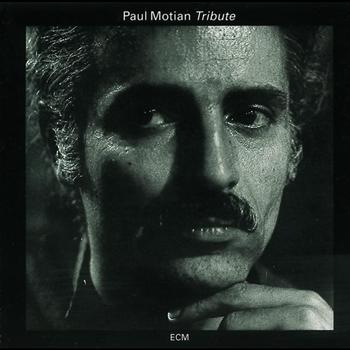
Paul Motian passed away yesterday at the age of 80. I wrote a brief remembrance for the TONY blog.
In looking back over my writings on Motian—and there were quite a few, especially from the last year or so, during which time I'd grown particularly obsessed with his work, and, fortunately, had the chance to see him live a few times—it occurred to me that verbalizing my feelings about his playing presented a particularly constructive challenge. More so than the work of many (probably most) musicians, what he did defied explanation. Even yesterday, when I heard the news and collected my thoughts, I was thinking, "How do I express what he meant, what he was up to all that time?"
He inspired me to look outside music, for one. Reflecting on the 2005 Frisell/Motian/Lovano record I Have the Room Above Her in 2009, I wrote:
"It's an aqueous record. You will probably not ever find a more convincing display of slippery, nonmetrical jazzmaking. This music floats and is *about* floating. I'm thrilled by the swirly weightlessness… It just hangs there, or drifts there, or flows there, or whatever air or water metaphor you want to apply. It's unmoored music."
Re-reading that, it's almost as though I'm saying you can't describe Motian's work in anything but elemental terms. His great achievement was to restore the wonder to jazz, the mystery. As I mentioned in the TONY write-up, there was a deep historical reverence to what he did—he would constantly repay his debts to Monk, Bird, etc. by performing their work—but there was nothing pat about his approach to repertory. He was always looking for the mystical element, the place where he could pierce convention and let weirdness whoosh in. There was no affect, though, no pretense of struggle; he just seemed to be searching for the most relaxed, human way to play the drums, a state of being where you could work in a given style (jazz) without letting it control you, without letting its calcified methods obscure the warmth and the magic at its core.
Listening to Paul Motian was, for me, remembering that jazz could really be—and not just in an aphoristic way—about constant surprise. Especially as a drummer, I relished the sense of bafflement his playing imparted. The logic behind what he was doing, the "Why?" of it was rarely clear to me (a phenomenon that other writers have eloquently described—see, for example, the end of this recent Ben Ratliff review). All I knew was that Motian never went on autopilot; he responded honestly, directly, instantaneously, at the risk of sounding obtuse, awkward, or, on the other end of things, at the risk of sounding utterly weightless. He was a ghost of a drummer, phantomizing the music. At his best, he seemed to bring everyone (players like Tony Malaby and Ben Monder, who played in a Motian band I caught in 2008) into this mindset, to slow down their metabolism, to resensitize and hypnotize them. Sitting there, inscrutable behind his ever-present sunglasses, he'd swing the watch in front of your eyes and you were entranced, even scared a little by the sensation of anti-gravity. He'd proceed up the route ahead of you, confiscating the road signs, and you were that much more attuned to each little signal.
Again, I've veered off into mystical territory, but Motian had/has that effect. As I reflected in October of 2010, I grew more or less addicted to the flavor of mystery that his music provided. So much so that I found myself unfairly criticizing jazz that didn't provide that, jazz that wasn't even trying to. Re: how another musician or band would even begin to deliberately imitate Motian's style, or the style of his groups, is beyond me. Players like the aforementioned Malaby and Monder—as well as Bill McHenry, who also played with Motian quite a bit—have clearly internalized something of his trance-jazz imperative, lessons about how even when playing, say, a standard, an improviser should never lose sight of the great beyond.
He may be gone, but I don't think his aesthetic values will slip away. He was gracious (and smart) enough to constantly collaborate with younger musicians—read this beautiful homage by Jerome Sabbagh—so there are many possible torchbearers, who have the good sense to honor what he was about without trying to reconstitute it.
Goodbye to a great dreamer of jazz, a conjurer of the sticks, cymbals, drumheads. Thank you for showing us the floating world.
/////
*Hear Motian's music all day (Wednesday, 11/23/11) on WKCR.
*My favorite Paul Motian record is The Story of Maryam, from 1984. It's on Spotify, so why not give it a shot? (Have you ever, in your life, heard anything like "Owl of Cranston"? Jesus…)
*The Motian chapter in Ben Ratliff's The Jazz Ear—readable in original Times incarnation here—is essential: reverent, but also funny. Ratliff clearly relishes the eccentricity of Motian's personality, as well as that of his musicianship. I love this observation dearly:
"I have heard him call a room full of people, at one time, 'man.' (As in 'Hey, thanks for coming, man!')"
*The Inconstant Sol archive contains two fantastic bootlegs of Motian's short-lived ’70s trio with Charles Brackeen and David Izenzon. I recommend this one.
*Ted Panken and Howard Mandel have each posted illuminating archival interviews with Motian.
Thursday, August 25, 2011
On "Do jazz critics need to know how to play jazz?"

Roanna Forman, over at bostonjazzblog.com, recently incited a provocative discussion by posing the simple question "Do jazz critics know how to play jazz?"
This is a fascinating inquiry, and one that gets at the heart of why this profession (I tend to avoid the word "critic" in favor of "thinker-about-music" or similar) is so strange. Basically you have this whole class of people who do not do a thing professionally and yet they are considered to be the utmost authority on that thing, sometimes even more so than the people who do do it for a living. In jazz criticism, the separation between the doers and the commentators—whether literal, i.e., social, or philosophical—is far less pronounced than it is in, say, professional sports, but there's still a divide there. Moreover, anyone in or around a certain art form, whether it's a player or an enthusiast, certainly has the right to ask of any writer who's paid to opine on said art form, "What gives you the right?"
So it's a matter of credentials, and it should be said outright that, in jazz criticism at least, there simply aren't any. I have friends who went to school for three years so that they could pass the bar exam and become lawyers. As far as my career writing about jazz goes (though, as I've stated here before, that's only a part of what I do as a thinker-about-music) I have no such formal training. If someone were to ask me what qualifies me to write about jazz, I would simply have to answer, "I love it."
As far as knowing how to play jazz, I can definitively say that I don't. I have played drums for about 17 years at this point, and I regularly rehearse, perform, record and compose music, mainly for a band called STATS that I'd broadly classify as "metal." I've taken a few lessons here and there, but for all intents and purposes, I'm self-taught as a musician. I have worked hard on my craft, though; there's roughness in my playing, but where it crops up, it's largely intentional.
In terms of my self-instruction, it's almost always been directed toward some sort of rock-based idiom. I have mainly performed rock (and related styles such as metal), so that's what I've studied. My influences as a drummer, those I can often feel myself channeling as I play, are musicians such as John Bonham, Levon Helm, Dale Crover, Neil Peart and Bill Ward. I'm not as good as any of these masters, but on some level, I understand what it is that they're doing; I could break it down for you, whether in technical or plainspoken language, and in some cases duplicate it on the drum set. If I'm a true authority on anything musical, it's the way drums work in a rock context.
As far as jazz drumming, I'm absolutely obsessed with it. Two of my favorite sounds in the world are those of Elvin Jones and Tony Williams interacting with a drum kit. I can definitely say that these musicians have influenced the way that I play—especially Elvin, who is in many ways the John Bonham of jazz, in terms of sheer mass and swing—but in no way could I duplicate what they do, except in some sort of sketchlike fashion. In short, I am not a jazz drummer. I have performed in free-improvisation contexts before, and I can convincingly fake my way through a bebop tune, but my palette is severely limited. When I speak jazz as a musician, I'm doing an impression—it is not my native tongue.
I've been discussing drums here, but the same goes for any of the other main instruments in jazz: Hand me a saxophone or a bass, or sit me at the piano, and I'm not going to be much help to anybody. I have experimented quite a bit with the piano over the years, and even performed on it—again in a free-improv setting—but I'm not a pianist. My knowledge of music theory is rudimentary. I can read rhythm notation, but I would need many hours of concentration in order to make sense of, say, a piano score.
I do write music, though—quite a bit of it. Basically what I do is sing guitar riffs in my head, record them on a dictaphone and then bring them to my bandmates to figure out. Often, these are more rhythmic figures than anything, but I do have melodic movement in mind. It's not a stretch to say that I am in some sense a songwriter; I just do it all mentally/orally rather than on paper. All of the composing that I do has been specific to the specific musical context of STATS (which was formerly known as Stay Fucked). It would not work in a vacuum, in the abstract sense of composition. It works because I have (and have had) friends/bandmates (Joe, Tony, Tom and many others) who are patient enough to sit there and help me realize the ideas that are swirling around in my head. For that I thank them.
Anyway, I've gotten completely off track here. All I really mean to say here is that I am not a jazz musician. If someone wants to take that statement and use it to disqualify my opinions on jazz, that's totally fine. I understand that for some, that might be a dealbreaker. On the other hand, I would have to say that I do feel qualified to comment on jazz. And again, I hesitate to use the word "criticize." When it comes to a given instrument, criticizing someone (whether in the positive or negative sense) ups the ante a bit. That is to say, it would be pretty ballsy of me to peg someone as a crappy saxophone player when I myself could barely summon a single note on a saxophone. Maybe I would have slightly more clout if I were dissing a drummer.
My main point, though, is that it has never been my interest to call anyone out. My entire reason, and perhaps justification, for writing at length about jazz, and researching the music exhaustively through oral history and dedicated listening, is that I am absolutely in love with it.
I view myself as authoritative only in what I am authoritative about. I'm not going to sit here and pretend to know ALL of jazz. I'll be the first person to admit that, just as with movies, I have a problem relating to some of the older jazz styles. I'm a huge fan of late-’30s Ellington, for example, but stretch back one decade, to Louis Armstrong's Hot Fives, and I have a hard time relating. I can understand what makes this music great, but I don't feel it in my bones.
Where jazz really starts to get interesting for me is the mid-’60s. My true canon of jazz centers around the Blue Note catalog of this era, records like Andrew Hill's Point of Departure, Wayne Shorter's The Soothsayer and Jackie McLean's One Step Beyond. (It's no coincidence that all these albums have Tony Williams on them!) My tastes beyond that are vast: I love both the classic Benny Goodman quartets with Lionel Hampton, Teddy Wilson and Gene Krupa, and I love Henry Threadgill's Air. I love Kind of Blue and I love Interstellar Space. I love Billy Cobham's Spectrum and Oliver Nelson's Blues and the Abstract Truth.
These are all just off the top of my head, but what I'm really trying to say is that the main thing that qualifies me to write about jazz is that I am devoted to educating myself about it constantly, not because I feel obligated to as a professional, but because I feel compelled to as a fan. Jazz is like food to me. Some weeks, I'm off on rock jags, poring over the Black Sabbath catalog, say, but many weeks, I'm glued the jazz discographies, trying to get a handle on a particular artist or period. I'm giving myself homework basically, homework that is purely pleasure-based. Sure, if I'm preparing for an interview or something, listening can occasionally become a chore, but on a day-to-day basis, it's rarely that. What it is, is pure joy.
I guess if I have a credential, it's that: That I do in fact derive a more or less daily joy out of the phenomenon of jazz. And this is a joy that transcends time, in the sense that I'm often obsessed with current jazz (Branford Marsalis and Joey Calderazzo's Songs of Mirth and Melancholy has brought me great pleasure this year) as well as older jazz that just happened to appear on my radar. This "just happened to appear" part is pretty mysterious to me. (I wrote a bit about it here.) I'm sure many hard-core music fans experience the same thing, but I just get into these extremely intense phases, listening-wise, where I need to hear one particular player, or period, or style, or all three at once, and I will absolutely not stand for one note of anything else to voluntarily enter my ears. As you can probably tell from the last two posts, I'm currently ensnared in a Mal Waldron obsession, set off by searching for Ed Blackwell on Spotify and stumbling across the marvelous Seagulls of Kristiansund.
So just to be clear, I do not know how to play jazz in any true practical sense. I cannot speak objectively as to whether or not that disqualifies me from commenting on it in print with authority. That will be up to my readers to decide. I have definitely struggled with this question myself, and I will admit that yes, sometimes I have felt that I simply lack the terminology or the framework with which to analyze or evaluate or even simply appreciate a given performance. But what I don't lack, though, is a kind of addiction to the music, a desire to embed the sounds of all my favorite players in my head. It's almost a synaesthetic thing. I can conjure Paul Motian, or Andrew Hill, or Tony Williams, or Joe Henderson, or Booker Little, or Jimmy Giuffre, or Fred Anderson in my head, the way I would a taste or a smell. I often think of players as "flavors" in some weird, abstract sense.
I am tirelessly devoted to knowing jazz in this way, just through constant contact with the art form, both through recordings and live shows. And in a way, I think that is the chief responsibility of the "critic": to love an art form so much that learning about it is like breathing. So much that if you weren't being paid to do it, you'd still do it just as fervently. With regard to jazz, this is me, and if I have any real qualification, it is that.
////
P.S. Many prominent critics, including Ben Ratliff and Ted Panken, weighed in on the original post. Right after completing the piece above, I noticed that Patrick Jarenwattananon had weighed in as well. Going to check out the latter as soon as I hit "Publish."
P.P.S. [Updated Monday, 8/29/11] Phil Freeman has contributed a sharp essay on this topic. See here.
Tuesday, July 19, 2011
15 favorite music books

Inspired by Ethan Iverson's list, in turn inspired by Pitchfork's list, here are 15 of my favorite books about music. Like EI's selection, this is simply the result of a quick bookshelf scan, but unlike that list, this one does include memoirs, biographies and the like.
As Serious as Your Life
Valerie Wilmer
I still remember the thrill of discovering this in Labyrinth Books in Morningside Heights. "Holy shit, there's a whole book about free jazz?!?"
Forces in Motion
Graham Lock
I've gushed about this one before. A tender and informative duet between author and subject (that being Anthony Braxton).
Chronicles, Volume One
Bob Dylan
A magical and terrifying tome. People say it's obscure, but it's totally clear. Tells us more than we ever thought we'd hear from the horse's mouth.
Shakey: Neil Young's Biography
Jimmy McDonough
Another one I've praised to the heavens. A constant spray of mindblowing information. The essential guide to one of our most essential artists.
Steve Lacy: Conversations
Jason Weiss ed.
A series of startlingly lucid interviews with one of the great jazz philosophers.
This Wheel's on Fire: Levon Helm and the Story of the Band
Levon Helm with Stephen Davis
The straight dope about one of my most beloved bands. You'll never watch The Last Waltz the same way again.
Miles Beyond: The Electric Explorations of Miles Davis 1967–1991
Paul Tingen
This book has a philosophical patina that can be off-putting, but push through and you'll find a painstakingly detailed, step-by-step study of this crucial period, all tied to the Miles disocgraphy. Great interview material.
Rockers, Jazzbos & Visionaries
Bill Milkowski
One of my favorite interview books. Zorn, Laswell, Fripp, Quine, the Marsalises, Tony Williams, Jimmy Smith and a ton of others.
Spiderland
Scott Tennent [33 1/3 series]
Does exactly what a history book should: Tell you a ton that you don't already know. Some prior thoughts here.
Miles Ornette Cecil
Howard Mandel
An oblique book, incorporating new and previously published material, but it has its own logic. A record of decades spent ruminating on (and interacting with) three masters. Prior thoughts here.
Mean Deviation: Four Decades of Progressive Heavy Metal
Jeff Wagner
A no-nonsense encyclopedia of a favorite subgenre. Prior thoughts here.
The Jazz Ear
Ben Ratliff
Probably my favorite jazz book. Sit-downs with the masters that double as definitive portraits. Prior thoughts here.
Precious Metal
Albert Mudrian ed.
Speaking of definitive portraits. 25 classic extreme-metal albums get the Behind the Music treatment. Some of these records you'll know; others you'll be thrilled to discover. Prior thoughts here.
Notes and Tones: Musician-to-Musician Interviews
Arthur Taylor
Intimate, hard-hitting conversations. Taylor, a master jazz drummer, interviewed his peers and they rose to the occasion. I'll never forget, e.g., Hampton Hawes's profane musings.
Thelonious Monk: The Life and Times of an American Original
Robin D.G. Kelley
Kelley lays it all out in a readable fashion. This is the kind of book that should exist for every major figure in politics, sports, the arts, whatever, i.e., the place you go first. Prior thoughts here.
P.S. I've only just started it, but the new Bob Mould book is really cool.
Saturday, June 04, 2011
Unpacking "25 NYC Jazz Icons"

Update: Saturday, 6/4/11—This post has been updated with Ted Panken's latest response, and my response to that response (and yet another response from Ted!). Scroll down to read the newer material.
I'm happy that people have been checking out the list of NYC jazz icons that my TONY colleague Steve Smith and I put together. Ted Panken took the time to organize his reactions into a thoughtful blog post, and I thank him for this effort. Since Ted takes issue with the overall tenor of the list, it seemed appropriate to respond. I attempted to post the following as a comment on his blog, but I think it may have been auto-rejected on account of its length. Whether or not it shows up there, I wanted to post it here for the record; I've slightly augmented my initial comment to clarify a few points and to specifically address this remark of Ted's: "In my view — and it’s only my view — a few too many of the choices privilege an aesthetic of recondite hipsterism."
/////
Greetings Ted,
I appreciate your thoughtful response. Leaning too "avant" or "progressive" was a concern of mine, but in the end—and I speak only in terms of my contribution to the project—I had to go with my gut, as well as with what I know. I make no claim to a 360-degree viewpoint. When it comes to jazz in our wonderful city, I keep up with as much as I can, but obviously I have my biases and blind spots.
In a way, I was hoping for exactly this sort of naming-names rebuttal. Some of the artists on your list (Binney, Lovano, Reid, Ribot, Eskelin, Morris, etc.) are very familiar to me and came up during Steve's and my discussion leading up to the final selection. Others (Harrell, Malone, Lynch) are less so, and I look forward to doing some research.
As far as the use of the word "icons," maybe there's some hyperbole there. I guess that, word choice aside, what I personally was aiming for was a kind of representative cross-section. And per my admission above, we may have failed in that. In our defense, though, I think we made strong cases for our inclusions, leaving aside those we may have excluded; maybe that's the best a list-maker can hope to accomplish.
To address one specific point, our inclusion of Marsalis wasn't begrudging at all—we simply ranked him where we felt he belonged. Another point re: the nitty-gritty of the rankings: To me, the most enjoyable aspect of making the list was the fact that Steve and I each independently arrived at Paul Motian as our No. 1 when this project was still in its nascent phase. In a way, that fact should tell any reader of the list where we're coming from. A list on which, say, Wynton placed first would be a list written from a very different perspective, and it's a perspective I totally welcome. (Seriously, if anyone wants to make that list, I'd love to see it!) But going back to that issue of bias—let's just call it taste—as anyone who's stopped by my blog could probably tell you, I make no bones about my deep love for the mystery men of jazz (Andrew Hill, RIP), of which Motian is probably our greatest living example, and certainly our greatest living-in-NYC example.
With regard to some of the younger players on the list, if cheerleading for the likes of Jon Irabagon, Matana Roberts and Fieldwork makes me a proponent or enabler re: an aesthetic of recondite hipsterism, then so be it. I can definitely respect the fact that the essence of great jazz can sometimes get obscured when there's too much focus on the "avant," conceptually rigorous or future-minded, but I nominated these three (and several others on the list) simply because I feel they represent the best kind of progressiveness—one that forges ahead without losing the thread.
Anyway, our chief goal was to incite discussion and—if not ire—at least enough controversy to fuel some impassioned responses. I greatly admire your work, and I'm sincerely honored that you took the time to write up a thoughtful rebuttal to what we put out there. The fact that there's disagreement signifies that we are surveying an extremely broad landscape re: "NYC jazz 2011." On that note, I echo Nate Chinen and Ben Ratliff in saying, more or less, bring on festival season! (I caught one of our TONY "icons," Lee Konitz, kicking off the June jazz rush in high style this very evening at the Blue Note, on the recommendation of Jim Macnie, a writer who I bet could make an essential-NYC-jazz-artists list to put us all to shame.)
Thanks again, Ted, and welcome to the blogosphere. Icons aside, these blindfold tests you've been posting (Konitz, Motian and there's more on the site) are blowing my mind.
-HS
/////
Ted Panken's response, posted on his blog:
Thanks, Hank. Had you said “representative critical cross-section” rather than “icon” (and I realize that this is an article for an civilian magazine) I would still have disagreed with but wouldn’t really have had a reason to express high dudgeon. To call someone an “icon” denotes influence, of being an artist with acolytes, who has influenced a stream of musical expression or found a sui generis path from deep R&D on the fundamentals.
Nomenclature aside, your “Time Out” list raises a broader point, the “sore spot” I mentioned towards the end of my post, which is the exclusion from the canons of all too many of my brother and sister journalist-critics of artists who work within groove- and swing-based contexts, who put some blues into their expression, and who endeavor to let their imagination and creativity operate within the idiomatic parameters of jazz and Afro-Caribbean traditions — not to recreate or xerox those traditions, but to deal with them in a present-day context on their own terms. The “mystery men” who fascinate you reached that point through long apprenticeships spent working through these vocabularies (or, as Henry Threadgill discussed with Ethan, the various tributaries of European music and other American and World vernaculars) and allowing their voices to emerge in an organic way.
/////
My response to that response:
Ted,
Thanks for posting the comment.
I understand what you're saying about the dangers of privileging the outré over the bread-and-butter. And I'm very familiar with the history of, e.g., Motian, and what led him to his more abstract late work. At the same time, I don't feel like anyone that Steve and I championed can be accused of ditching tradition in favor of novelty or lofty conceptualism. Take your description below:
"…artists who work within groove- and swing-based contexts, who put some blues into their expression, and who endeavor to let their imagination and creativity operate within the idiomatic parameters of jazz and Afro-Caribbean traditions — not to recreate or xerox those traditions, but to deal with them in a present-day context on their own terms."
When I read that, the very first artists I think of are players such as Jon Irabagon, who engages in a very direct way with Sonny Rollins in his "Foxy" project and has a record ("The Observer") out with Kenny Barron, one of the elders whom you cited as an omission on our list. Additionally, the Mostly Other People Do the Killing band, of which Irabagon is a member, is one of the most historically minded jazz ensembles in NYC, right down to their parodies of classic cover art and liner notes. Or I think of Matana Roberts, whose "Coin Coin" presentations seem to me like a very conscious engagement with the work of Mingus, Max Roach and John Carter (and maybe even Wynton Marsalis), artists whose work grapples with cultural history and sociopolitical reality. And Jason Moran's ties to Byard, Hill, Abrams and others—not to mention Monk and the stride tradition—are well-documented. To their credit, I think a lot of the younger players who have been captivating the critics are doing so precisely *because* they're demonstrating a very deep awareness of what came before and doing so in very novel, personal ways.
There's definitely such a thing as throwing the baby out with the bathwater when it comes to jazz "innovation," but I'd happily defend all the artists on our list (and again, I'll concede that "icon" may have been too strong a word—in the end, though, the choices and the text are the real content of Steve's and my piece) against such accusations. You'll find tons of groove, swing and blues in the work of the Irabagons, Robertses and Morans of the scene.
Thanks,
HS
/////
Ted Panken's response to the above is here. Apologies for such a convoluted post! Happy to field any questions on the whole exchange.
Saturday, January 08, 2011
I am not a jazz journalist

[UPDATE: This post has elicited a number of insightful responses, some of which you'll find in the comments below. Howard Mandel has shared his thoughts on his own blog.]
/////
I'm just returning from a Jazz Journalists Association town hall meeting—"What is the state of jazz journalism now and what are its future prospects?"—held to coincide with APAP and NEA goings-on about town, as well as with Winter Jazzfest, which I attended last night and which I'm enthusiastically headed back to in a few hours. For a number of reason, mainly my own over-politeness, I failed to get a word in at the gathering, and I left feeling frustrated by that fact. I had a few things to say, and so I'll say them here.
The question at hand in this meeting was, as I gathered it, "How do we survive as jazz journalists?" The laments being aired were familiar ones: Print outlets are drying up, and even as online outlets are proliferating, online outlets that pay well are scarce. In one sense, I felt a bit distant from this conversation due to the fact that I have a staff job writing about music at Time Out New York. For this, I am infinitely thankful—it affords me a highly visible platform, as well as a good deal of freedom to express myself elsewhere as I see fit.
But I also felt distant from this conversation in another, more important sense. When I interviewed Anthony Braxton a few years back, he said to me emphatically: "I am not a jazz musician, and please put that in your article." Though I have a great deal of respect for my colleagues in the JJA—such as Howard Mandel, David Adler, and Laurence Donohue-Greene and Andrey Henkin of All About Jazz—and I'm proud to be a card-carrying member, I feel like I need to make a similar stipulation in terms of my own work as a writer, and more broadly, as a lover of music: I am not a jazz journalist.
It's absolutely true that I love jazz and—as any reader of this blog, or for that matter my fiancée, will tell you—and spend an inordinate amount of time listening to it, analyzing it, hearing it live and just generally obsessing about it. BUT all this activity does not occur in a vacuum. As I took great pains to stress in this 2006 post, one of the very first things I ever wrote on this blog, I experience music in a countless ways: listening to the radio while driving, singing karaoke, dancing at the weddings of friends and families, writing and performing with my band STATS, listening to promo downloads at the office or to my iPod on the train. By the same token, my tastes are wide open. In other words, I love jazz, but I am in no way wedded to it as a listener or as a writer, and though I realize that my position is unique and privileged, I'd state with caution that anyone who is wedded to Jazz Journalism—i.e., rather than, say, Music Journalism (or even Cultural Criticism or even something way broader)—per se as a profession may have a difficult road ahead.
David Adler acknowledged this in the meeting by indicating that he was probably less familiar with mainstream pop than he ought to be. The mention of Justin Bieber elicited quite a few snide smiles. But the plain fact of the matter is, a fact that ought to be acknowledged by anyone who's being paid to think about music, there's a lot of REALLY GREAT STUFF going on in mainstream pop these days. I don't need to bore anyone with some paean to My Beautiful Dark Twisted Fantasy, but I think it needs to be stated that we writers-about-music who love jazz shouldn't make it our beeswax to learn about pop because it might make us more marketable, we should do so because if we don't, we're cutting ourselves off from some really wonderful and fascinating music.
This is a lesson I've learned gradually. I've been a music snob my whole life, prattling on and on about esoterica, and when it comes down to it, some of my favorite music ever made is music that very few people have ever heard of. But over time, I began to realize that obscurity was not in any way a sign of quality. I came at music backwards, learning about DIY rock and metal first and then catching up re: all the classics. It was only a few years ago that I finally realized what every drive-time commuter has understood for decades: that Led Zeppelin is considered one of the greatest bands of all time because they FUCKING RULE, not because they play to some bullshit lowest common denominator. I'm not saying that all pop is great, but I am saying that to willfully insulate yourself from popular music, or from ANY music is to cut off a crucial air supply, not just regarding your career but regarding your enrichment as a lover of art.
When I first got to Time Out New York, I came carting a portfolio of pieces on jazz artists, pieces on experimental artists, all kinds of super esoteric stuff. I held these up as a badge of honor: "Look at how exclusive and rarefied my knowledge is," etc. And I'm still very proud of those pieces, as well as all the pieces I've written for Time Out on little-known artists ranging from avant-jazz pianist Burton Greene to death-metal visionary Steeve Hurdle. But you know what? I'm just as proud of my pieces on Francis and the Lights, and Chris Brown and Nicki Minaj. Having the opportunity to sit down with the latter for an interview was one of the most enjoyable and stimulating things I did in all of 2010. Taking on that assignment wasn't some sort of concession or compromise: What it was, was straight-up enlightening.
And our best writers-about-music show us this on a weekly basis. Think of Ben Ratliff, who can inspire you take a second look at either the doom-metal band Salome or soul-jazz great Dr. Lonnie Smith; or Nate Chinen, who can do the same for Josh Groban, Marnie Stern or the Tristano-ite Ted Brown. Or my TONY colleague Steve Smith, who could school you on Nas, King Crimson, Henry Threadgill, Edgard Varèse or a million others as the situation demands. Or Phil Freeman, who can—and frequently does—start provocative discussions on anything from Borbetomagus to Iron Maiden to Miles.
And that latter name (Miles) is an important one. Now it's fashionable to turn up our noses at the out-of-it critics who dissed Miles's electric experiments. With the benefit of hindsight we can see that he had just outgrown the tidy genre tag of "jazz" and needed to grow, right? But by emphasizing our jazz-journalists-ness over our lover-of-music-ness, maybe we're just echoing those critics' narrow-minded approach. If we expect broad-mindedness, resolute outside-the-boxness from our greatest and most widely influential artists (our Miles-es and our Beefhearts and our Kanyes), we need to expect the same of ourselves as thinkers-about-music.
BUT let me say, that I'm not advocating for some nebulous nonspecialization, some completely level playing field wherein we insist of ourselves that we GIVE EVERYTHING A CHANCE, do or die. No, that would lead to a world of spread-way-too-thin dilettantes. What I'm saying is that we need to foster a non-monogamous approach to the idea of specialty. Every writer-about-music worth anything has certain areas of affinity, a handful (finite yes, but always expandable) of styles or areas that make their heart flutter with excitement. And by the same token, every one of those writers, has massive blind spots—stuff that they don't know a damn thing about. What I'm saying is, let's celebrate the multiplicity of the former, let them play off of and inform one another. (In my personal pantheon, jazz mingles with metal, with classic rock, with punk, with pop, with hip-hop and more.) And let's also say, in certain cases, "You know what? I really don't know anything about MUSICAL STYLE X, and at least for today, I'm okay with that." Let's follow our innate tastes and distastes, in other words, without walling ourselves off.
Again, I'm not saying, "Don't specialize." I'm just saying, "Let a little air in." Our best outlets for music coverage are the ones that allow you to glimpse the world beyond their particular area of focus. A Blog Supreme, which alludes frequently to the indie-rock sphere; Destination Out, which makes a constant effort to portray avant-garde jazz as vital and inviting rather than some pallid curio. And stretching further out, Burning Ambulance and Signal to Noise, which celebrate the esoteric spirit while still maintaining their authoratativeness, and Invisible Oranges, which cheerleads for the metal underground while at the same time calling B.S. on the scene's inherent hypocrisies.
All I'm really saying here is: Let's not pigeonhole ourselves right out of the gate. Let's bond over our shared love of this music without building a fence to keep non-jazz-obsessives out, and to blind us to the possibilities of the pop world and beyond. The best jazz I heard in 2010—records by the Bad Plus, Chris Lightcap, Dan Weiss and others—didn't need some sort of rubber-stamp Seal of Jazz Approval to convey its message. It just sounded beautiful, in a way that didn't need to be explained. As I noted in my Bad Plus post, my fiancée, Laal, often helps me to open my mind re: how I think about the jazz I take in: The operative question isn't "Was that a great jazz show?," it's "Was that a great show?" Full stop.
All of the real movers on today's jazz scene know this well. Adam Schatz, say, or Darcy James Argue, or Ethan Iverson, all of whom have demonstrated their engagement with the world outside the jazz bubble in a number of shrewd ways. Aside from all the great music I heard at last night's Winter Jazzfest, one of the coolest encounters I had was with the saxist Darius Jones, a scary-good musician and an extremely nice guy whom I've known for a few years now. I shook his hand, congratulating him on what a fine set he'd played with Mike Pride's From Bacteria to Boys, but all he wanted to do was grill me about what it was like to interview the great Nicki Minaj. So again, all this great music exists on one plate for the artists—let it also be so for those of us who cover it.
Subscribe to:
Posts (Atom)