Showing posts with label feast of the epiphany. Show all posts

Saturday, September 21, 2019

Feast of the Epiphany's 'Practicing Loss': An invitation

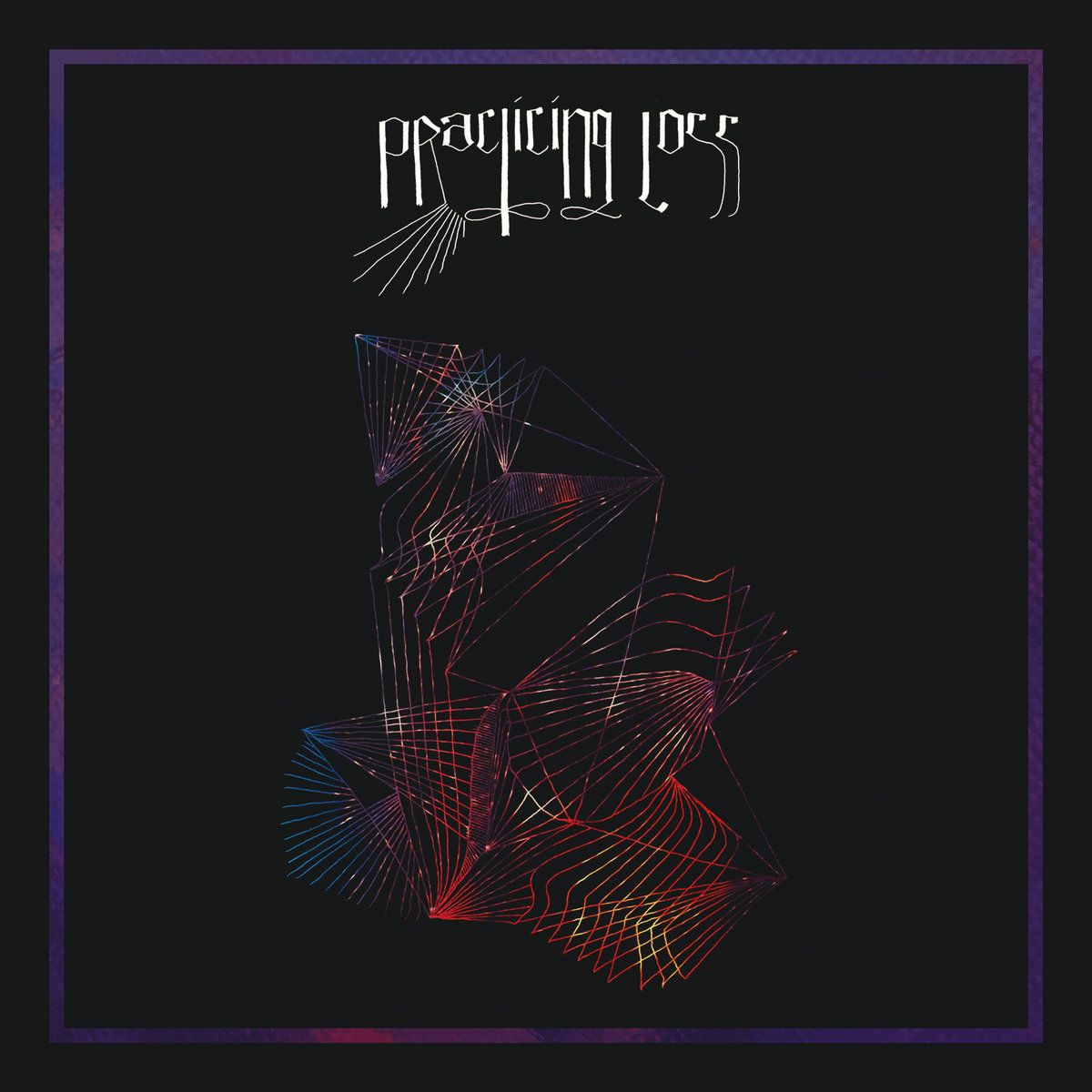
The below are some thoughts I put down last year regarding Practicing Loss, a then in-progress album by Feast of the Epiphany, one of the many musical outlets of my good friend and sometime collaborator Nick Podgurski. The album is out now, and I encourage you to explore and enjoy. (A vinyl edition is also available via Kincsem Records, a label founded by members of the excellent Couch Slut; for ordering info, write to KincsemRecs [at] gmail [dot] com.) See also this older piece, written after experiencing Practicing Loss live in 2015. -HS

https://f4.bcbits.com/img/a1315487628_10.jpg

/////

Blissful incomprehension: Listening to Feast of the Epiphany's 'Practicing Loss'

I don't pretend to know the meaning behind Practicing Loss, or to be able to comprehend its methods and materials. On the contrary, spending time with this music — as with much of the music my friend Nick Podgurski makes and has made under the names Feast of the Epiphany and New Firmament — is for me a process of coming to terms with its otherness. We have all these tactics of reckoning with art, and a lot of times, we grasp for the "next closest thing," drawing what it is we're hearing nearer to what we already know.

In the case of Practicing Loss, the more time I spend with it, the more I feel I would be doing it a disservice by likening it to anything else. I don't hear it as a difficult work. In fact, the less I try to bring it into some kind of familiar orbit, the more it draws me in. What at first seemed alien and impenetrable now feels serene, sturdy, utterly at ease with its own structure and presentation.

What I can say, in a very general way is that I hear roughly three extended "movements" in the work. The first is a kind of ambient ballad, in which an insistent, incandescent synth drone sort of beams itself through the center of the music, as gently unfurling "riffs," played by keyboard or guitar, move in their slow orbits. Soulful, patient vocals center the piece, orient you in its fundamental song-ness. I picture an intricate mobile, suspended from the ceiling, with four or five components each spinning on their own axes, at their own speed, the whole creation moving in exacting multifarious harmony.

The piece begins to build into a kind of refrain around the 15-minute mark ("Light and darkness both shall be burned"), leading to a brief pause and what is to me the climax and highlight of Practicing Loss. The patiently unfolding quality of the first section gives way to a brisk, dancing feel, what sounds to me like a song opening up and tumbling ahead with its own momentum. There is this gorgeous repeated refrain ("We are burned! We evaporate!) that drew me in like an efficient pop hook the first time I heard it, and still gets my fist pumping every time I put the record on. The combination of catchiness and vast, elusive complexity in this second section to me gets at the heart of the Feast of the Epiphany listening experience. I don't pretend to "understand" its order, and in fact, during any given listen, I often feel like more of its details are eluding me than not, but I feel absolutely sure of its own sturdiness within itself. I hear an inspired onrushing of ideas, a steady stream of marvelously choreographed events (for one, a totally unexpected and brilliantly situated guitar solo) that may take years to fully grasp.

The third section is to me the most "difficult," the most other — the least, for me, relatable to anything else I've heard. Again, the twisting, interlocking rhythmic feel of the first two sections, but sort of slowed and blurred, with an almost perverse play between disparate harmonic feels. Sometimes, the synth chords that underlie the piece feel curdled, almost queasy, then twisting into sudden beauty.

Practicing Loss ends with a sort of high-density coda, an echo of the more "uptempo" feel of the second part. The music glinting and rising into this sort of marchlike riff. The whole thing sounds like some sort of extended fanfare or annunciation, phrases dancing and intertwining in sublime tribute.  And then a final refrain — "Lust for loss / Die trying, there is nothing else" — building in its final minute to a brief and thrilling vocal eruption, with Podgurski digging deep into his guts and testing the harsh limits of his remarkable range.

I write the above not as a roadmap but as an invitation. It's possible that the less you take in with you — preconception, will to classify or "understand" — the richer your experience with this work will be. I still couldn't tell you what Practicing Loss is on any fundamental level, but I feel confident in deeming it a marvelously rich soundwork that only seems to bloom further with each listen. You, the listener, are in good hands.

Hank Shteamer, May 2018

Friday, June 12, 2015

Sublime architecture: Feast of the Epiphany and the New Firmament universe


Processing the master's passing in a private way at the moment, sharing memories with friends. There may be more to say, but right now, we just need to listen.

Saw a concert last night at IBeam that seems somehow more urgent, in the sense that a) you'll be reading less about it elsewhere and b) its sensations are newer to me, less implanted, processed, decided-upon. I know what I think of Ornette Coleman; what remains is simply the continuation of my lifelong joy and savoring of his work. I know what I think I think of Feast of the Epiphany—the ever-evolving ensemble led by singer, multi-instrumentalist and composer (and my longtime friend) Nick Podgurski—but it could take years, decades even, for this music to come into focus, for me and for the listening public. I feel comfortable saying, though, that it is something major, and that if you are interested in music of actual newness and progress, as those concepts are playing out in New York at this very moment, you need to reckon with it.

I, and I suspect most who know and love his work, first heard Nick as a drummer. A phenomenal one. For years, he played in a Baltimore band called Yukon, which has since broken up but has spawned three totally different and equally brilliant bodies of work: Nick's New Firmament universe, of which FOTE is only a small part; Sam Garrett's magical Voice Coils; and Denny Bowen's Roomrunner, the most outwardly conventional of the three but every bit as thrilling and reflective of its architect's unique sensibility. My band STATS serendipitously shared a bill with Yukon roughly a decade ago and thus began an ongoing friendship and mutual aesthetic appreciation with these great young artists. Here is Mortar, an outstanding Yukon recording from the pre-Garrett era; Nick, Sam and bassist Brad Smith made one final recording as a trio that, in my opinion, is one of the most astonishingly weird, smart and enjoyable rock-related albums of the past decade (the true continuation of the idea of "prog," without all the tired nostalgic ballast), but it seems to have disappeared from Bandcamp. Will have to talk to Nick about that…

This later era of Yukon gave rise to what could be labeled Nick's still-flowering auteur period. As a drummer who contributes to the composition, content and overall feel of his band, i.e., STATS, I'm nevertheless comfortable with the fact that at the end of the day, I am, as the saying goes, "The Drummer." Nick is not "The" anything. That is to say, he's everything. That's not to say he's a lone wolf who doesn't value collaboration; quite the contrary. What I mean to say is that he is building a complete musical system, without boundary. "ABOVE ALL ELSE I feel that the best form of information for ALL of these projects is one another," he wrote recently on New Firmament, a blog which bears the overarching name of his creative endeavors (a name that he also uses when performing instrumental ambient keyboard music). I know what he means, at least in one sense: As Nick's music evolves, it grows steadily less relatable to any other given style of music. Much as Anthony Braxton makes Anthony Braxton music, full stop, as John Fahey made John Fahey music, Nick Podgurski is making Nick Podgurski music. To deal with it, you have to deal with it, period.

Last night's performance, the first Feast of the Epiphany show in more than two years, and the debut of a new lineup of the band, was a good example of this. I'm sitting here feeling genuinely apprehensive, because I have no idea where to begin in describing this performance, or the project in general. I want to emphasize the impact the show had on me, which was considerable, but I feel ill-equipped to state with conviction even the basic facts of what this ensemble does. This isn't false modesty; as I wrote above, FOTE is a really difficult thing to relate to anything that is not itself, and I sense this is by design. Nevertheless, since I hope that you will go see a Nick Podgurski show yourself, I will try.

FOTE is at heart a song-based music. The songs are long-form, and cyclical but not overtly repetitive, if that makes sense. Nick plays keyboard—often heavily distorted, so that it renders as a sort of buzzing drone—and sings, in a voice that ranges from a low croon to a piercing, dramatic belt. There is a suppleness, eccentricity, conviction to the delivery that reminds me at various times of Eddie Vedder and Sam Herring from Future Islands, both singers I admire greatly, singers of power and control and a certain almost actorly stylization that's perfectly suited to the aesthetics of their given bands. Same goes for Nick. His vocals are key to the success of this project.

The current FOTE ensemble also includes guitarists Andrew Smiley (of Little Women; incidentally Travis Laplante, another member of that band, opened the evening with a stunning solo saxophone set) and Caley Monahon-Ward (ex–Extra Life, a band that Nick also played in), and bassist Keith Abrams (former drummer of Time of Orchids). These players weave their lines around the foundational pillars of Nick's keyboard parts, in a way that feels sometimes ornamental, sometimes elemental. The overall feeling I get from listening to FOTE is of a sort of pulsating, undulating mass—like a pop song exposed to great pressure and heat, so that it warps and elongates and melts down into pure, radiant musical matter. There's a great tension between the abstract nature of the surface sound and the clear organization that's going on beneath. You'll feel unmoored, and then all of the sudden the band snaps into a tight, balletic postprog riff and the music takes on a great forward drive.

The same applies the vocals. Sometimes they play a background role, almost inaudible. At other times they rise up to a terrifying peak. You don't tend to hear vocals this clear, commanding, pungent in so-called experimental music. Nick does not play the conventional role of frontman, but during these vocal peaks, he is a riveting presence, wielding an instrument of deep power. Nick made his first major statement as a singer in Yukon (this is a subpar recording, but it will have to do), and he's continuing to push with FOTE. Listen to his brilliant cover of the Chocolate Watchband's garage-pop classic "(I Ain't No) Miracle Worker" here for a sense of what his voice is capable of. During last night's show, there were peaks like those you hear in that performance, peaks that made you wince with awe. FOTE plays a deeply controlled music, making the moments when the band really unleashes (such as in the second and final of four long, apparently untitled songs they performed last night) leap out and grab your attention.

I sat and read the voluminous lyrics Nick passed out on a typically well-designed, beautifully illustrated poster/program (visuals are key to the New Firmament aesthetic), puzzling over potent lines such as:

We are burned
We evaporate
We are spun
From the slime that we are

And I felt like I was flying rapidly over a thriving alien civilization, catching glimpses of sublime architecture, weird landforms, houses, temples, skyscrapers, but not having adequate time to process what I was seeing. The FOTE experience is one of information overload. You can't keep up, at least I can't. But the care and the depth are easy to see. Nick Podgurski is up to something major, something that relates only to itself. Explore New Firmament, see a Feast show, see an ambient New Firmament gig, see one of Nick's improv performances on drums, spend time with one of his illuminating, genre-transcendent Playlists. To paraphrase Bob Dylan, there's something happening here—right now, in New York—and I don't know what it is. You can't label it or contain it, but you can witness it, apprehend its formidable, enlightened construction in fleeting moments. I strongly encourage you to do so.