Wednesday, February 20, 2013
DFSBP archives: Steve Lacy
I stumbled across the photo above while doing some cleaning the other day. It was taken on June 21, 2000, in the control room at the former location of WKCR, located in Riverside Church. On the left is me, age 21; on the right is Steve Lacy.
In retrospect, the regular DJ gig I held for a couple years during college was a dream. I had regular access to that incredible LP library (and to a listening audience that appreciated it); I got to learn firsthand from master broadcaster/scholar/educators such as Phil Schaap and Ben Young; and best of all, I got to interview various heroes on air, including Rashied Ali and Grachan Moncur III.
I was ecstatic to land the Lacy conversation. I remember seeing him play a few months before this: a concert with Mal Waldron at Lincoln Center's Duets on the Hudson series. I knew that the Lacy/Waldron duo would be coming to Iridium that same June, so I hung around after the show, introduced myself to Steve as a WKCR DJ, and asked if I could set up an interview in conjunction with the run. He said sure. I worked out the details with his manager, and on the appointed day, he walked up to the entrance of Riverside Church, dressed spiffily and looking a little overheated. His friendly smile put me at ease. I recall him asking for a beer, which we procured. We talked and played various Steve Lacy records on air for roughly 1.5 hours; you can listen to the program below. (You should be able to stream via the players or download by clicking on "Part 1" and "Part 2.") Some of the musical selections are included in the broadcast; you'll find a couple of the others in the Spotify playlist that follows. The opening track, which kicked off the broadcast, was "Four in One" from Reflections.
Steve, of course, sounds fantastically wise. I sound green, awkward, sometimes ill-informed. (I'm still kicking myself 12-odd years on for mispronouncing "communiqué," and for not realizing it was an English word!) If I could meet him again, I would thank him for his patience with me on that day. I apologize for the poor volume balance; you might need to adjust your levels during the portions when Steve is speaking. I chose a quieter transfer over one that would distort.
Steve Lacy - WKCR - I
Steve Lacy - WKCR - II
Click the links to download the show in MP3 form, or stream the two sections via the Streampad player at the bottom of the page—they're items 4 and 5 on the playlist. [Update, 5/15/14: Streampad doesn't seem to be acknowledging these tracks at the moment, so simply clicking the links above is probably your best bet for accessing the files.]
(Note: If you enjoy this interview, do let me know via the comments or e-mail. I have a bunch of others that I could transfer and post.)
Spotify:
Labels:
ben young,
Grachan Moncur,
interview,
mal waldron,
phil schaap,
Rashied Ali,
Steve Lacy,
WKCR
Tuesday, February 12, 2013
Rolling up their sleeves: Suffocation and the pleasures of death-metal conservatism
One of the chief constants throughout my listening life has been death metal. I first got into the style in roughly 1993, via Morbid Angel, whose masterpiece, Covenant, turns 20 in a few months. For a long time, I maintained a sort of mental hierarchy re: death metal as a whole, which went something like: "There's Morbid, and then there's everyone else." While I still adore that band, and worship their inspired, wildly erratic take on the subgenre, my perspective on death metal has changed a lot throughout the past two decades. These days, I seem to be more interested in consistency and longevity, a kind of dogged devotion to craft, than anything else. Bands that once seemed workmanlike now appear remarkable. Several times over the past few years, I've found myself off on one of my extreme listening jags, so immersed in, enamored of and acclimated to the work of a single death-metal band that I can barely stand to hear a note of anything else. In late 2011, it was all about first Obituary, then Immolation; last summer, it was Cannibal Corpse; currently, it's Suffocation.
I'm pretty sure I first heard this band on the 1993 Roadrunner comp At Death's Door II, a landmark purchase for me at the time, the album that introduced me to staples of my extreme-metal listening diet both then (Disincarnate, Fear Factory) and more recently (Cynic, Gorguts). I'm pretty sure, as well, that the Suffocation track in question ("Prelude to Repulsion," from their 1993 sophomore LP, Breeding the Spawn) didn't make much of an impression. It's only in recent years that I've developed an obsession with Suffocation. Blood Oath, from 2009, piqued my interest in a major way, but it's the brand-new Pinnacle of Bedlam that's really sent me over the top.
The MetalSucks review of this album is dead-on and highly recommended. I can definitely relate to the initial skepticism that Sammy O'Hagar cops to in that write-up. For those not up to speed, here's the gist: There's been a bit of drama/upheaval in the Suffocation camp over the past year or so. Drummer Mike Smith, a staple of the Long Island band's lineup since their 1990 demo (and a musician whom Heavy Metal Be-Bop readers might remember from the Damión Reid installment), left the band on bad terms last year. Then, the news dropped that vocalist Frank Mullen, a charter member and one of death metal's most charismatic frontmen, would no longer be a permanent part of the band's touring incarnation. (Suffocation played with a fill-in growler at last summer's Obscene Extreme fest.)
That Pinnacle of Bedlam is extraordinarily good—one of the finest LPs, and maybe even the finest LP, that Suffocation has released—tells you something about the way this band operates, and tangentially about the M.O. shared by the truly great veteran death metal acts, including the aforementioned Immolation, Cannibal Corpse and Obituary. With help from Spotify, I've been binging on the Suffocation discography over the past week or so—seven full-lengths (including Pinnacle) and two EPs—and what really stands out is the steadiness, the determination with which this band has progressed. As with, say, Immolation, you won't find any wild departures in the Suffocation discography; you'll find a band laying out a primitive yet competent blueprint on its early releases—compare these two bands' seminal releases, Dawn of Possession and Human Waste, respectively, which came out within a few months of one another in 1991—and slowly but surely honing that into something truly fearsome, absolutely airtight. There are no accidents in the Suffocation discography, just a gradual perfection of a craft, namely death metal marked by fiendishly complex yet ever-headbangable riffage, assaultively growl-barked vocals and the juxtaposition of jackhammer blastbeats and churning, mosh-commanding breakdowns. It's a style so iconic that if one is showing up late to the Suffocation party, as I did, it can be easy to mistake them for a generic death-metal band. In reality, they wrote much of the blueprint for a certain subcategory of the genre and have proceeded to cling to that blueprint like Super Glue. Pinnacle of Bedlam is, then, simply their latest, greatest dispatch. There's no real need to play-by-play it (though, for those that might be concerned, I will specify that Smith's replacement, Dave Culross, absolutely smokes here); it's an effing Suffocation record, and it's worthy of their legacy, which is saying a ton. Overall, it feels a bit speedier, more technical, more straight-up overwhelming than its predecessor, Blood Oath, for those keeping track. From a more general perspective, though, this is the key takeaway: If you enjoy Suffocation as much as I do, Pinnacle of Bedlam will make you ridiculously happy, as it has me.
I mentioned Morbid Angel above, and they're relevant to this discussion mainly as a counterexample. In 1989's Altars of Madness, they released one of death metal's indisputable early benchmarks. The next two records saw the band straining against the style's essential underground-ness, seeing how far they could push the, for lack of a better term, professionalism of the style, and in the process, arriving at what I consider to be the single greatest death-metal album of all time (not to mention my favorite metal album, full stop): 1993's Covenant. But as anyone who read their interviews around that time could tell you, Morbid Angel was never content to be just a death metal band. They spoke with arrogant indifference re: "the scene," and in a way, they had earned the right to. Band mastermind Trey Azagthoth was, and as far as I'm concerned, still is, one of the great oddball visionaries of contemporary rock-based artistry, a guy who has seemed to draw more inspiration over the years from video games and motivational speakers than he has from other music, let alone from a narrowly defined subgenre such as death metal. It's that kind of outside-the-box thinking that makes possible a masterpiece like Covenant—and its flawed but still excellent follow-up, 1995's Domination—but that also breeds a kind of precarious eclecticism. Longtime DFSBP readers might recall me tying myself in knots trying to defend Morbid Angel's widely reviled, industrial-leaning 2011 comeback LP. As with any gonzo departure of that nature, the true test of its value is whether or not the record's allure outlasts the controversy that it incites, and the truth of the matter is that, for me, the record in question (Illud Divinum Insanus) has not measured up in that regard. After my initial flurry of probably meta-contrarian interest—i.e., born more out of hating on the haters than out of my own genuine positive feeling toward what I was hearing—I haven't felt the desire to spin the thing a single time.
I've meandered way off course here, but I promise there's a Suffocation-related point mixed in with all this. And that point is this: There is no Covenant in the Suffocation discography—no genre-transcending ultra-masterpiece—but by the same token, there is also no Illud Divinum Insanus—no pointlessly baffling head-scratcher. As with the Immolation catalog, what you get listening to the Suffocation oeuvre front-to-back is a respectable but not-quite-there early phase followed by an unbroken string of staggering rippers. In other words, once these bands have found their respective zones, they've stayed right dead in the center of them, making small tweaks but not seeming to feel any great need to change up the formula, to attempt experiments or departures—hence what I said above re: workmanlike-ness, a certain humble craftsmanship that, in my listening experience anyway, seems to thrive as strongly in death metal as it does anywhere else in contemporary music. (To my ears, Suffocation really hit its stride, which persists to this day, on its third LP, 1995's Pierced from Within; my recall of the Immolation catalog isn't super-fresh at the moment, but I seem to remember that their own third LP, 1999's Failures for Gods, marked the beginning of their all-killer phase.)
Sure, there's deviation within the Suffocation catalog from 1995 until now. Some of that has to do with personnel. Much like Cannibal Corpse, Suffocation has shuffled members frequently over a 25-year existence. Among the current lineup, Mullen is the only consistent original member, with guitarist Terrance Hobbs coming in a close second; as far as I know, only these two have appeared on every Suffocation release. Guitarist Guy Marchais apparently cofounded the band, but he had departed by the time of the demo and wouldn't record with them until 2004's Souls to Deny (an LP that marked the band's return after a five-year hiatus); Smith, meanwhile, didn't play on Pierced from Within or the next Suffocation release, ’98's Despise the Sun EP. All this is inside baseball, though. For the non–nerdily obsessive, the point is that Suffocation has maintained a certain monolithic quality level for the better part of the past two decades. To these ears, the Cannibal Corpse discography has been spottier—I'd maintain that they peaked on 1994's The Bleeding and then again with 2006's Kill, and haven't looked back—but the principle is the same: In a sense these bands are tried-and-true brands as much as they are artistic entities. Personnel changes; production styles change (you can especially hear that in the Suffocation discography; spin Pierced from Within alongside Suffocation's absolutely massive-sounding self-titled 2006 record for a quick lesson in how drastically the recorded presentation of extreme metal has shifted over time). But the core aesthetic is unwavering. Fans of bands like Suffocation, Cannibal Corpse and Immolation don't need to worry about their heroes fancying a surprise, an experiment, a departure. Sure, you'll get the odd quasi-curveball: an instrumental track from Cannibal, the occasional clean-toned guitar passage / whispered-not-growled vocal from Immolation, a ballad-like intro from Suffocation (e.g., on the mindblowingly good "Sullen Days" from Pinnacle of Bedlam). But what you won't get is the album-length WTF moment.
On paper, this might seem tedious, but in practice, speaking from a fan's perspective, it's actually pretty damn delightful. You know these bands are going to slay, both on record and onstage. (I haven't caught Immolation yet—can't wait for this in June—though I can vouch for the live awesomeness of both Cannibal Corpse and Suffocation, the latter of whom I saw at Maryland Deathfest last year.) In that sense, they're critic-proof. An outsider might roll their eyes at yet another Cannibal Corpse, Immolation or Suffocation record, but as long as these bands are recording, there will never come a time when the die-hards will not rabidly swarm one of these releases, record-industry downfall be damned. It seems like a silly stat to point out, but I couldn't help but be impressed by the whopping 56 Amazon reviews, most of them raves, for Suffocation's Souls to Deny. What that number tells you is that there is a real audience for this stuff, that fans appreciate consistency, that so-called artistic evolution can sometimes be overrated. Sometimes, you just want a band that delivers. There's something touching about this sort of closed-circuit artist-audience relationship. I'm sure it exists in other subgenres too—perhaps in the jam-band scene, another sphere regarded by "the outside world" with indifference or outright scorn, but one that enjoys serious, unwavering fan support.
It's this relationship, upheld year-in, year-out—and in the case of veteran bands like Suffocation, decade-in, decade-out—that keeps me coming back to death metal, 20 years after I first discovered it. The kind of longevity these bands embody isn't an empty one; it isn't mere "hanging around." Sure, just like any other genre, death metal has its wild aberrances—those acts like, say, Gorguts or Death, who successfully attempt some insanely ambitious stylistic makeover, as well as your Morbid Angels, who clip the hurdle as they're attempting to leap over it—much as it has its sticks-in-the-mud. I won't name names, but I can think of a handful of death-metal bands who have been around just about as long as Suffocation and who don't interest me in the slightest. Yes, Suffocation may be reading from a recipe at this point, but the recipe yields something absolutely delicious—it's no longer novel, but nor, if you have a taste for it, does it ever really get old. Death metal may not embody the media-friendly sexiness of black metal—the latter's often tedious trappings of supposed real-life anguish, its absurd/enthralling pageantry, its deliberately taxing lo-fi-ness/experimentalism; as is probably clear, I've never really warmed up to that subgenre. But what death metal offers, at its best, is the rolling up of sleeves. Vein-popping virtuosity applied to pure baroque artistry. Hyper-ambitiousness within a formally conservative framework. Craft. Sweat. Head-down devotion. It makes me so happy.
/////
Here's a quick Suffocation sampler, touching on all five albums from the new Pinnacle of Bedlam back through 1995's Pierced from Within. If you like what you hear, I recommend giving each of these records a good, concerted listen. Effigy of the Forgotten and Breeding the Spawn—from ’91 and ’93, respectively—have their primitive charms as well. (Interestingly, the band has made a habit of re-recording tracks from the subpar-sounding Breeding throughout their later career, a practice that seems to tie into my impression of them as perfectionist craftsmen; Pinnacle concludes with one of these: "Beginning of Sorrow.")
/////
P.S. Here's a great new interview with Terrance Hobbs, via Phil Freeman at Burning Ambulance.
Friday, February 01, 2013
Recently
*A review of the new second installment of the Miles Davis Bootleg Series, via Pitchfork. The infinitely drawn-out MD archival endeavor—it's reached near-absurd proportions, but I never get tired of it. I'm always grateful for the excuse to view a particular micro-phase, in this case that of the Lost Quintet, under the microscope. I'd heard the Antibes sets here years ago, but how wonderful that they're now on the official record, and that Live in Europe 1969 paves the way for new music from Wayne Shorter, who plays at Carnegie Hall tonight—here's my TONY preview.
*The ninth Heavy Metal Be-Bop interview, with once and apparently future Black Flag guitarist Greg Ginn, via Invisible Oranges (abridged) and heavymetalbebop.com (full-on). I'd like to thank Greg for making the time and new IO editor Fred Pessaro for helping me get this monster transcribed. I hope to have HMB No. 10 live before too, too long.
*Speaking of jazz and metal, or proto-jazz/metal, I can't recommend Bill Bruford's autobiography—which I finally made time for over the holidays—highly enough. A good-humored, but also sobering treatise on how to live a self-indulgent artistic life and stay afloat, barely. Jammed with golden anecdotes and wry wisdom; an idiosyncratic, yet hyper-meticulous reflection on a career punctuated by landmark music-making.
*David Virelles and Continuum are at the Vanguard through this Sunday, 2/3. Anyone catch last night's late set, with the Threadgill guest appearance? Dying to know how that went.
*Lastly: Thank you to the awesome Buke and Gase for helping my band realize a longtime dream.
Thursday, January 24, 2013
Continuum, live
By this point, you've likely heard about—and, hopefully, heard—David Virelles's Continuum, which turned up on my 2012 best-jazz list, as well as in a bunch of other year-end round-ups. The band from the record—plus saxist Roman Filiu Friday–Sunday and another very special guest on Thursday—is playing the Vanguard starting next Tuesday, 1/29, and I can't wait. Here, via TONY, is my preview of the run.
Sunday, January 13, 2013
Radical convention: Winter Jazzfest 2013
Some quick thoughts about Winter Jazzfest 2013, which is wrapping up as I type this in the wee hours of Sunday, 1/13. This is by no means intended as any sort of comprehensive review of the fest—I'm sure we'll read many smart ones in the coming days—but merely as a distillation of my own (very enjoyable) experience of the event. Some from-the-field impressions can be found on my Twitter page.
I heard a lot of, for lack of a better term, high-tech music at WJF 2013: groups that used samples, groups that focused on proggish, daredevil precision, groups that nodded to funk, hip-hop and electronica, groups that foregrounded their now-ness, their distance from a conventional notion of what jazz is. I enjoyed several of these groups very much; I look forward to hearing more from, e.g., Marcus Strickland's Twi-Life (trombonist Frank Lacy was the MVP here) and Rafiq Bhatia's group.
But my favorite sets at the festival had nothing to do with any of that. They were unadorned, acoustic, lacking in any particular eye-catching hook. They were just about sensitive, in-the-moment interaction; they were about listening; they represented very different aesthetics, but they all, in one way or another, conformed to some relatively well-established, historically proven way of playing jazz.
1) The trio of pianist Kris Davis, bassist Eric Revis and drummer Andrew Cyrille (pictured above) at Zinc Bar on Friday. An extraordinarily sensitive set, that built from a hush to a subtle dance then back to a hush. It seems silly to say that the appeal here was the sound, but that's the only way I can think to put it. All three players were considering the sounds they were producing in relation to the sounds the others were producing. It's an obvious idea, but less commonly illustrated in practice than you'd think. Cyrille, master of timbre and touch dictated the pace (unhurried) and the focus level (extreme), but no one was really the star; or in another sense, everyone was. It was free jazz, but without any of the chest-thumping or catharsis. It was "out," but it was not self-consciously weird. It moved along as it pleased, but with real narrative intrigue. I would love to hear this band again soon. This is a moment for Andrew Cyrille: last year's Bill McHenry and David Virelles records, for example—the first of which Revis also appears on. I very much look forward to seeing Cyrille w/ Virelles at the Vanguard at the end of the month, and hopefully w/ Ethan Iverson, Tim Berne and Sam Newsome at Smalls the week before. (He's also playing a free big-band show at Lincoln Center next Thursday!)
2) The quartet of reedist Andrew D'Angelo, trumpeter Kirk Knuffke, bassist Ben Street and drummer Nasheet Waits, known collectively as Merger, at Culture Project on Saturday. On Twitter, I pegged what this band was playing as freebop. I'm not sure if that's the correct term, but I'm referring to a sort of inside/outside thing, part vanguard mid-’60s Blue Note, part late ’50s / early ’60s Ornette, part ’90s downtown. Jazzy, but also abstract, noise-embracing. Each player has an extremely distinctive voice on their respective instrument, and all those voices came through b/c each player made it his business to complement his bandmates' voices. Again, a "duh" idea, but to see it really happening, live, is special. Super-quiet moments, like a minutely detailed unaccompanied Knuffke solo, and aggressive ones, where D'Angelo was frothing in post-Zorn fashion. The rhythm section knew what to do with all of it, and that didn't necessarily mean rise up and meet the frontline; it just meant, "Find what's complementary, even if it's counterintuitive." Nasheet Waits is a poet of his instrument. He gets me closer to the bliss I get from primo Tony Williams than just about any other living drummer. The tempos are fluid, but the looseness does not signify slackness. There's such authority, whether the beat is explicit or left in the rearview. Nice thematic material in this set too. Merger needs to make a record, probably a live one.
3) The quartet of reedist Don Byron, pianist Aruán Ortiz, bassist Cameron Brown and drummer Rudy Royston at Le Poisson Rouge on Friday. I don't know Don Byron's work very well, but I do know that he has a penchant for the conceptual hook, the project devoted to a specific historical repertoire or genre, the kind of thing artists such as Dave Douglas and Ken Vandermark have often engaged in. Nothing against that approach, but this set was so, so not that. I didn't get to see the full performance, but what I did see was capital-J Jazz. Long solos, band swinging incredibly hard, each musician playing with serious flair and flash. No sense of "We need to get past this fossilized format." No. Merely a sense that what we need to do is play our asses off in a well-established mode, a mode that's well-established because it works. This was probably the most conventional set I saw all weekend, and interestingly, because of the context described at the top of this post, it also felt like one of the most radical. (Honorable mention in a similar vein: James Carter's Organ Trio at LPR on Saturday.)
P.S. Almost exactly 10 years ago, I interviewed Andrew Cyrille and wrote this profile.
Wednesday, January 09, 2013
Winter Jazzfest // Barry Altschul
Via Time Out New York, here's a preview of five promising sets at this coming weekend's Winter Jazzfest.
/////
Also, a very happy 70th b-day to Mr. Barry Altschul. (Dig Harris Eisenstadt's Q&A with the man over at Destination: Out.) I can't wait to check out the new 3dom Factor CD; that band sounded great at Roulette last night, as did Altschul's reunited BRAHMA trio.
It's been a real trip and a pleasure getting to know Altschul's playing in the present tense over the past few years. When I first started checking him out on record, around 2000, he didn't seem to be performing much, so my aural picture of his playing was that skittery, high-pitched style you hear on Dave Holland's Conference of the Birds. When I heard him a couple years back with Jon Irabagon—I think it was the Foxy release party at Cornelia Street Café—I couldn't believe how fat and forceful he sounded. The same was true of last night's performance. He really smacks the kit, revels in the booming, woody tones of the drums and the bash of the cymbals. And the Beaver Harris–inspired "ragtime to no time" principle that Eisenstadt discusses was in full effect at Roulette; you'll see few other drummers who not only execute this full spectrum convincingly but appear to be having a total blast no matter what mode they're playing in. Altschul is a radiant performer; see him if you have the chance.
Tuesday, December 25, 2012
Best of 2012: Open season
Top 10 albums of 2012 (all genres in play):
Time Out New York (annotated, with Spotify playlist)
Pitchfork (unannotated, with top 10 singles list)
Top 10 jazz albums of 2012 (with many honorable mentions):
Jazz Journalists Association, plus annotated breakdown, part I (plus intro), II and III
/////
I participated in a few different year-end polls this season, each with its own parameters. I tried to keep my picks consistent across the various platforms, but inevitably, a bit of imprecision crept in. Below you'll find a list of my top 50 records of the year, as submitted to the Pitchfork contributors' poll. (My final list may have differed very slightly in terms of order, but I'm 99 percent sure that these 50 records are the ones I ended up voting for; it's hard to say because I entered my picks via an online voting portal that's since disappeared.) The first 10 constitute the same top 10 I submitted to Time Out New York and the Village Voice's Pazz and Jop poll, and the 15 jazz records found here constitute the top 15 jazz records I listed over at the JJA site, with the top 10 of those making up my Jazz Critics Poll ballot.
Below, I link to my prior coverage where applicable, discuss any strays and provide listening samples for albums 20–50 (via a playlist apiece for each grouping of 10, including a track from every selection that's available on Spotify). Hat-tip to Seth Colter-Walls—who's got a great all-genres list over at the Awl—for the formatting suggestion.
Thanks for reading. As always, comments/feedback welcome, especially re: records I might have missed!
/////
1. Christian Mistress Possession
2. Japandroids Celebration Rock
3. Converge All We Love We Leave Behind
4. Pallbearer Sorrow and Extinction
5. Propagandhi Failed States
6. fun. Some Nights
7. Loincloth Iron Balls of Steel
8. Frank Ocean Channel Orange
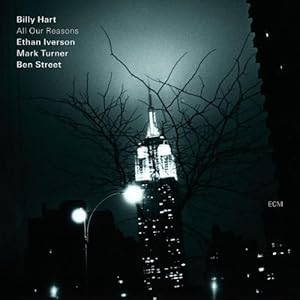
9. Billy Hart All Our Reasons
10. Corin Tucker Band Kill My Blues
A rock- and male-heavy top 10, yes. I've been a little bothered by that in recent days, thinking I should've mixed it up a bit more, but (A) I sort of believe that top 10 lists make themselves, i.e., these are the albums that chose me over the past year, not the other way around (to put it another way, these are records I played and played and played, in both professional and personal contexts), (B) this list is much less monochrome than it looks on the surface and (C) I've done my best to shout-out at least a sampling of all the other great albums I heard in 2012 below and via the jazz-only list linked above. The narrowing part was tough; there are albums in the 30s and 40s below that were in serious contention for the top 10.
To comment a briefly on the unlinked above:
Possession is a magical album. As I suggested in my TONY list, this record both epitomizes and transcends the recent retro-metal trend. Yes, its basic palette is an old one, but its emotional content is so not mere pastiche; in the mold of the best of Dio-fronted Sabbath (Mob Rules, The Devil You Know), it's at once tough and badass, and also crushingly sad, qualities embodied in Christine Davis's scratchy-throated vocal turn—somehow both majestic and humble. And the riffs and structures go way beyond post-Sabbath-ism—so effortlessly, stylishly progressive, full of twists and sudden set changes. Spend time with this album, enough time to listen past its surface retro-ness and on to its timeless rewards. Metal is not something donned, assumed for Christian Mistress; this is real communion with the past—the ’70s and ’80s, yes, but also more ancient eras. Possession is so damn earthy it almost feels pagan. A big salute to this one.
Damn, is fun. ever fun. Some Nights speaks to the part of me that loves the pomp of Elton and Queen, but as with Christian Mistress, this isn't mere retro. This band's gift is updating that sound with a very modern kind of wryness—it seems almost too perfect that one of the dudes in the band is dating Lena Dunham. This is the kind of record that takes a subculture (the modern NYC hipster) and makes it into a kind of super-stylized Broadway-style tragicomedy. It's over-the-top and self-deprecating but it's also deeply touching. And the songwriting and arrangements are just stellar. I love this kind of pop, the kind that respects old-school craft but finds a way to say something contemporary.
/////
11. Nude Beach II
12. The Smashing Pumpkins Oceania
13. Asphyx Deathhammer
14. Rush Clockwork Angels
15. Prong Carved Into Stone
16. Steve Lehman Trio Dialect Fluorescent
17. R. Kelly Write Me Back
18. Darius Jones Quartet Book of Mæ'bul (Another Kind of Sunrise)
19. Dysrhythmia Test of Submission
20. How to Dress Well Total Loss
Re: Nude Beach, again with the retro. The entire album is not quite this good—if it was, it might've been my album of the year—but, dear God, "Radio" and a few more…
The Rush album is solid, solid, solid. Snakes and Arrows was a decent record, but they are back in the driver's seat with this one. The real story here isn't the recent Rock and Roll Hall of Fame inductees' (ahem) return to concept-album-dom; it's that that they've written probably their strongest set of songs since 1993's Counterparts.
R. Kelly is still on his own backward-looking tip, and he seems to be having a hell of a time. There's plenty of cheese on this record, but also pure, post–Barry White gold, e.g., "Lady Sunday."
The Dysrhythmia record is crammed with their own brand of "hits." As I've written before, these are Dysrhythmia's catchiest songs to date. Went through a period of could-not-stop-listening-to-this re: Test of Submission a month or so back, due largely to "In Secrecy" and three or four others.
/////
21. Serpentine Path Serpentine Path
22. Van Halen A Different Kind of Truth
23. Jim Black Trio Somatic
24. Cannibal Corpse Torture
25. Federico Ughi Songs for Four Cities
26. Henry Threadgill Zooid Tomorrow Sunny / The Revelry, Spp
27. The Men Open Your Heart
28. Say Anything Anarchy, My Dear
29. Neurosis Honor Found in Decay
30. Dr. John Locked Down
What a puzzle Open Your Heart is. This album blindsides you in at least four different ways. Individual tracks make perfect sense, but as a whole, it's inscrutable in a way I very much enjoy. "Rock" sticks, but any subgenre tag you might try to pin on it slides right off.
I think Anarchy, My Dear is the best Say Anything album since the frankly untouchable …Is a Real Boy. Max Bemis is one of our great songwriter/bandleaders.
Locked Down is essentially a perfect example of the "re-branding" album, i.e., one of these increasingly common efforts where an older artist whose career has slowed or perhaps even stalled teams up with a sharp, savvy producer who can reconnect him or her with the kids/critics. Sometimes these efforts can smack of crass strategizing, but this one is simply a great Dr. John album that happens to have been abetted by a famous young musician (Dan Auerbach of the Black Keys). This material sounded every bit as good live, when I heard it at BAM earlier this year.
/////
31. Joel Harrison / Lorenzo Feliciati Holy Abyss
32. Behold… the Arctopus Horrorscension
33. David Virelles Continuum
34. Tim Berne Snakeoil
35. Incantation Vanquish in Vengeance
36. The Cookers Believe
37. The Howling Wind Of Babalon
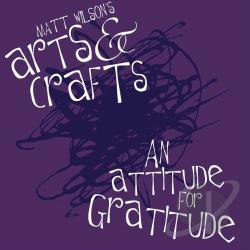
38. Matt Wilson's Arts and Crafts An Attitude for Gratitude
39. George Schuller's Circle Wide Listen Both Ways
40. Aaron Freeman Marvelous Clouds
A glorious return for Behold, which marks the BtA debut of Weasel Walter on drums. It's only fitting that this project should rev up again just as the Flying Luttenbachers endeavor was concluding. Extraordinary, inspiring extended composition first; great metal second.
Doug Moore's Invisible Oranges write-up of Vanquish in Vengeance was spot-on. This record (A) sounds very little like the murk-fi masterpieces (Onward to Golgotha, Mortal Throne of Nazarene) that established Incantation's sterling reputation, and (B) really isn't surprising in the least. It's simply an excellent genre-obedient effort by a band that helped define the genre—in other words, the death-metal analog to the Cookers' Believe.
Man, is Of Babalon ever heavy. An excellent companion to Serpentine Path, another 2012 effort featuring former Unearthly Trance member Ryan Lipynsky. This one is both more diverse stylewise and more vicious in its mood. Lipynsky isn't a revolutionary, but the degree to which he really and truly means it when he makes metal makes him a standout figure in the underground.
/////
41. Cattle Decapitation Monolith of Inhumanity
42. Dr. Lonnie Smith The Healer
43. Napalm Death Utilitarian
44. Sam Rivers / Dave Holland / Barry Altschul Reunion: Live in New York
45. Jozef Van Wissem / Jim Jarmusch Concerning the Entrance Into Eternity
46. Death Grips No Love Deep Web
47. Leonard Cohen Old Ideas
48. Bob Mould Silver Age
49. Unsane Wreck
50. Eri Yamamoto The Next Page
Monolith and Utilitarian are blistering new albums by long-running bands I've never truly loved in the past; these efforts woke me up. (In Napalm Death's case, an incredible Maryland Deathfest set helped too.) Both records impressed me with how catchy and diverse they were—dig those theatrical chorus hooks on Monolith, esp.—demonstrating that grindcore has come a long way from its super-primitive roots.
The hype surrounding Death Grips (Epic, not Epic—yadda, yadda) was a little wearisome, but I still found No Love Deep Web to be worthy of its title. It's a chaotic yet focused negative-vibe spew that's hard to tear yourself away from.
I'm a big Leonard fan in general, but the past couple LPs haven't grabbed me. This one seems stronger, aiming for the midpoint between solemn and wry. Like his current live show (I caught him at the Beacon a few years back), Old Ideas feels warm and connected but not hokey. In contrast, I don't know Mould's post–Hüsker Dü work well, but Silver Age grabbed me immediately, as I expect it would anyone who enjoys aggressive, tightly composed melodic rock. "Descent" is an incredible song. Speaking of, I meant to include that in my top 10 singles list…
/////
P.S.
As indicated at the top of my 2012 jazz round-up, Ravi Coltrane's Spirit Fiction was an album I enjoyed greatly throughout the year and unintentionally overlooked when it came time for year-end voting. I'm bummed about that; if I had my Jazz Journalists Association / Jazz Critics Poll top 10 and Pitchfork all-genre top 50 to do over, I'd include it in both. In any case, one happy side effect of the omission is that I became re-enthralled by Spirit Fiction over the past couple weeks. It really is outstanding, start to finish.
Another two I woke up to too late to consider them for these polls:
Bill McHenry La Peur du Vide
I loved the quartet on this record—with Orrin Evans, Eric Revis and Andrew Cyrille—when I heard them at the Vanguard last November. But I didn't warm up to La Peur (recorded at the same venue this past March) on a first listen. Something about it sounded straighter, less mysterious than what I'd remembered. Turns out I just didn't sit with the record long enough. The first track, "Siglo XX," is indeed pretty conventional post-Coltrane sax-quartet jazz, but things get so deep/surprising as the album continues. Such an absolute pleasure to hear Andrew Cyrille featured so prominently and in such unpredictable ways, and Evans and Revis are in bruising form here as well. This record is a subtle killer, every bit as essential as McHenry's earlier collaborations with Paul Motian.
The Bad Plus Made Possible
Another strong Bad Plus record. For me, this one doesn't quite reach the level of the sublime Never Stop, but there's some extraordinary stuff on here, particularly Reid Anderson's two latest triumphs: the hushed-then-ecstatic epic "In Stitches" and the plainspoken, melancholy-pop-ish "Pound for Pound." (File the latter of these alongside the Eri Yamamoto and Federico Ughi records discussed here.)
Also, Xaddax and Feast of the Epiphany made great records this year—in Feast's case, several great records; I especially endorse Solitude—which were out-of-bounds for me pollwise due to friendships with the parties responsible. Visit Xaddax here and Feast here.
/////
Bonus:
Time Out New York's full year-end Music package—including a list of top concerts, with a few of my entries—as well as top 10 lists by my colleagues Steve Smith and Sophie Harris.
Wednesday, December 12, 2012
Best of 2012: Jazz, part III
Here's the third and final installment of my 2012 jazz round-up. Complete, unannotated list is here, part I and an intro are here, and part II is here. And here's a thematically fitting bonus track: my Pitchfork review of the new Mingus box set on Mosaic. All-genres-in-play year-end lists coming soon!
Jim Black Trio
Somatic [Winter and Winter]
David Virelles
Continuum [Pi Recordings]
Grouping these two together might be a little bit of a stretch, but I think it makes sense. At heart, they're both unconventional piano-trio records that work hard to sustain a particular mood/feel over their respective running times.
I remember receiving a download of Somatic about a year ago, right in the middle of the 2011 year-end-list frenzy. Right from the first spin, I really enjoyed it, but I was worried that it would get lost in the shuffle as the year progressed; albums that come out early in January often do. (Though, interestingly, the album that ended up topping my 2012 all-genres-in-play list—to be revealed in due time—is also a record I've had my hands on since the very beginning of the year.) Fortunately, this did not occur. I saw a very good show by this band at Cornelia Street Café in February, and the record stuck with me pretty stubbornly throughout the year.
So what is Somatic, exactly? Jim Black is a musician I've come around to gradually. I first heard him at Tonic with Dave Douglas's Tiny Bell Trio, probably around 1999 or 2000, and soon after that I ran into him on records by Tim Berne's Bloodcount. I wasn't in love with his drumming at that time. I respected the skill, but the aesthetic didn't click with me; something about the way he was channeling rock seemed sort of like a knowing paraphrase rather than the result of true, head-on engagement, and I found his signature idiosyncrasies, both timbral and rhythmic, a little distracting. But as I heard more of Black's work over the years—especially the gorgeous records he made with his AlasNoAxis band (e.g., Houseplant), on which he did an awesome job of getting out of the way of his own compositions and simply letting them speak—I really turned around on him. Jim Black, the composer-bandleader, appealed to me much more than Jim Black, the sideman.
With Somatic, I think he's reached a new peak. He's stripping the aesthetic down to the bone here, uncluttering it in an admirable way. AlasNoAxis retained that rockish feel via Hilmar Jensson's guitar and the backbeat feel of some of the grooves, but that kind of allusion is less apparent here. This set of pieces feels entirely secure within itself; listening, you're not preoccupied with what the influences might have been. So yes, as I mentioned above, this is a piano trio record: Black, plus bassist Thomas Morgan and pianist Elias Stemeseder (a young Austrian player whose name is new to me). The writing is just remarkable. You get these simple, folksy, memorable themes, such as "Uglysnug" and "Terrotow," which gets stuck in my head constantly, and a bunch of moodier, more troubled-, pensive-sounding ones—like opener "Tahre" and "Chibi Jones"—and then some, like "Somatic," that seem to combine those two sensations. A lot of slow, extremely chilled-out music here, but unpredictable and unboring. "Somatic" is a good illustration of what's so compelling about this record; the composition is sort of lilting and catchy, but the playing is teeming with strange detail. Black, Morgan and Stemeseder are having a real Bill Evans Trio kind of group conversation here, drifting in and out of in-time playing, just sort of flowing where the piece takes them. This record isn't just my favorite example to date of Jim Black's writing; it might be my favorite example of his drumming as well. On "Somatic," he seems to be going for an unbelievably subtle version of the Tony Williams–on-"Nefertiti" thing, i.e., a sort of constructive disruption. The trademark sounds of his kit, those dry cymbals, the splatty bass drum, and the strange, slurred time feel—here you hear all this in a quiet and composed setting. The improvisation does threaten to heat up at times, but it's all so dynamically controlled, so essentially balladic.
This trio doesn't sound anything like the Motian/Frisell/Lovano band, but there's a similar kind of murky, liquid lyricism at work here—an experimentalism that has no time for obvious signifiers. A few pieces on the record veer off in other directions—the postboppish "Sure Are You," one of the only tracks here with what I'd describe as a jazzy rhythmic feel, and the tumbling, prog-funky "Beariere"—but overall, Somatic is a pretty remarkable feat of sustained moodcraft. If you like your jazz reflective, with a little stimulating yet unobtrusive weirdness around the edges, you will eat this record up. Every time I put it on, I feel like I've previously underestimated how good it is.
Again, David Virelles's Continuum—a very different record. Jim Black is a veteran compared to Virelles, whose name I've only started seeing around over the past couple of years. When I noticed that this Cuban pianist's working band, also called Continuum, featured Andrew Cyrille on drums—as well as Ben Street, also a member of the Billy Hart Quartet discussed in part II of this round-up—I was instantly intrigued. Cyrille's been doing awesome work in Bill McHenry's band over the past couple years (check out the recent La Peur du Vide), and he sounds incredible on Continuum. (I've written before about intergenerational jazz bands designed to showcase the work of an older drummer; you can add Virelles trio to that list.)
As Ben Ratliff pointed out in his review, Continuum is a multimedia presentation, in which Román Díaz's chant and even Alberto Lescay's painting play a central role. While I've come to enjoy those elements—and I'll admit that Díaz's vocals took some getting used to—the sound of the piano trio at the core of this ensemble is what's kept me coming back to Continuum. I love the way Virelles, Street and Cyrille groove on the funky dervish dance "The Executioner"—Díaz's subtle Afro-Cuban percussion is key here too—working up to a tense climax and giving way to a masterfully textural Cyrille solo. Some of the other pieces go for pure texture; "Threefold" is a super-quiet masterpiece, an abstracted ballad, in which Virelles and Street leave tons of space for Cyrille's pinging cymbals and rustling brush-on-snare work.
The record can be a little disorienting, since the group's approach mutates constantly; almost every piece seems to have a different sonic objective. After a few spins, though, I started to embrace the variety. This is a record that ranges from "Manongo Pablo," essentially a nimble, uptempo Cyrille drum solo set against Virelles's spacey, almost psychedelic Wurlitzer, to "Our Birthright," where a Díaz recitation over hushed accompaniment from the trio gradually transitions into a passionate, spirit-raising free-jazz episode, featuring guest horn players Román Filiú, Mark Turner and Jonathan Finlayson. (During this latter section, you really hear how valuable Cyrille is to the session; when the other players dial up the intensity, he keeps his volume and density carefully controlled, assuring that the crescendo doesn't turn into a cacophonous blowout.)
While I look forward to spending more time with Continuum, I'm not sure I'll ever understand fully what Virelles is going for here. In the liner notes, he writes about the Afro-Cuban religious practices that inspired the record, discussing the "highly complex cosmologies" that guide them and the way Díaz's verse weaves together Spanish with the "ritual languages" of Karabali, Kongo and Yorùbá-Lucumí. No translations of any of the text are provided, so in a sense, any listener not steeped in these traditions is kept deliberately on the outside. It's an intriguing and, in a weird way, almost refreshing way to present a record, i.e., clue the listener in slightly to the concepts guiding the work but don't overexplain. The result is that Continuum scans like a mystery rather than some sort of context-laden cross-cultural artifact. It's fascinating stuff.
Note that this band plays Drom tonight. They're also at the Village Vanguard from January 29 through February 3, with Filiú guesting Friday to Sunday and none other than Henry Threadgill (!) sitting in on Thursday.
/////
Henry Threadgill Zooid
Tomorrow Sunny / The Revelry, Spp [Pi Recordings]
As discussed on DFSBP a couple weeks back, I recently had a bit of a moment with Threadgill's three most recent Zooid releases, developing a new appreciation for the band's sound—and the ways in which it diverges from H.T.'s "classic" work. The postscript marked "Update" there features some in-the-moment impressions of this latest Zooid record, which welcomes cellist Christopher Hoffman to the fold, so I won't go into too much detail here. Tomorrow Sunny doesn't differ wildly from the bands prior two LPs—Vols. 1 and 2 of This Brings Us To—but you can hear a progression in terms of the band's deep-listening interaction. The group dynamic on tracks like "So Pleased, No Clue"—one of the sparser, shorter, less groove-oriented pieces—is stunningly sensitive. You really hear the players breathing together, completing each other's sentences, coexisting, collaboratively coaxing out the ensemble sound. In the post linked above, I wrote about how Zooid's music isn't the kind that comes to you; you have to meet it on its own terms. But once you're there—and for me, that meant shedding my desire for big, bold, super-memorable ensemble themes, so prevalent in older Threadgill—this is a very pleasurable, even sensuous record and probably my favorite Zooid statement yet.
/////
Joe Fiedler
Big Sackbut [Yellow Sound Label]
I don't know too much about the trombonist Joe Fiedler, but I have enjoyed the last couple of albums of his I've checked out: 2007's The Crab and last year's Sacred Chrome Orb, both lean trio discs geared toward showcasing the leader's charming compositions and impressive command of odd timbral effects. Big Sackbut debuts a very different project, a World Saxophone Quartet–style four-piece with three trombones (Fiedler, Ryan Keberle and Josh Roseman) and one tuba (Marcus Rojas. I like the more extroverted tracks on here, e.g. Fieder's "Mixed Bag" and a take on Willie Colon's "Calle Luna, Calle Sol," but the more measured, reflective pieces ("#11," "Don Pullen") impress me the most. For me, the real hurdle a project like this has to clear is "Does the music transcend the eccentricity of the ensemble make-up?," and I'd answer a definite yes with respect to this record. Enjoyable stuff, especially for the brass-inclined.
Here's a clip of the group doing "Calle Luna, Calle Sol" live in 2010.
/////
Yoni Kretzmer 2Bass Quartet
Weight [OutNow]
Another one that foregrounds an unusual ensemble make-up. Here, I'd heard everyone but the leader—Israeli tenor-saxist Yoni Kretzmer—going in; the rest of the band—bassist Sean Conly and Reuben Radding, and drummer Mike Pride—are all NYC stalwarts. There's definitely a gritty, post-Ayler quality to Weight, but that's only a fraction of what's going on here. Kretzmer has a very classic tenor sound, raspy yet melodic—I believe I cited Dewey Redman in one of the prior write-ups; I think of him here too—and a sometimes borderline-sentimental compositional sense; on pieces like "Giving Tree," and "A Bit of Peace," these qualities clash fruitfully with the grittiness of the improvising. This push-and-pull keeps me interested. I'm all for the backbeat-driven meltdown at the beginning of "Again and Again," but I'm even more intrigued by the way the dynamics dip down to ballad level instead of continuing to blare. "Smallone," a measured interlude that sets Kretzmer against the two plucked basses and Pride's tasteful brushwork, is another standout. As with the Threadgill record, Kretzmer really lets you hear every player in the band; it's a beautifully recorded disc, and its greatest pleasure is hearing the group members carrying on a lively yet expertly controlled conversation, e.g., on a track like the sing-songy "A Bit of Peace." Everyone's really listening, here and throughout the album.
/////
Ted Nash
The Creep [Plastic Sax]
I'd never really checked out Ted Nash's work before this year. One of the most welcome side benefits of researching my Jazz Composers Collective profile a couple months back was getting to know various Nash projects like the Double Quartet, Still Evolved and Odeon. As with the Fiedler and Kretzmer records above, some of this past Nash work—e.g., the tango-inspired Odeon and the string-quartet-augmented Double Quartet—thrives on unconventional ensemble make-up. The Creep is something different, though. It's simply a scrappy, hard-swinging quartet record, driven by Ulysses Owens's ass-kicking drumming and the stimulating warm-cool contrast between Nash's saxophone and Ron Horton's trumpet. Much like the Dolphy/Curson/Mingus/Richmond band, this group gets a ton of mileage out of its stripped-down instrumentation, emphasizing density or sparseness, abandon or control as the situation demands. Check out "Burnt Toast and Avocado" and "Plastic Sax Lullaby" in succession and you'll see what I mean. Nash has cited Ornette (particularly his use of a plastic saxophone) as an inspiration for this record, but to continue with our overriding theme, The Creep is another no-school jazz statement. It simply does its thing (many things, really) and leaves the classification up to the listener.
/////
Jeremy Pelt
Soul [HighNote]
Hat-tip to Phil Freeman for turning me on to this one. I knew Pelt's name, but little else about him, going in. I was intrigued by the idea of hearing JD Allen and Gerald Cleaver in a new context, and I wasn't disappointed at all. This is a low-key and unassuming session, ballad-heavy, clearly indebted to ’60s Blue Note fare—esp. moody Wayne Shorter records like Speak No Evil—and gorgeously recorded. (Pelt's site says that Rudy Van Gelder himself engineered this one, though, oddly, Joe Marciano's name is listed on the CD itself.) It's a throwback record, but it's not slavish in the slightest, and the playing is outstanding, whether on the more freewheeling, uptempo tracks like "What's Wrong Is Wright" or "The Tempest"—both of these have a pretty strong mid-to-late-’60s-Miles-quintet vibe going on, with Cleaver clearly mining a Tony Williams vibe on the latter, and sounding great—or whispery slow pieces like "The Ballad of Ichabod Crane." The latter piece exemplifies one of Soul's most appealing qualities, its ability to convey chill-ness without sleepiness; in the end, this is a fairly straightforward record, but there's enough intrigue and conviction in the playing that it doesn't feel rote. Playing this again now, though, I'm reminded by its subtle magnetism—I'll definitely be returning to this one, and keeping an eye out for future Pelt releases.
/////
Ralph Peterson
The Duality Perspective [Onyx]
As with Soul, I woke up to this one after reading another writer's take, in this case Ben Ratliff's review. And again, I'm very thankful for the heads-up, since I wasn't familiar with Peterson's prior work. Part of what intrigued me in the Times write-up was the description of the Fo'tet—one of two bands featured on this record—a quartet with clarinet, vibes and bass. (The sidemen are Felix Peikli, Joseph Doubleday and Alexander L.J. Tosh, respectively—all new names to me.) The combination of clarinet and vibes is one I've loved since I first heard the ’30s Benny Goodman Quartet back in college—got a nice opportunity to binge on these sides during WKCR's recent Teddy Wilson centennial marathon—and though the Fo'tet is no Swing Era throwback, the texture of the band does hint at the crisp, fresh, chamber-jazzy interplay of Goodman and Lionel Hampton. To me, this group sounds best playing more or less straightforward postbop, as on album opener "One False Move." What I like about this piece, and "Princess" as well, is the contrast between the cool sound of the clarinet-vibes frontline—and I mean that more texturally, since Peikli is a daring and passionate soloist—and Peterson's busy, churning accompaniment. He's got a rumbling, Elvin Jones quality to his swing, and he certainly smacks the kit from time to time, but his dynamics are impressively controlled; he's driving the band without overdoing it. I'd have to agree with Ratliff's assessment of the record's latter half, which features Peterson's sextet ("The sextet has its moments, but it deals in more weighed-down and conventional moods and doesn’t have as recognizable a group sound," he wrote). The title track—a lushly orchestrated ballad—is a definite winner, though: a strong showcase for Peterson's writing/arranging, that muscular yet sensitive drumming style I mentioned above and the appealing two-sax frontline of Walter Smith III and Tia Fuller. I look forward to hearing more from Peterson, especially the Fo'tet.
/////
Eric Revis's 11:11
Parallax [Clean Feed]
Was a little apprehensive about including this one on my year-end list, mainly because it only showed up in the mail a few days before I filed. But I knew that (A) the band featured here—the sidemen are Ken Vandermark, Jason Moran and Nasheet Waits—was too special to overlook and that (B) the record wasn't really going to be eligible for 2013 consideration. Definitely still digesting this one, so my impressions are a little sketchy. But I will tentatively say that Parallax lives up to my high expectations. (I remember seeing this band listed on the Jazz Gallery schedule a few years back, and after missing that gig, I eagerly awaited a recording.) Revis is, in his own way, one of the most eclectic players I know. I've been seriously impressed by his playing with Tarbaby, Bill McHenry's current working quartet, Peter Brötzmann (the 2011 Vision Festival featured a Revis / Brötzmann / William Parker trio), and Branford Marsalis—a pretty wide range of contexts—and I remember really digging his last leader record, Laughter's Necklace of Tears, when I checked it out a while back.
Like that LP, Parallax is an eclectic and challenging set. Revis doesn't just put together bands and let them rip; he assembles real programs' worth of music. This album features muscular, trancelike solo bass ("Percival," e.g.); dramatic, tightly orchestrated pieces like "Dark Net" and "MXR," which almost come off as proggy chamber jazz; entropic yet sensitive free-jazz pieces ("I'm Going to Sit Right Down and Write Myself a Letter," "Celestial Hobo," "ENKJ") that really show off the potent group dynamic this quartet has achieved; and at least one piece ("Winin' Boy Blues") that sounds like a riff on the kind of stylized retro vibe that Moran and Waits often explore in the Bandwagon. Skimming back through the tracks now, I'm realizing that I can't wait to give this record a few more focused spins. Revis has put together a fascinating group here—one that can breathe free-form fire when called upon to do so, e.g., "Hyperthral," or groove hard and tough, e.g., "Split"—and he really seems to be wringing all the potential he can out of these players.
/////
Harris Eisenstadt
Canada Day III [Songlines]
Canada Day Octet [482 Music]
Harris Eisenstadt has been a mainstay of my year-end lists over the past few years—I particularly dug 2008's Guewel and 2010's Woodblock Prints. He's prolific, but he's always worth checking in with. I'd overlooked Eisenstadt's Canada Day band in the past, maybe because it's his most conventional-sounding ensemble, a quintet with saxophone, trumpet, vibes and bass. As with previous Canada Day releases, the writing on III is very clean, clear and lyrical, sometimes with a shade of playful quirk. The pieces seem designed to show off the sidemen, specifically the extraordinary frontline of saxist Matt Bauder and trumpeter Nate Wooley; both can veer into abstract/abrasive territory—fans of Wooley's work in freer contexts will recognize what he's up to on "Nosey Parker"—but what impresses me most here is when they're playing in this sort of soft, murmuring style—as on "Song for Sara"—and mingling their sounds with Chris Dingman's vibes. It's a very pleasant and accessible group texture, but far from conventional, which seems to be a hallmark of Eisenstadt's work overall. Don't meant to short-shrift the Canda Day Octet record record when I say that it's more or less a companion piece. Eisenstadt's writing for this expanded group is just as sharp as it is for the core band—the multipart "Ombudsman" suite, which really takes advantage of the larger ensemble, is magical—and again, Bauder, Wooley and Dingman are the stars here. Both these discs are highly recommended.
Here's some live footage of the octet.
/////
40Twenty
40Twenty [Yeah Yeah]
David Ambrosio has shown up a couple times on this list already, on the Schuller and Yamamoto records, and the other three here are familiar names, all of whom lead their own projects. (Garchik's The Heavens is definitely one to check out.) This is a subtle one that I might have overlooked if it wasn't for Nate Chinen's recent shout-out. I like how this record manages to sound both weird and composed at the same time, as when the band plays an expertly controlled form of free jazz on Ambrosio's "One Five," or a slurry Monkish march on Sacks's "Jan 20." With only trombone in the frontline, the group has a kind of drollness about it, a vibe that's also reinforced in the writing, but there's some really heated, energized playing on tracks like Garchik's "Gi." Like many of the other projects on this list, 40Twenty is taking what it needs from various jazz strains without aligning itself to any of them. "Jan 20" sounds almost throwbacky—appropriate since the band's name is a nod to the grueling nightclub gig schedules of yore—while "Plainchant" is as delicate and austere as the name would suggest. The feel of the latter piece captures what I enjoy about this record—the way both its beauty and its oddness feel muted, sort of far off. 40Twenty is more elusive than most of the records cited above, but it's worth taking the time to get close to it.
/////
P.S. The best jazz performances I saw this year, with links to coverage, where applicable:
Miguel Zenón Quartet
January 6; Zinc Bar (Winter Jazzfest)
Craig Taborn Trio
April 6, 8; Village Vanguard
Darius Jones Quartet
June 12; Roulette (Vision Festival)
Marc Ribot Trio
June 29; Village Vanguard
Ethan Iverson / Ben Street / Albert "Tootie" Heath
August 26; Village Vanguard
Bob Stewart Quintet
November 10; Central Park (Jazz and Colors)
Henry Threadgill Zooid
November 24; Roulette
Jim Black Trio
Somatic [Winter and Winter]
Continuum [Pi Recordings]
Grouping these two together might be a little bit of a stretch, but I think it makes sense. At heart, they're both unconventional piano-trio records that work hard to sustain a particular mood/feel over their respective running times.
I remember receiving a download of Somatic about a year ago, right in the middle of the 2011 year-end-list frenzy. Right from the first spin, I really enjoyed it, but I was worried that it would get lost in the shuffle as the year progressed; albums that come out early in January often do. (Though, interestingly, the album that ended up topping my 2012 all-genres-in-play list—to be revealed in due time—is also a record I've had my hands on since the very beginning of the year.) Fortunately, this did not occur. I saw a very good show by this band at Cornelia Street Café in February, and the record stuck with me pretty stubbornly throughout the year.
So what is Somatic, exactly? Jim Black is a musician I've come around to gradually. I first heard him at Tonic with Dave Douglas's Tiny Bell Trio, probably around 1999 or 2000, and soon after that I ran into him on records by Tim Berne's Bloodcount. I wasn't in love with his drumming at that time. I respected the skill, but the aesthetic didn't click with me; something about the way he was channeling rock seemed sort of like a knowing paraphrase rather than the result of true, head-on engagement, and I found his signature idiosyncrasies, both timbral and rhythmic, a little distracting. But as I heard more of Black's work over the years—especially the gorgeous records he made with his AlasNoAxis band (e.g., Houseplant), on which he did an awesome job of getting out of the way of his own compositions and simply letting them speak—I really turned around on him. Jim Black, the composer-bandleader, appealed to me much more than Jim Black, the sideman.
With Somatic, I think he's reached a new peak. He's stripping the aesthetic down to the bone here, uncluttering it in an admirable way. AlasNoAxis retained that rockish feel via Hilmar Jensson's guitar and the backbeat feel of some of the grooves, but that kind of allusion is less apparent here. This set of pieces feels entirely secure within itself; listening, you're not preoccupied with what the influences might have been. So yes, as I mentioned above, this is a piano trio record: Black, plus bassist Thomas Morgan and pianist Elias Stemeseder (a young Austrian player whose name is new to me). The writing is just remarkable. You get these simple, folksy, memorable themes, such as "Uglysnug" and "Terrotow," which gets stuck in my head constantly, and a bunch of moodier, more troubled-, pensive-sounding ones—like opener "Tahre" and "Chibi Jones"—and then some, like "Somatic," that seem to combine those two sensations. A lot of slow, extremely chilled-out music here, but unpredictable and unboring. "Somatic" is a good illustration of what's so compelling about this record; the composition is sort of lilting and catchy, but the playing is teeming with strange detail. Black, Morgan and Stemeseder are having a real Bill Evans Trio kind of group conversation here, drifting in and out of in-time playing, just sort of flowing where the piece takes them. This record isn't just my favorite example to date of Jim Black's writing; it might be my favorite example of his drumming as well. On "Somatic," he seems to be going for an unbelievably subtle version of the Tony Williams–on-"Nefertiti" thing, i.e., a sort of constructive disruption. The trademark sounds of his kit, those dry cymbals, the splatty bass drum, and the strange, slurred time feel—here you hear all this in a quiet and composed setting. The improvisation does threaten to heat up at times, but it's all so dynamically controlled, so essentially balladic.
This trio doesn't sound anything like the Motian/Frisell/Lovano band, but there's a similar kind of murky, liquid lyricism at work here—an experimentalism that has no time for obvious signifiers. A few pieces on the record veer off in other directions—the postboppish "Sure Are You," one of the only tracks here with what I'd describe as a jazzy rhythmic feel, and the tumbling, prog-funky "Beariere"—but overall, Somatic is a pretty remarkable feat of sustained moodcraft. If you like your jazz reflective, with a little stimulating yet unobtrusive weirdness around the edges, you will eat this record up. Every time I put it on, I feel like I've previously underestimated how good it is.
Again, David Virelles's Continuum—a very different record. Jim Black is a veteran compared to Virelles, whose name I've only started seeing around over the past couple of years. When I noticed that this Cuban pianist's working band, also called Continuum, featured Andrew Cyrille on drums—as well as Ben Street, also a member of the Billy Hart Quartet discussed in part II of this round-up—I was instantly intrigued. Cyrille's been doing awesome work in Bill McHenry's band over the past couple years (check out the recent La Peur du Vide), and he sounds incredible on Continuum. (I've written before about intergenerational jazz bands designed to showcase the work of an older drummer; you can add Virelles trio to that list.)
As Ben Ratliff pointed out in his review, Continuum is a multimedia presentation, in which Román Díaz's chant and even Alberto Lescay's painting play a central role. While I've come to enjoy those elements—and I'll admit that Díaz's vocals took some getting used to—the sound of the piano trio at the core of this ensemble is what's kept me coming back to Continuum. I love the way Virelles, Street and Cyrille groove on the funky dervish dance "The Executioner"—Díaz's subtle Afro-Cuban percussion is key here too—working up to a tense climax and giving way to a masterfully textural Cyrille solo. Some of the other pieces go for pure texture; "Threefold" is a super-quiet masterpiece, an abstracted ballad, in which Virelles and Street leave tons of space for Cyrille's pinging cymbals and rustling brush-on-snare work.
The record can be a little disorienting, since the group's approach mutates constantly; almost every piece seems to have a different sonic objective. After a few spins, though, I started to embrace the variety. This is a record that ranges from "Manongo Pablo," essentially a nimble, uptempo Cyrille drum solo set against Virelles's spacey, almost psychedelic Wurlitzer, to "Our Birthright," where a Díaz recitation over hushed accompaniment from the trio gradually transitions into a passionate, spirit-raising free-jazz episode, featuring guest horn players Román Filiú, Mark Turner and Jonathan Finlayson. (During this latter section, you really hear how valuable Cyrille is to the session; when the other players dial up the intensity, he keeps his volume and density carefully controlled, assuring that the crescendo doesn't turn into a cacophonous blowout.)
While I look forward to spending more time with Continuum, I'm not sure I'll ever understand fully what Virelles is going for here. In the liner notes, he writes about the Afro-Cuban religious practices that inspired the record, discussing the "highly complex cosmologies" that guide them and the way Díaz's verse weaves together Spanish with the "ritual languages" of Karabali, Kongo and Yorùbá-Lucumí. No translations of any of the text are provided, so in a sense, any listener not steeped in these traditions is kept deliberately on the outside. It's an intriguing and, in a weird way, almost refreshing way to present a record, i.e., clue the listener in slightly to the concepts guiding the work but don't overexplain. The result is that Continuum scans like a mystery rather than some sort of context-laden cross-cultural artifact. It's fascinating stuff.
Note that this band plays Drom tonight. They're also at the Village Vanguard from January 29 through February 3, with Filiú guesting Friday to Sunday and none other than Henry Threadgill (!) sitting in on Thursday.
/////
Henry Threadgill Zooid
Tomorrow Sunny / The Revelry, Spp [Pi Recordings]
As discussed on DFSBP a couple weeks back, I recently had a bit of a moment with Threadgill's three most recent Zooid releases, developing a new appreciation for the band's sound—and the ways in which it diverges from H.T.'s "classic" work. The postscript marked "Update" there features some in-the-moment impressions of this latest Zooid record, which welcomes cellist Christopher Hoffman to the fold, so I won't go into too much detail here. Tomorrow Sunny doesn't differ wildly from the bands prior two LPs—Vols. 1 and 2 of This Brings Us To—but you can hear a progression in terms of the band's deep-listening interaction. The group dynamic on tracks like "So Pleased, No Clue"—one of the sparser, shorter, less groove-oriented pieces—is stunningly sensitive. You really hear the players breathing together, completing each other's sentences, coexisting, collaboratively coaxing out the ensemble sound. In the post linked above, I wrote about how Zooid's music isn't the kind that comes to you; you have to meet it on its own terms. But once you're there—and for me, that meant shedding my desire for big, bold, super-memorable ensemble themes, so prevalent in older Threadgill—this is a very pleasurable, even sensuous record and probably my favorite Zooid statement yet.
/////
Joe Fiedler
Big Sackbut [Yellow Sound Label]
I don't know too much about the trombonist Joe Fiedler, but I have enjoyed the last couple of albums of his I've checked out: 2007's The Crab and last year's Sacred Chrome Orb, both lean trio discs geared toward showcasing the leader's charming compositions and impressive command of odd timbral effects. Big Sackbut debuts a very different project, a World Saxophone Quartet–style four-piece with three trombones (Fiedler, Ryan Keberle and Josh Roseman) and one tuba (Marcus Rojas. I like the more extroverted tracks on here, e.g. Fieder's "Mixed Bag" and a take on Willie Colon's "Calle Luna, Calle Sol," but the more measured, reflective pieces ("#11," "Don Pullen") impress me the most. For me, the real hurdle a project like this has to clear is "Does the music transcend the eccentricity of the ensemble make-up?," and I'd answer a definite yes with respect to this record. Enjoyable stuff, especially for the brass-inclined.
Here's a clip of the group doing "Calle Luna, Calle Sol" live in 2010.
/////
Yoni Kretzmer 2Bass Quartet
Weight [OutNow]
Another one that foregrounds an unusual ensemble make-up. Here, I'd heard everyone but the leader—Israeli tenor-saxist Yoni Kretzmer—going in; the rest of the band—bassist Sean Conly and Reuben Radding, and drummer Mike Pride—are all NYC stalwarts. There's definitely a gritty, post-Ayler quality to Weight, but that's only a fraction of what's going on here. Kretzmer has a very classic tenor sound, raspy yet melodic—I believe I cited Dewey Redman in one of the prior write-ups; I think of him here too—and a sometimes borderline-sentimental compositional sense; on pieces like "Giving Tree," and "A Bit of Peace," these qualities clash fruitfully with the grittiness of the improvising. This push-and-pull keeps me interested. I'm all for the backbeat-driven meltdown at the beginning of "Again and Again," but I'm even more intrigued by the way the dynamics dip down to ballad level instead of continuing to blare. "Smallone," a measured interlude that sets Kretzmer against the two plucked basses and Pride's tasteful brushwork, is another standout. As with the Threadgill record, Kretzmer really lets you hear every player in the band; it's a beautifully recorded disc, and its greatest pleasure is hearing the group members carrying on a lively yet expertly controlled conversation, e.g., on a track like the sing-songy "A Bit of Peace." Everyone's really listening, here and throughout the album.
/////
Ted Nash
The Creep [Plastic Sax]
I'd never really checked out Ted Nash's work before this year. One of the most welcome side benefits of researching my Jazz Composers Collective profile a couple months back was getting to know various Nash projects like the Double Quartet, Still Evolved and Odeon. As with the Fiedler and Kretzmer records above, some of this past Nash work—e.g., the tango-inspired Odeon and the string-quartet-augmented Double Quartet—thrives on unconventional ensemble make-up. The Creep is something different, though. It's simply a scrappy, hard-swinging quartet record, driven by Ulysses Owens's ass-kicking drumming and the stimulating warm-cool contrast between Nash's saxophone and Ron Horton's trumpet. Much like the Dolphy/Curson/Mingus/Richmond band, this group gets a ton of mileage out of its stripped-down instrumentation, emphasizing density or sparseness, abandon or control as the situation demands. Check out "Burnt Toast and Avocado" and "Plastic Sax Lullaby" in succession and you'll see what I mean. Nash has cited Ornette (particularly his use of a plastic saxophone) as an inspiration for this record, but to continue with our overriding theme, The Creep is another no-school jazz statement. It simply does its thing (many things, really) and leaves the classification up to the listener.
/////
Jeremy Pelt
Soul [HighNote]
Hat-tip to Phil Freeman for turning me on to this one. I knew Pelt's name, but little else about him, going in. I was intrigued by the idea of hearing JD Allen and Gerald Cleaver in a new context, and I wasn't disappointed at all. This is a low-key and unassuming session, ballad-heavy, clearly indebted to ’60s Blue Note fare—esp. moody Wayne Shorter records like Speak No Evil—and gorgeously recorded. (Pelt's site says that Rudy Van Gelder himself engineered this one, though, oddly, Joe Marciano's name is listed on the CD itself.) It's a throwback record, but it's not slavish in the slightest, and the playing is outstanding, whether on the more freewheeling, uptempo tracks like "What's Wrong Is Wright" or "The Tempest"—both of these have a pretty strong mid-to-late-’60s-Miles-quintet vibe going on, with Cleaver clearly mining a Tony Williams vibe on the latter, and sounding great—or whispery slow pieces like "The Ballad of Ichabod Crane." The latter piece exemplifies one of Soul's most appealing qualities, its ability to convey chill-ness without sleepiness; in the end, this is a fairly straightforward record, but there's enough intrigue and conviction in the playing that it doesn't feel rote. Playing this again now, though, I'm reminded by its subtle magnetism—I'll definitely be returning to this one, and keeping an eye out for future Pelt releases.
/////
Ralph Peterson
The Duality Perspective [Onyx]
As with Soul, I woke up to this one after reading another writer's take, in this case Ben Ratliff's review. And again, I'm very thankful for the heads-up, since I wasn't familiar with Peterson's prior work. Part of what intrigued me in the Times write-up was the description of the Fo'tet—one of two bands featured on this record—a quartet with clarinet, vibes and bass. (The sidemen are Felix Peikli, Joseph Doubleday and Alexander L.J. Tosh, respectively—all new names to me.) The combination of clarinet and vibes is one I've loved since I first heard the ’30s Benny Goodman Quartet back in college—got a nice opportunity to binge on these sides during WKCR's recent Teddy Wilson centennial marathon—and though the Fo'tet is no Swing Era throwback, the texture of the band does hint at the crisp, fresh, chamber-jazzy interplay of Goodman and Lionel Hampton. To me, this group sounds best playing more or less straightforward postbop, as on album opener "One False Move." What I like about this piece, and "Princess" as well, is the contrast between the cool sound of the clarinet-vibes frontline—and I mean that more texturally, since Peikli is a daring and passionate soloist—and Peterson's busy, churning accompaniment. He's got a rumbling, Elvin Jones quality to his swing, and he certainly smacks the kit from time to time, but his dynamics are impressively controlled; he's driving the band without overdoing it. I'd have to agree with Ratliff's assessment of the record's latter half, which features Peterson's sextet ("The sextet has its moments, but it deals in more weighed-down and conventional moods and doesn’t have as recognizable a group sound," he wrote). The title track—a lushly orchestrated ballad—is a definite winner, though: a strong showcase for Peterson's writing/arranging, that muscular yet sensitive drumming style I mentioned above and the appealing two-sax frontline of Walter Smith III and Tia Fuller. I look forward to hearing more from Peterson, especially the Fo'tet.
/////
Eric Revis's 11:11
Parallax [Clean Feed]
Was a little apprehensive about including this one on my year-end list, mainly because it only showed up in the mail a few days before I filed. But I knew that (A) the band featured here—the sidemen are Ken Vandermark, Jason Moran and Nasheet Waits—was too special to overlook and that (B) the record wasn't really going to be eligible for 2013 consideration. Definitely still digesting this one, so my impressions are a little sketchy. But I will tentatively say that Parallax lives up to my high expectations. (I remember seeing this band listed on the Jazz Gallery schedule a few years back, and after missing that gig, I eagerly awaited a recording.) Revis is, in his own way, one of the most eclectic players I know. I've been seriously impressed by his playing with Tarbaby, Bill McHenry's current working quartet, Peter Brötzmann (the 2011 Vision Festival featured a Revis / Brötzmann / William Parker trio), and Branford Marsalis—a pretty wide range of contexts—and I remember really digging his last leader record, Laughter's Necklace of Tears, when I checked it out a while back.
Like that LP, Parallax is an eclectic and challenging set. Revis doesn't just put together bands and let them rip; he assembles real programs' worth of music. This album features muscular, trancelike solo bass ("Percival," e.g.); dramatic, tightly orchestrated pieces like "Dark Net" and "MXR," which almost come off as proggy chamber jazz; entropic yet sensitive free-jazz pieces ("I'm Going to Sit Right Down and Write Myself a Letter," "Celestial Hobo," "ENKJ") that really show off the potent group dynamic this quartet has achieved; and at least one piece ("Winin' Boy Blues") that sounds like a riff on the kind of stylized retro vibe that Moran and Waits often explore in the Bandwagon. Skimming back through the tracks now, I'm realizing that I can't wait to give this record a few more focused spins. Revis has put together a fascinating group here—one that can breathe free-form fire when called upon to do so, e.g., "Hyperthral," or groove hard and tough, e.g., "Split"—and he really seems to be wringing all the potential he can out of these players.
/////
Harris Eisenstadt
Canada Day III [Songlines]
Canada Day Octet [482 Music]
Harris Eisenstadt has been a mainstay of my year-end lists over the past few years—I particularly dug 2008's Guewel and 2010's Woodblock Prints. He's prolific, but he's always worth checking in with. I'd overlooked Eisenstadt's Canada Day band in the past, maybe because it's his most conventional-sounding ensemble, a quintet with saxophone, trumpet, vibes and bass. As with previous Canada Day releases, the writing on III is very clean, clear and lyrical, sometimes with a shade of playful quirk. The pieces seem designed to show off the sidemen, specifically the extraordinary frontline of saxist Matt Bauder and trumpeter Nate Wooley; both can veer into abstract/abrasive territory—fans of Wooley's work in freer contexts will recognize what he's up to on "Nosey Parker"—but what impresses me most here is when they're playing in this sort of soft, murmuring style—as on "Song for Sara"—and mingling their sounds with Chris Dingman's vibes. It's a very pleasant and accessible group texture, but far from conventional, which seems to be a hallmark of Eisenstadt's work overall. Don't meant to short-shrift the Canda Day Octet record record when I say that it's more or less a companion piece. Eisenstadt's writing for this expanded group is just as sharp as it is for the core band—the multipart "Ombudsman" suite, which really takes advantage of the larger ensemble, is magical—and again, Bauder, Wooley and Dingman are the stars here. Both these discs are highly recommended.
Here's some live footage of the octet.
/////
40Twenty
40Twenty [Yeah Yeah]
David Ambrosio has shown up a couple times on this list already, on the Schuller and Yamamoto records, and the other three here are familiar names, all of whom lead their own projects. (Garchik's The Heavens is definitely one to check out.) This is a subtle one that I might have overlooked if it wasn't for Nate Chinen's recent shout-out. I like how this record manages to sound both weird and composed at the same time, as when the band plays an expertly controlled form of free jazz on Ambrosio's "One Five," or a slurry Monkish march on Sacks's "Jan 20." With only trombone in the frontline, the group has a kind of drollness about it, a vibe that's also reinforced in the writing, but there's some really heated, energized playing on tracks like Garchik's "Gi." Like many of the other projects on this list, 40Twenty is taking what it needs from various jazz strains without aligning itself to any of them. "Jan 20" sounds almost throwbacky—appropriate since the band's name is a nod to the grueling nightclub gig schedules of yore—while "Plainchant" is as delicate and austere as the name would suggest. The feel of the latter piece captures what I enjoy about this record—the way both its beauty and its oddness feel muted, sort of far off. 40Twenty is more elusive than most of the records cited above, but it's worth taking the time to get close to it.
/////
P.S. The best jazz performances I saw this year, with links to coverage, where applicable:
Miguel Zenón Quartet
January 6; Zinc Bar (Winter Jazzfest)
Craig Taborn Trio
April 6, 8; Village Vanguard
Darius Jones Quartet
June 12; Roulette (Vision Festival)
Marc Ribot Trio
June 29; Village Vanguard
Ethan Iverson / Ben Street / Albert "Tootie" Heath
August 26; Village Vanguard
Bob Stewart Quintet
November 10; Central Park (Jazz and Colors)
Henry Threadgill Zooid
November 24; Roulette
Thursday, December 06, 2012
Best of 2012: Jazz, part II
Here's part II of an ongoing rundown of my favorite 2012 jazz recordings. Full, unannotated list here; intro and part I here. Part III to follow as soon as I have time to write it up!
Joel Harrison / Lorenzo Feliciati
Holy Abyss [Cuneiform]
As I suggested in a TONY preview back in May, guitarist Joel Harrison is a hard guy to keep tabs on. He's about as prolific as, say, Ken Vandermark, and even harder to pin down, stylewise; I've only woken up to his work within the past couple years, and I already feel a little overwhelmed by what there is to hear. Harrison also put out a very good album on Sunnyside this year, Search, but the one I kept coming back to was this oddity, a session co-led by Lorenzo Feliciati, a Italian fusion bassist whose name was new to me.
Like with many of the other records on this list, Holy Abyss carves out its own stylistic niche—a boldly unfashionable one that I'd loosely peg as some sort of prog-blues fusion. The second track, "Saturday Night in Pendleton" moves from a whimsical, laid-back swing intro to a raunchy roots-rock stomp, with drummer Dan Weiss sloshing it up on the hi-hat, keyboardist Roy Powell providing gleaming B3 organ and Harrison shredding in a sort of Pat Metheny–gone-roadhouse style. Some of the writing and arrangement reminds me of Metheny as well (tracks like "Requiem for an Unknown Soldier," which you can hear below, and "North Wind (Mistral)," esp.); something about the unabashed drama of the compositions and the super-stylized arrangements recalls a record like The Way Up for me. (Also, Metheny Group trumpeter Cuong Vu is on trumpet here.) But Holy Abyss has a mood all its own, evidenced in the soothing yet sinister drift of a piece like "Faith," which is much more about pure texture than flash.
I'm just now reading on Harrison's site that writing duties are shared on this record, and that's impressive because this set of pieces really does feel coherent in some hard-to-pin-down way. Maybe it's that sort of noirish mood I was getting at above in the "Faith" description, or the way the pieces will suddenly move from spacey to ballsy. As with the more proggish Metheny, this music can flirt with over-slickness, but there's enough grit to make it work. Overall, Holy Abyss really surprised me, and I'd love to hear more from this band.
/////
Jasmine Lovell-Smith's Towering Poppies
Fortune Songs [Paintbox]
Haven't spent as much time with this one as I would've liked, but it has me hooked. Fortune Songs is an almost incredibly assured-sounding debut. Lovell-Smith is a soprano saxophonist (a still-rare specialist on the instrument) from New Zealand, and this is the first I'd heard of her; same for the other four members of her band. What she's going for her is a boldly lyrical sound, almost uniformly mellifluous without being saccharine. As you can hear on a track like "Darkling I Listen," the themes are often striking, but what impresses me most is the way the band plays like a single instrument—Lovell-Smith has a beautifully songlike style, and the entire band seems to channel that sound, operating in a kind of dreamy trance—as well as how measured and focused the improvisations are. I may be leaning too heavily on this notion, but it's very apt here: This record is of no school. Listen to the unmoored rhythm section work going on in "Confidence (Two)"; this is jazz that's free but that subscribes to no clichés of the avant-garde. (The in-time playing on, e.g., "A Nest to Fly" is just as satisfying.) Fortune Songs isn't in a hurry to grab your attention; it just patiently goes about its business. It's pretty rare for any record, let alone a debut, to put forth such a firm yet subtle aesthetic. Really impressive stuff.
/////
Matt Wilson's Arts and Crafts
An Attitude for Gratitude [Palmetto]
This is another very beautiful and approachable record that's full of surprises. I've been impressed with Wilson's playing for many years, and his Matt Wilson Quartet records have always grabbed my attention. But this is probably my favorite album I've heard from him. What I love about the Arts and Crafts band—a quartet with Terell Stafford on trumpet and flugelhorn, Gary Versace on keyboards and Martin Wind on bass—is the way it comes off as both classic and eccentric. The band's preferred mode is simple, buoyant swing, soloists proceeding in orderly fashion, etc.; they sound thoroughly convincing playing groovy soul-jazz ("Little Boy with the Sad Eyes") or a romantic ballad ("Happy Days Are Here Again"). Where Wilson's fun-loving personality comes through is in the offbeat details—e.g., Versace's stylized accordion on "Bubbles," which also features a Wilson recitation of a Carl Sandburg poem—which add color without tipping the project over into quirkiness, and in his gleefully liberal approach to repertoire. In addition to "Little Boy," a Nat Adderley piece, you get pieces by Jaco ("Teen Town") and Jon Scofield ("You Bet"), originals from Versace, Wind and Wilson, the standard "There's No You"(played unaccompanied by Stafford, a brilliant late-in-the-album curveball) and an absolutely gorgeous Versace/Wind/Wilson rendition of "Bridge Over Troubled Water," maybe the best jazz cover of a well-known pop song I've ever heard. That performance sums up the charm of this record; as with the Yamamoto above, An Attitude for Gratitude is easy to love but still deep and nourishing.
/////
The Cookers
Believe [Motéma Music]
Billy Hart
All Our Reasons [ECM]
Believe is another record that wears its charms right on the surface. The Cookers' 2010 debut, Warriors, landed on my best-jazz list for that year, but I think this one (their third LP) might be even better. The Cookers are an all-star band—convened by trumpeter David Weiss as an illustration of the timelessness of great hardbop—filled with lifers such as George Cables, Cecil McBee and Billy Hart and they play like it, with plenty of flash, brawn and virtuosity, but what I love most about them is the way their records don't just feel like a bunch of pros jamming. The repertoire consists mostly of compelling originals from the band members, arranged in little-big-band fashion. There's generally a theme-solos-theme thing going on, but there's nothing auto-pilot-y about the way the Cookers perform this material; they're playing compositions, not just heads. That said, when it's solo time, the frontline just steps up and shreds, esp. tenor player Billy Harper, who shines on two pieces he wrote: album opener "Believe, for it Is True" and "Quest." Billy Hart sounds typically magical throughout this record, whether propelling the band through a rave-up like Wayne Shorter's "Free for All" or a delicate waltz (Cables's "But He Knows"); what I love about Hart is the way that, like, say, Elvin, you always hear his personal sound stamp, even when he's playing a background role, and the Cookers is a great showcase for that. As with Spirit Fiction, Believe is another record that muddies the idea of a contemporary jazz mainstream; sure it's accessible, conventional and crowd-pleasing in a sense, a little retro even, but at the same time, it's not part of any contemporary jazz movement. It's just too damn engaging to pigeonhole.
Here's a Cookers EPK.
The Billy Hart Quartet, oft-praised on this blog, is a very different setting in which to hear Hart. All Our Reasons is only the band's second album, a long-awaited follow-up to 2006's Quartet, but it shores up what the group was doing on that earlier release, makes it official; the Billy Hart Quartet, in other words, has trademarked a sound—or more accurately several sounds. Every piece on this record has something very specific to say: the slyly funky "Tolli's Dance" and the sprawling and meditative "Song for Balkis" (both Hart originals); Iverson's "Ohnedaruth," which reconfigures "Giant Steps" much as the band scrambled "Moment's Notice" on the first record, and "Nostalgia for the Impossible," a mysterious and poetic ballad that's probably the closest I've heard another composer come to nailing the Andrew Hill vibe. Material aside, though, what I love most about this record is how it captures the way these four musicians—Hart, Iverson, saxist Mark Turner and bassist Ben Street—have braided together like ivy in this project; as I listen back to "Tolli's Dance," Turner's dusky tenor tone, Hart's whispering cymbals, Iverson's sparse chords and Street's funky undergirding all seem to spring from one mind. You feel that especially on a piece like "Wasteland," where Turner, Iverson and Street play a floating melody as Hart murmurs underneath, playing mallets on his toms. What I'm trying to get at is that this band has a headspace, a shadowy and beautiful one, and All Our Reasons captures it exquisitely. (For some background, here's my profile of the group, based on a joint interview with Hart and Iverson.)
Here's a Billy Hart Quartet EPK.
/////
Wadada Leo Smith / Louis Moholo-Moholo
Ancestors [TUM]
Sam Rivers / Dave Holland / Barry Altschul
Reunion: Live in New York [Pi Recordings]
Speaking of shadowy and beautiful… Leo Smith has been on a tear in recent years, and it's been tough, though thrilling at the same time, to try and keep up. I've loved the various records he's put out on Cuneiform, including Heart's Reflections, Spiritual Dimensions and Tabligh, and while I just haven't had enough time to digest this year's civil-rights-themed opus Ten Freedom Summers, I look forward to digging in further. Ancestors—the second Smith album to come out on the Finnish label TUM—is very different than any of the ensemble-oriented albums listed above. It's the latest installment of an ongoing sidebar in Smith's career that has found him dueting with some of the world's best drummers, yielding stunning collaborations with Jack DeJohnette (check out 2009's America), Ed Blackwell (heard on The Blue Mountain's Sun Drummer) and Gunter "Baby" Sommer (the Smith/Sommer performance I caught at the Vision Festival a few years back was one of the best free-improv sets I've ever seen, if not the best). Here's another one to add to that list. I don't really know what you say about a record like this, other than that it documents two masterful improvisers sharing time and space, in absolutely gorgeous studio fidelity. I've always loved what I've heard of Louis Moholo-Moholo (e.g., Remembrance, his duet with Cecil Taylor, found in the big 1988 FMP box set), but because I don't own very many recordings by him and because I've never caught him live, he seems like an elusive figure to me. This record helps bring him into focus.
It's a true pleasure to hear him and Smith simply dancing together. Each of these musicians is the kind of player who has little time for the self-conscious avant-garde gesture. Yes, they're playing free, but that doesn't mean they're playing "out," i.e., they're not preoccupied with ugliness, strangeness, unconventionality, disruption. They're just interested in singing a song that's made up in the moment. There are very few free-improv records that truly matter to me—increasingly less, as time goes by, I find—but an album like Ancestors is the exception. It's not just a random live date, packaged and sold as though it had been intended as some lasting statement; it's a real legacy documented, played, recorded and issued with love.
Reunion: Live in New York is similar case. This is, in fact, a live recording, though it documents a pretty special 2007 gig, the first performance by the Rivers/Holland/Altschul trio in (as Pi reports) 25 years. I'll admit to being a tad skeptical about this release at first. First, I was worried that its reception would get too tangled up with the sad fact of Rivers's sad passing a year ago this month, making the record seem like some kind of definitive musical epitaph, when it was really just one night of music-making in a life filled with them. Second, I attended the actual concert heard here and while I definitely remember enjoying it, my recollection of the performance was that it was somewhat tentative and diffuse—about what you'd expect from three old friends who hadn't stepped onstage together in decades.
What a pleasant surprise, then, to find this music sounding so fresh on disc. I haven't spent enough time with this record to be able to give you an event-by-event rundown, but I feel secure in recommending it highly. It's pure improv, and it's very long, but the sound is fantastic, and the listening and responsiveness are exemplary. There's as much conviction and purpose in the abstract sections (such as part 3 of the first set here, with Rivers on piano) as in the swinging ones (part 4 of the same set), and in that sense Reunion: Live in New York is classic Rivers, a document of the way he didn't wall himself and his bands off from any area of jazzmaking. You can't get all the Rivers you need in just one record, but this one is definitely a real keeper, a worthy cap to any well-rounded Sam collection—not to mention the fact that it's a rare recent example of Dave Holland playing in a free-improv mode, and that it's a chance to hear Barry Altschul right at the point when he was starting to reemerge as a real force around NYC and beyond. (Speaking of, he's playing tonight at Cornelia Street Café with Jon Irabagon.)
Subscribe to:
Posts (Atom)