*Frank Mullen's final NYC show as the vocalist of Suffocation (a band I've written about at some length on DFSBP) turned out to be a surprisingly touching event. I'm very interested in the idea of true mastery in a field like this (i.e., death-metal vocals), which to 99% of the populace would scan as pure absurdity. But Frank has put in the time, to say the least, and now gets the last laugh. In the end, I feel like mastery in a field like extreme metal, which when you get down to it, is a pure fan-powered meritocracy, is maybe somehow even more "authentic" than mastery in a more "legitimate," "respectable" artistic field. In short, Frank Mullen is a guy who simply got extremely good at something for which, during the time he was coming up, there was really no established rule book (let alone rewards or accolades). Insofar as there is a rule book for death-metal vocals now, he helped write it, along with a handful of others, like Chris Barnes, for instance. Anyway, yes, this was a hell of a night, and here is my attempt to convey why.
*Hemispheres is definitely in my personal Rush-albums Top 5, likely in my Top 3 and possibly in my Top 1. Here is my take on the new expanded reissue. Ryan Reed's Geddy Lee interview from a few weeks back, linked right up top, is essential reading.
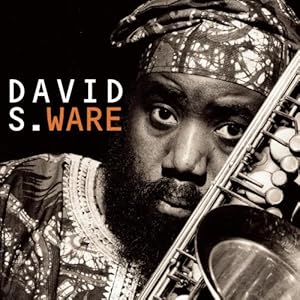
*Some thoughts on a new David S. Ware archival release. David S. Ware was "breaking" (in Rolling Stone, for one thing) right around the time I was getting into "this music." I was engaged with his work then but not, I have realized and continue to realize, as engaged as I ought to have been. (To be more specific, I think I was still pretty immersed in the history of free jazz at the time, to some degree at the expense of the music's present, though I did get out there plenty.) The more I listen, especially to the quartet, on albums like Go See the World, the more impressed I am. This trio with William Parker and Warren Smith is a very different animal, but it's dawning on me that there is really no lesser DSW.
*Harriet Tubman are, at this point, something of an NYC institution. Their new album is fitting of such a group, in that captures a band fully at ease with itself, and with the fact that it will probably never fit neatly into any scene, let alone genre. As discussed in this track write-up, with commentary from the musicians, there are strong and sturdy Sonny Sharrock–ian overtones to the Harriet Tubman project, which manifest in a particularly gritty and transportive way in the Bob Marley cover under discussion. Given my Sharrock fanaticism, I do not point out the above lightly — since his departure, few have managed to even touch on his aesthetic zone / life force, let alone harness core elements of it. That's not to say that this is some kind of tribute band or copycat endeavor. Harriet Tubman are a whole universe of sound and sensation unto themselves, and this new album is an excellent demonstration of its scope and character.
See also: Heavy Metal Bebop with Melvin Gibbs.
/////
Also, re: Heavy Metal Bebop in general, if you have enjoyed past installments, please stay tuned. As always, the series is in glacial yet perpetual motion. We're heading somewhere with HMB, slowly, steadily, and I will share details when I'm able.
Showing posts with label david s. ware. Show all posts
Showing posts with label david s. ware. Show all posts
Tuesday, November 20, 2018

Friday, June 06, 2014
Suspension of self: Mick Barr and Marc Edwards

Last year, I wrote about the jazz/metal intersection for The Daily Note. One of my case studies was the Mick Barr / Marc Edwards duo. By that time, I'd seen Barr play many times—with Orthelm, Ocrilim, Krallice and various other projects—and caught at least one show by Edwards, in collaboration with Weasel Walter (I believe it was the 2011 Death by Audio performance that ended up on Solar Emission), so I had good sense of each player. At least one of their duo sets up to that point was on YouTube, so I spent plenty of time with that document as well. In short, I did my best to get close to the music.
Last night, I saw the Barr/Edwards duo live for the first time, standing front-and-center at Saint Vitus, and I realized that before that, I hadn't been anywhere near it. I'm doing my best to recall it now, after an intense night of music that also featured sets by Many Arms and Dysrhythmia (respective leaders in the zones of what you might reductively call punk fusion and prog metal), and again, I don't feel like I'm anywhere near it. Last year, I wrote about the nowness of witnessing, respectively, Milford Graves and J. Read. To have your mind around those players, fully, you do, literally, have to be there, as the saying goes. I think it is the same for Mick and Marc.
There is this cliché of finding common ground. With Barr and Edwards, what they do is something closer to finding common purpose. Their backgrounds are distinct, tied to their respective ages and geographies—Mick coming of age in the Connecticut and D.C. hardcore/post-hardcore scenes of the early-to-mid-’90s, and Marc in the jazz avant-garde of early ’70s Boston and New York. Edwards made his name with Apogee, a sadly underdocumented trio with David S. Ware and Gene Ashton (later known as Cooper-Moore), brilliantly recollected by Cooper-Moore here and heard on Ware's outstanding debut, Birth of a Being, recorded in ’77 and released in ’79. (Cooper-Moore shares a priceless account of the group's appearance at the Village Vanguard, opening for none other than Sonny Rollins, at Rollins's invitation. "For you see, we had the endorsement of the master… We mounted the stage as if it were a spacecraft, and blasted off.") Barr came into his own with Crom-Tech, an insular prog-punk duo that famously wowed Ian MacKaye and the rest of the D.C. underground.
Edwards, along with Ware, eventually worked his way to Cecil Taylor's band, a collaboration documented on the mighty Dark to Themselves, from ’76. (As Edwards told me on a postshow chat last night, Birth of a Being was sort of the afterlife of Apogee; the band was most active in the early ’70s, and it reunited post–Dark to Themselves to record what would become Ware's debut.) Barr cofounded Orthrelm, which reached its apex with the 2005 minimalist-metal opus OV. Edwards was born, in ’49, more than 25 years before Barr, but the players' trajectories, their respective pursuits of free jazz and extreme post-hardcore/-metal—musics built on intensity and endurance—were leading them to a very similar place. These underground movements aren't quite unified—the crowd at Saint Vitus last night wasn't the same crowd I'll see next week at the Vision Festival, give or take a few fellow overlappers—but the two scenes have, thankfully, become entirely simpatico.
Barr and Edwards have developed a shared language, or more accurately, they've discovered—after being introduced by Weasel Walter, a key facilitator and catalyst of this new jazz/metal moment, as well as an integral participant in it—that they had each arrived separately at a variation on the same dialect. As Mick told me last year, the purpose and method of their duo is clear and straightforward: "I think we’ve done three shows now or four, and every time it’s basically the same thing; we just play a solid 20 minutes to a half-hour, and afterwards, I always feel like I got my ass kicked."
And so it was last night, yielding an experience (probably closer to 45 minutes, on this particular occasion) that I wished afterward and still wish now that I could bottle. Edwards epitomizing a style of free drumming that I think of as coaxing or conjuration, enacting what is more or less a perma-roll around the kit. (You can hear him engaging with both blast-beat-centric metal and what I hear as a very specific sort of ’65–’66 free-jazz approach—think of the undulating, rubato sweet spot between Elvin Jones on Sun Ship and Rashied Ali on Interstellar Space. But in the end, Marc Edwards isn't playing style; he's playing drums.) Employing a loose grip, allowing for the multi-attack strokes that are his signature, and using a double kick pedal to add extra density. (The latter is a recent addition to the Edwards arsenal; Marc told me that after spending roughly four decades as a single-pedal drummer, he made the transition to double kick after seeing Bay Area the extreme-free-jazz duo Ettrick play.) Edwards knows when to add in a gut-punching crash cymbal / bass-drum bash for punctuation, but mostly he's all about the snowball effect, the gradual accruance or invocation of a primal rumble that's maximalist (in terms of the sheer density of notes) and minimalist (in terms of the overall effect) at the same time. Barr is after something similar. His famous cyborg-level picking and fretting chops yield a firehose of sonic information.
The agreement between the two players seems to be, simply, faith in endurance. It's not just some sort of athletic act, what they do, but nor is a self-important "spiritual" exercise. Very plainly, and without making a fuss of it, when Marc Edwards and Mick Barr play duo, they're showing you that there's no distinction between these two pursuits once you reach a certain level. You work for decades to hone what we call chops; then you find a sympathetic partner and enter this free space, this lingua franca of—do we call it avant-garde? I think there's a language pretty well established at this stage, so maybe it's better to say that you willingly step into a kind of DIY sublime, where the extreme volumes and densities of niche styles such as post-hardcore and free jazz blur together, and steadily and deliberately and mostly without pause, you're conjuring and nurturing a vibration. I think of a rubber-band ball being assembled in fast motion or a wave form gradually increasing in amplitude. Whatever the metaphor, it's about starting somewhere, hitting the ground, as it were, and just maintaining, stoking, pushing, pushing, whipping this musical whitewater into a glorious, room-engulfing froth. It's harsh, yes, but also benevolent, loving.
There were several brief pauses in last night's set, and a few of what I'd call chapters. During one segment, Edwards shifted to more of a fractured fusion groove on the bass, snare and ride—as heard here—ceasing the multi-strokes for a period and opening up space in the music. Barr responded shrewdly, using his volume knob to bring his sound in and out. But on the whole, the set was a sort of sonic static—and I mean "static" descriptively, with no pejorative connotation—a statement of either relentless macro-level sameness or infinite micro-level variety.
It's a gift to step into that space with two players this accomplished. Afterward, as I'm doing now, you might step back and ponder the marvel of the circumstance, the years and miles and communities and struggles—all the facts of life in underground music, the way it stubbornly plants itself and endures, cultivates a small, devoted following and persists with a more or less willfully oblivious or even antagonistic relationship to the wider world of art—that brought Mick Barr and Marc Edwards to share a stage at a metal bar in Greenpoint. But there, in that time, in their presence, you're just communing with what they're conjuring. The contrast with say, a work day spent in front of the computer, is total: a welcome blizzard after a day of dry, blazing heat. You don't ever want it to stop, and that feeling persists when it's over. You carry it with you, a seemingly superhuman, yet ultimately so humble and generous, musical act such as this. It doesn't matter what you call it—jazz, metal, improv, minimalism; what's important is the net effect, for listener and—I expect—performer: a temporary and very deliberate suspension of self.
P.S. Videos of Barr/Edwards in action: 2011, 2013 and (wow, just discovered this!) last night.
P.P.S. Went looking for new/recent Edwards recordings last night after the show and came across this late 2013 release, Sakura Sakura (3 variations). Just bought it; can't wait to check it out. Solar Emission, linked above, is highly recommended.
Friday, October 19, 2012
Go see the world: David S. Ware and ELEW
The past couple days have brought startling news from the jazz world:
First, last night's announcement of David S. Ware's passing at the relatively young age of 62, circulated by Patricia Parker and reported by various sources, including Peter Hum's blog.
Second, the publication on Wednesday, via Do the Math, of what can only be called a manifesto from the self-dubbed Rockjazz piano star Eric Lewis (who performs as ELEW). It's a remarkable piece of writing. AccuJazz.com dubbed it "really engrossing straight talk"; I'd second that and add that it's also stupendously witty.
It seems odd to link word of a death with any other bit of information; I hope I don't sound crass in that regard. At the same time, I'd be lying if I said that the two figures didn't converge in my mind when I heard about Ware. Let me explain:
When I think about Ware, I think about beautiful music: e.g., an intimate Brooklyn solo concert I had the privilege to attend in March of 2010 (released last year on Aum Fidelity as one half of Organica), or my favorite Ware record, 1979's Birth of a Being, as far as I know the only officially released document of the collective trio known as Apogee, with pianist Gene Ashton (later to be known as Cooper-Moore; read his fascinating reminiscences re: the group—including an account of opening for a band led by Ware's friend Sonny Rollins at the Vanguard—a little more than halfway the page here) and drummer Marc Edwards (still kicking ass in NYC on a regular basis). Respect to Ware's celebrated quartets of the ’90s and aughts, but this early release has captured my imagination more than any other DSW release. To my ears, it's probably the single greatest document of second-wave free jazz. Happily, a blogger has uploaded it to SoundCloud; the pleasures of this music, that heartbreaking, hymnal, post-Ayler lyricism, which gradually splinters apart, like a homey cottage in the path of a tornado, are plain:
But when I think about David S. Ware, I also think about what it means to have a career in jazz. The discussion of how musicians operating in this genre can make a decent living while retaining integrity is a constant one, which seems to flare up about once a year at least. (See also: another recent post by Peter Hum.) While I doubt that Mr. Ware was a particularly wealthy man in the grand scheme of things, certainly it's fair to say that he was one of the more visible jazz musicians of his generation (maybe "peer group" would be more accurate). I don't think I'll ever forget this Gary Giddins assertion, via a July, 2001 installment of his Weather Bird column in the Voice:
"Let's be bold: The David S. Ware Quartet is the best small band in jazz today. I realize that I will almost certainly hear another quartet, or trio or quintet or octet, this week or next, that will make me want to backpedal. But every time I see Ware's group or return to the records, it flushes the competition from memory."
I didn't know enough about the state of jazz in July of 2001 to particularly agree or disagree with Giddins's assertion, but I admired the ballsiness of the statement. (Looking back on the period now, I'd probably give the nod to Tim Berne's then-nascent Hard Cell band, later to be expanded into Science Friction.) But whatever my own feelings about Ware's music, I had an understanding that he was something like the Michael Jordan of this world of Vision Festival–affiliated NYC free jazz that I was just then starting to discover, the member of that crew who had achieved some measure of niche-transcending fame. Around that time, I remember visiting the apartment of a not particularly jazz-fixated friend and spotting a copy of Ware's 1998 Columbia debut, Go See the World, in his CD collection. It was only later that I came to understand how exactly it was that Ware had achieved this name-brandedness, which began to snowball around 1994, thanks in large part to the passionate advocacy of current Aum Fidelity boss Steven Joerg, then working at the Homestead label. (Brad Cohan's 2011 interview with Joerg is a valuable primer on all this: "The idea of signing the Ware Quartet was a bit of a stretch, but I convinced [Homestead]," says Joerg. "The first record we did—Cryptology—ended up being the lead review in Rolling Stone.") I have a memory of Ware's 1999 Columbia record, Surrendered, as being a bit tamer, but listening back to the two now, I realize that both were/are marvelous anomalies, HTGMLPCFJRs! (honest-to-God major-label post-Coltrane free-jazz records, i.e.) I look forward to getting better acquainted with these albums.
I can't speak to the nitty-gritty details of Ware's Columbia signing; it would be fascinating to read an interview with the A&R rep who was responsible for that deal. [Update: Mark Stryker informs me it was none other than Branford Marsalis! I had no idea. Peter Hum points the way to this valuable document: "Branford said don't change a thing," says Ware. Given that Wynton figures into the ELEW saga, it makes me wonder how many jazz success stories of the past 20 years or so don't include the Marsalises in some respect.] But details aside, and whatever the net effect of this episode on the Ware's quality of life then and later on, one has to marvel at and respect the fact that DSW busted through a glass ceiling in a certain respect. Obviously the scale is vastly smaller, and the analogy is iffy due to the fact that unlike Cobain & Co., Ware's signing did not pave the way for a whole wave of like-minded indie artists, but it's hard not to see Go See the World as the Nevermind of American free jazz, a record that mainstreamed, or at least attempted to, an inherently underground aesthetic without masking its essential rawness—and a record that even celebrated that rawness. It seems to me, in other words, that Ware succeeded in the marketplace without compromising in the slightest, that Go See the World is more or less the next record his band would've made for Aum Fidelity had Columbia not stepped in. If you think about it, that's pretty damn cool.
So when I say I linked Ware and Eric Lewis in my mind, what I mean is that, having just read Lewis's disarmingly candid account of how he forged a thriving career in music—proceeding at first through conventional jazz channels and then later fashioning an arena-ready aesthetic built around improv-heavy covers of well-known rock songs—I couldn't help thinking about how these two figures might have regarded one another. Ware's circle was obviously not the same one (i.e., the Wynton Marsalis orbit) that Lewis occupied before rebranding himself—and if you've read the piece, you know that I mean that phrase very literally—as ELEW. But these are obviously two extraordinarily skilled musicians who labored for years over their respective brands of jazz and managed—again, each in their own respective ways—to carve out a place for themselves in the jazz-unfriendly marketplace. (And even Ware, whether consciously or not, was a brand: It's hard to look at the album cover above and argue that there wasn't some image-building going on there.)
I'm not making any value judgment here. I haven't heard enough of ELEW's music (really, just a cover of "Mr. Brightside" at a Jazz Foundation of America event a few years back) to give an informed opinion on it, and my knowledge of Ware's work in the ’90s and 2000s is spotty as well. But it is fascinating to think of these two figures, both "stars" in a certain sense, one of whom won a degree of fame (and even a major-label deal) working in one of the most seemingly "difficult" subgenres in American music, i.e., post-Coltrane free jazz, without altering his core values in the slightest, and the other, who strategically retooled his entire aesthetic, grafting his love for and command of jazz onto a commercially viable "hook" and succeeding beyond just about any contemporary jazz musician's wildest dreams (touring with Josh Groban, etc.). There is no right path. Ware seemed entirely in love with his artistic pursuit, and Lewis, in his own way, seems to be in love with his. Yes, in the latter case, art intermingles more straightforwardly with commerce, but as anyone who has ever tried to make a living at anything creative (writing, ahem) could tell you, it pretty much has to at one point or another, so why not be open about that fact?
Again, I'm not advocating for the ELEW model, nor am I criticizing it. I'm simply stating that it seems to have worked for him, in the sense that he appears to be happy and fulfilled doing what he does, over and above the fact that he's making a good living doing it, and that that is in many ways the definition of success. Ware succeeded too, in that he reached many more listeners than 99 percent of the other free-jazz musicians who have ever lived. Think of the great John Tchicai, who passed away recently at the age of 76. I don't have encyclopedic knowledge of his work (I will say that I adore the early New York Art Quartet works), but I feel comfortable asserting without verifying it first that Tchicai never landed the lead review in Rolling Stone—or, for that matter, toured with Josh Groban. Everyone loves an unsung hero, but sometimes it's worth thinking hard about the players, like Ware and Lewis, who have "made it," and about why and how they did: how much, i.e., was due to their own deliberate efforts, as in the case of Eric Lewis reimagining himself as ELEW; how much was due to tireless advocates, e.g., Steven Joerg in Ware's case; how much was due to the conditions of the marketplace during a given period, etc. As jazz fans, we're bred to be suspicious of success, of visibility, etc., and certainly many of the music's brilliant statements, especially since the ’70s have been made underground, as it were, but we should celebrate the fact that certain artists in the field have managed to climb a little higher, to position themselves a little closer to the popular sphere, to go see the world, as it were. As Lewis suggests, there are lessons to be learned even from Kenny G.
I don't mean to reduce Ware's sad passing to an occasion for soapboxing; all I mean to say is that, with Lewis's fascinating career arc on my mind, I couldn't help but muse a bit on art-and-commerce as it pertains to jazz. May DSW rest in peace, and may ELEW continue to thrive on his own terms.
Tuesday, June 14, 2011
Studio visit: Milford Graves on record

In a March post, I attempted to make the point that free jazz ought to be documented in the studio from time to time. The only problem was that the Peter Brötzmann albums I chose as examples were actually live recordings. I stand by my argument, however, and it's because of albums like Real Deal and Beyond Quantum, sessions from, respectively, 1991 and 2008 featuring the drummer Milford Graves.
I've been on a Milford Graves kick over the past few days, incited by an interview subject who named Graves's 1976 LP Babi as an all-time favorite. Checking out that record, it was easy to see the appeal: It is as unhinged and raw a free-jazz document as you will find. Like Graves's many ESP-Disk recordings (I happened to catch some great material from 1964's The Giuseppi Logan Quartet on WKCR the other day as part of a Don Pullen profile), it sounds DIY, punk. There's something romantic about that. The legend of free jazz hinges on ideas of subversion and underground-ness. We like to think of these sorts of recordings as having been made hastily and cheaply—or in the case of Babi, a live album, almost incidentally, i.e., the music would have raged on whether or not the tape recorder was rolling. Graves's ESP sessions were mostly (all?) recorded in the studio in NYC, but there's nothing meticulous about them. The resulting documents are more or less the polar opposite of the kinds of gorgeously warm and balanced albums being made for Blue Note nearby at Rudy Van Gelder's New Jersey studio.
Despite all the financial shadiness surrounding ESP, fans of this music—myself included—tend to be glad that those mid-’60s records exist. We should also be happy, though, that many of the artists in question, e.g., Mr. Graves, have survived/thrived long enough to take advantage of more sophisticated recording technology. Just like with old, scratchy blues recordings sourced from 78s, we fetishize the thin, sometimes borderline crappy sound on those old ESPs, hold it up as a badge of authenticity, forgetting that no free jazz actually sounded like that in the flesh. You want to hear a Milford Graves album? Get Real Deal, a duet recording with David Murray recorded in the decidedly non–historically sexy year of 1991, or Beyond Quantum, a 2008 trio album with Anthony Braxton and William Parker. (Both are available as Amazon downloads via the links above.)
I can't express to you the sheer beauty of these recordings—not just the performances, but the SOUND. On Real Deal, Milford Graves sounds like the wind and the rain. He sounds like he's worshiping the drum kit, its glorious range of timbres. I'm listening to the first track right now, and it sounds heartbreakingly alive. The recording is wonderfully three-dimensional: You have the ride cymbal over in the left channel, the toms and bass drum closer to the center along with Murray's tenor, the hi-hat slightly to the right of those. I don't think I've ever heard another drummer paint with his kit the way Graves does, coax as much nuance out, and a musician like that deserves to be heard in a warm and resonant document like this, without that obfuscating aspect of rawness—obfuscating not just in the sense that detail is lost, but in the sense that it invites you to impose upon it a kind of punk romanticism. The romanticism is all there in the drums, though—you don't need an invitation to heap on your own baggage.
In short, free jazz deserves the studio treatment just as much as any other music. Sure it's a style built on rawness and spontaneity, but with the truly great musicians like Graves, you're going to get that no matter what. Why not hear him in glorious hi-fi? Here is a sample of Beyond Quantum—skip to around 1:50 for a taste of what I'm talking about:
I love that the ESP records exist (The New York Art Quartet is a particular fave), that Babi survives. But in terms of what I would take to a desert island, it's the pro-shot stuff, so to speak, where the music brings the heat and the recording soaks up the whole range of frequencies. Interstellar Space, anyone? Recorded at the aforementioned Van Gelder facility, not at some no-name Times Square facility or at a gig with a room mic. These Graves records are part of that illustrious tradition. Like many of the recordings in, say, the Aum Fidelity catalog—I've been very impressed recently by the new Planetary Unknown, with David S. Ware, Cooper-Moore, the aforementioned William Parker and Muhammad Ali—they're about museum-quality preservation, not DIY mythmaking. Artists of this caliber deserve such treatment. It is, I would venture to say, the real deal.
P.S. ECM is another label that has long understood the value of superior sound quality and studio documentation. You won't hear the full range of a Paul Motian performance on any other label. (See I Have the Room Above Her.) Speaking of which, I wrote about a handsome new studio-recorded Craig Taborn solo disc on ECM in this week's Time Out New York.
Subscribe to:
Posts (Atom)