I'm generally superstitious about announcing events before they come to pass, but now seems like the right time to mention that on Monday, July 20, I'll be starting a new full-time job as a senior editor at RollingStone.com. I'm thrilled and grateful for the opportunity.
I leave behind a dream job (a series of them, really) at Time Out New York, a publication where I spent 10 great years. I'm tempted to shout out all my TONY friends and former colleagues, who helped make the past decade of my working life exceedingly rewarding, challenging and fun, but I'm worried I'll leave out a crucial name or two.
Best just to say a heartfelt thanks to all those folks, as well as everyone else I've worked with during this time: publicists, bookers, artists and just about anyone who devotes their life to the business of music in NYC. It's been wonderful collaborating with you, and even though my new job will have more of a national focus, I look forward to furthering those relationships as time goes on.
I'll still be checking out as much music as possible, live and recorded, and covering it whenever and however I can—including, as always, on DFSBP. Once I'm settled in, I'll post my new work e-mail address for anyone who might want to get in touch. Please feel to get in touch via e-mail: hank [dot] shteamer [at] rollingstone [dot] com.
*****
With help from my partners at Northern Spy and Aqualamb, I'm hard at work on my Kickstarter-funded dream project, the craw box set. I'll post any major updates concerning the release here, but you can also keep tabs on all craw-related matters via Facebook.
*****
My own band STATS, in which I play drums and share vocal and composition duties with my dear friends Tony Gedrich (bass) and Joe Petrucelli (guitar), will release a new LP, Mercy—our debut full-length—via New Atlantis Records on August 8, 2015. Go here for more info; stream a track here; and stream a different track and read an interview here. If you listen, please listen loud.
I'm proud of the current Time Out New York cover story, which I had a hand in. Since Julian Casablancas and Karen O both have new solo albums out, we thought it would be fun to have them interview each other. Thankfully, they were game, and I think we ended up with a really cool conversation: wide-ranging, alternately insightful and silly, and (as far as I know) unique. I'm pretty sure these two have never sat down and had a conversation this extensive, let alone on the record. Read it here if you have a chance. A big thanks to my too-numerous-to-name Time Out colleagues and photographer Jake Chessum for helping to make this awesome.
A bit of background. I adore the Strokes, as well as scattered bits of Casablancas's extracurricular discography: a handful of tracks from his first solo record, 2009's Phrazes for the Young ("11th Dimension" and its accompanying video floor me; I really respond to the combo of kitschy flamboyance and self-deprecating wit that's on display here); his incredible Daft Punk collaboration from Random Access Memories; and various fleeting moments on his insane, sprawling, seemingly willfully opaque new one, Tyranny. When I saw the Strokes at Governors Ball this year—awesome show, btw—I Tweeted something to the effect of, "The Strokes have had the last laugh. Their songs are now every bit as classic, if not more so, than the output of the bands everyone said they ripped off." I really do believe that they belong in the all-time-great pantheon, despite the spottiness of some of the recent records. Even on First Impressions of Earth, Angles and Comedown Machine, the band's signature baroque-but-economical brilliance shines though.
I'm definitely a fan of Yeah Yeah Yeahs, though I don't know their catalog as well. A song like "Date with the Night" is indisputably badass. Karen O's new solo record, Crush Songs, is fragile and beautiful—exactly, it seems to me, as intended. There are some real gems toward the end of the album: "Body," in particular, is a quiet killer.
/////
And for Stereogum, a 20th-anniversary look back at Chocolate and Cheese. I couldn't help but recycle some themes from my book, but there are definitely new ideas here. I adopted the above image as an emblem for the album, and the band, as a whole. I also dug out a choice interview outtake that didn't make it into the 33 1/3 volume (the "They're classicists, you know?" bit)—I'd forgotten how insightful former Ween manager Dave Ayers was.
Speaking of 33 1/3, the series celebrates its tenth anniversary this year—Lit Genius is kindly hosting annotated excerpts from various books in the series; here's mine—and there's a party at the Powerhouse Arena in Dumbo this coming Thursday, October 2. I'll be there during the early part of the evening, so come on out if you're around!
In 2006, I spent an afternoon at Chico Hamilton's apartment, interviewing him for Time Out New York. I was underprepared; he was ailing and rightfully impatient. The conversation limped along until I mentioned, in quick succession, that I was 1) from Kansas City and 2) a drummer. The Q&A is no longer on the TONY site, but after I heard about his passing, I dug it out of the archives and transcribed it.
I still don't know Hamilton's music as well as I'd like to. I do love what I've heard of the early quintet material, and about a year ago, I caught a few pieces off Man from Two Worlds (a ’63 Impulse set with Charles Lloyd and Gábor Szabó) on WKCR and sat spellbound. The only time I saw Hamilton live was at the 2011 Winter Jazzfest; here's my mini review:
"I'm happy to be here.... At my age, I'm happy to be anywhere," joked
89-year-old drummer Chico Hamilton from the stage, before offering a
textbook demonstration of how swinging propulsion can coexist with
whisper-level dynamics.
I look forward to further listening. Hamilton seems to be someone who fits into no jazz school; from what I remember, those early records are exceedingly polished, while the Impulse dates are loose and raw. Anyone know of any detailed primers re: his body of work? I'd love a guided tour.
In the meantime, here's the TONY interview, in both photo and text form:
"Backstage with… Chico Hamilton"
By Hank Shteamer; Time Out New York – September 21, 2006
You're commemorating your 85th birthday this year by releasing four diverse CDs. They include your own tunes, pieces by Duke Ellington and the Who, plus DJ remixes—why cover so much ground?
Well, that's what music is all about, isn't it? Versatility in regards to sound, rhythms and melodic structures.
One CD has a vocal cameo by Arthur Lee.
Yeah, I was really shocked when I heard that he died [in August]. I think this was his last recording. My band performed with his group Love [in the late ’60s] out in L.A., where I'm from. It was unusual for a jazz organization to share the stage with a rock group.
Speaking of your past, you worked for years in commercial and movie music, scoring films such as Roman Polanski's Repulsion. Why'd you move away from that?
There's really no such thing as a film score anymore. Everybody lifts prerecorded tracks. As for my commercial period, that was the only time jazz was played on TV. Most of the commercials were recorded by jazz musicians, who had no choice in the matter—but that work drains you, you know?
I can imagine. You teach drums and lead ensembles at the New School—what led you to that?
I realized that this could be my way of giving something back, because music has been very good to me. Schools are the only place to learn jazz today, but sadly, a lot of people teaching this music know nothing about swinging.
Okay, how do you teach someone to swing?
It takes two things: patience and fortitude. [Taps rhythmically on table] You hear that? Okay, do that for me.
[Taps along]
Good. Now can you talk at the same time?
Okay… [Still tapping] My name is Hank; I was born in Kansas City…
You're from Kansas City? Oh shit, okay! All right, keep tapping; now I want you to do this at the same time: [Sings] daaah-dah dah.
[Taps, sings] Daaah-dah dah…
See what kind of a groove you got in all of a sudden? Your whole body started to feel it, didn't it? It's just that simple, man.
Well, I actually play drums too.
That's cool. What kind of group do you have?
It's kind of a loud, heavy rock band.
Why loud? If you start loud, where you gonna go?
Down, I guess!
I think you should have some sensitivity to your sound, because the ear can only take so much.
Do you ever play loud?
I don't have no need for it. I play in the danger zone. What's that?
It's a way of playing that's very tensified, but at a volume where you can hear everything. And I stay in that zone, with that energy happening, you dig?
*NYC Metal package at Time Out New York. This one's been gestating a long time; I'm really happy with how it turned out. Don't miss the portrait gallery—featuring exclusive shots of Immolation, Ross the Boss, Colin Marston, the dudes of Saint Vitus and many more—and the equally wide-ranging Spotify playlist.
*Black Host review at Pitchfork. This is a fascinating record and a very worthy follow-up to Gerald Cleaver's prior bandleading date, Be It As I See It, discussed in brief here. As a point of comparison, here are some thoughts on a Black Host live gig I caught in December of 2011.
*The 100 Greatest Drummers of Alternative Music at Spin. This one's close to my heart. I came of age, both as a listener and as a drummer, during the ’90s "alternative" era; I learned to play drums, and appreciate them, from people like John Stanier, one of 16 artists I blurbed for this list. (Others I wrote about include Greg Saunier, Brian Chippendale, Blake Fleming, Drumbo, Tomas Haake, Bill Ward, Han Bennink, etc.) I was part of the nomination process, but I didn't have final say re: who was included—three names you'd see on there if the latter had been the case: Tony Williams, Bill Bruford, Mac McNeilly. Still, I can always get behind a good rethink of a given canon. Among the drummers I didn't blurb, the ones that mean the most to me here are: Dale Crover (likely my personal No. 1 among this field; balletic brontosaurus), Chuck Biscuits (the punisher; Black Flag, sure, but my God, his Danzig work…), Britt Walford (a beautifully weighty and creative player whose talents are too often overlooked), Lombardo (beast), Che (mythical creature), Copeland (ultimate style-ist), Canty (post-hardcore poet), Stevenson (prog-punk champion).
*Giorgio Moroder interview at Red Bull. I had a pleasure speaking with this wise and charming man. Didn't know his work so well going in; relished the chance to study up. For the uninitiated, I highly recommend this comprehensive Moroder mixtape.
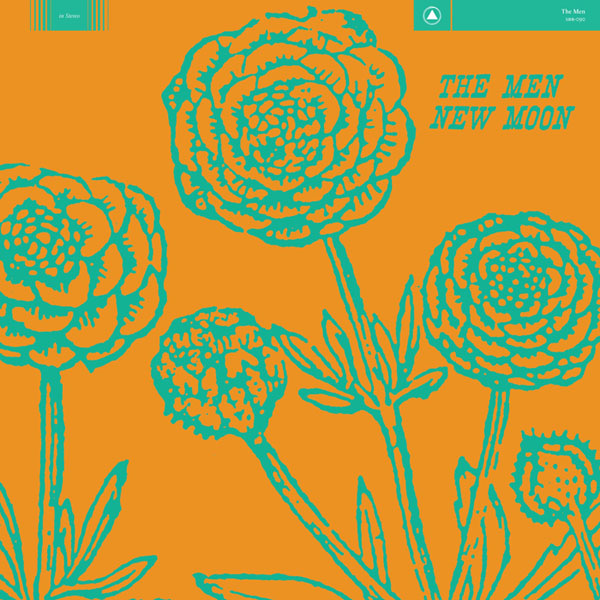
Via Time Out New York: a preview of The Men at Bowery Ballroom tonight. As I indicate in the piece, their 2012 album, Open Your Heart, has been a serious grower for me; if I'd spent a little more time with it, I'm pretty sure it would've ended up on my top 10 list. I've been savoring the latest Men LP, New Moon, as well. For starters, how could you resist "Half Angel Half Light" or "I Saw Her Face"? I look forward to really getting to the bottom of this one.
Top 10 albums of 2012 (all genres in play): Time Out New York (annotated, with Spotify playlist) Pitchfork (unannotated, with top 10 singles list)
Top 10 jazz albums of 2012 (with many honorable mentions): Jazz Journalists Association, plus annotated breakdown, part I (plus intro), II and III
/////
I participated in a few different year-end polls this season, each with its own parameters. I tried to keep my picks consistent across the various platforms, but inevitably, a bit of imprecision crept in. Below you'll find a list of my top 50 records of the year, as submitted to the Pitchfork contributors' poll. (My final list may have differed very slightly in terms of order, but I'm 99 percent sure that these 50 records are the ones I ended up voting for; it's hard to say because I entered my picks via an online voting portal that's since disappeared.) The first 10 constitute the same top 10 I submitted to Time Out New York and the Village Voice's Pazz and Jop poll, and the 15 jazz records found here constitute the top 15 jazz records I listed over at the JJA site, with the top 10 of those making up my Jazz Critics Poll ballot.
Below, I link to my prior coverage where applicable, discuss any strays and provide listening samples for albums 20–50 (via a playlist apiece for each grouping of 10, including a track from every selection that's available on Spotify). Hat-tip to Seth Colter-Walls—who's got a great all-genres list over at the Awl—for the formatting suggestion.
Thanks for reading. As always, comments/feedback welcome, especially re: records I might have missed!
A rock- and male-heavy top 10, yes. I've been a little bothered by that in recent days, thinking I should've mixed it up a bit more, but (A) I sort of believe that top 10 lists make themselves, i.e., these are the albums that chose me over the past year, not the other way around (to put it another way, these are records I played and played and played, in both professional and personal contexts), (B) this list is much less monochrome than it looks on the surface and (C) I've done my best to shout-out at least a sampling of all the other great albums I heard in 2012 below and via the jazz-only list linked above. The narrowing part was tough; there are albums in the 30s and 40s below that were in serious contention for the top 10.
To comment a briefly on the unlinked above:
Possession is a magical album. As I suggested in my TONY list, this record both epitomizes and transcends the recent retro-metal trend. Yes, its basic palette is an old one, but its emotional content is so not mere pastiche; in the mold of the best of Dio-fronted Sabbath (Mob Rules, The Devil You Know), it's at once tough and badass, and also crushingly sad, qualities embodied in Christine Davis's scratchy-throated vocal turn—somehow both majestic and humble. And the riffs and structures go way beyond post-Sabbath-ism—so effortlessly, stylishly progressive, full of twists and sudden set changes. Spend time with this album, enough time to listen past its surface retro-ness and on to its timeless rewards. Metal is not something donned, assumed for Christian Mistress; this is real communion with the past—the ’70s and ’80s, yes, but also more ancient eras. Possession is so damn earthy it almost feels pagan. A big salute to this one.
Damn, is fun. ever fun. Some Nights speaks to the part of me that loves the pomp of Elton and Queen, but as with Christian Mistress, this isn't mere retro. This band's gift is updating that sound with a very modern kind of wryness—it seems almost too perfect that one of the dudes in the band is dating Lena Dunham. This is the kind of record that takes a subculture (the modern NYC hipster) and makes it into a kind of super-stylized Broadway-style tragicomedy. It's over-the-top and self-deprecating but it's also deeply touching. And the songwriting and arrangements are just stellar. I love this kind of pop, the kind that respects old-school craft but finds a way to say something contemporary.
Re: Nude Beach, again with the retro. The entire album is not quite this good—if it was, it might've been my album of the year—but, dear God, "Radio" and a few more…
The Rush album is solid, solid, solid. Snakes and Arrows was a decent record, but they are back in the driver's seat with this one. The real story here isn't the recent Rock and Roll Hall of Fame inductees' (ahem) return to concept-album-dom; it's that that they've written probably their strongest set of songs since 1993's Counterparts.
R. Kelly is still on his own backward-looking tip, and he seems to be having a hell of a time. There's plenty of cheese on this record, but also pure, post–Barry White gold, e.g., "Lady Sunday."
The Dysrhythmia record is crammed with their own brand of "hits." As I've written before, these are Dysrhythmia's catchiest songs to date. Went through a period of could-not-stop-listening-to-this re: Test of Submission a month or so back, due largely to "In Secrecy" and three or four others.
What a puzzle Open Your Heart is. This album blindsides you in at least four different ways. Individual tracks make perfect sense, but as a whole, it's inscrutable in a way I very much enjoy. "Rock" sticks, but any subgenre tag you might try to pin on it slides right off.
I think Anarchy, My Dear is the best Say Anything album since the frankly untouchable …Is a Real Boy. Max Bemis is one of our great songwriter/bandleaders. Locked Down is essentially a perfect example of the "re-branding" album, i.e., one of these increasingly common efforts where an older artist whose career has slowed or perhaps even stalled teams up with a sharp, savvy producer who can reconnect him or her with the kids/critics. Sometimes these efforts can smack of crass strategizing, but this one is simply a great Dr. John album that happens to have been abetted by a famous young musician (Dan Auerbach of the Black Keys). This material sounded every bit as good live, when I heard it at BAM earlier this year.
A glorious return for Behold, which marks the BtA debut of Weasel Walter on drums. It's only fitting that this project should rev up again just as the Flying Luttenbachers endeavor was concluding. Extraordinary, inspiring extended composition first; great metal second.
Doug Moore's Invisible Oranges write-up of Vanquish in Vengeance was spot-on. This record (A) sounds very little like the murk-fi masterpieces (Onward to Golgotha, Mortal Throne of Nazarene) that established Incantation's sterling reputation, and (B) really isn't surprising in the least. It's simply an excellent genre-obedient effort by a band that helped define the genre—in other words, the death-metal analog to the Cookers' Believe.
Man, is Of Babalon ever heavy. An excellent companion to Serpentine Path, another 2012 effort featuring former Unearthly Trance member Ryan Lipynsky. This one is both more diverse stylewise and more vicious in its mood. Lipynsky isn't a revolutionary, but the degree to which he really and truly means it when he makes metal makes him a standout figure in the underground.
Monolith and Utilitarian are blistering new albums by long-running bands I've never truly loved in the past; these efforts woke me up. (In Napalm Death's case, an incredible Maryland Deathfest set helped too.) Both records impressed me with how catchy and diverse they were—dig those theatrical chorus hooks on Monolith, esp.—demonstrating that grindcore has come a long way from its super-primitive roots.
The hype surrounding Death Grips (Epic, not Epic—yadda, yadda) was a little wearisome, but I still found No Love Deep Web to be worthy of its title. It's a chaotic yet focused negative-vibe spew that's hard to tear yourself away from.
I'm a big Leonard fan in general, but the past couple LPs haven't grabbed me. This one seems stronger, aiming for the midpoint between solemn and wry. Like his current live show (I caught him at the Beacon a few years back), Old Ideas feels warm and connected but not hokey. In contrast, I don't know Mould's post–Hüsker Dü work well, but Silver Age grabbed me immediately, as I expect it would anyone who enjoys aggressive, tightly composed melodic rock. "Descent" is an incredible song. Speaking of, I meant to include that in my top 10 singles list…
/////
P.S.
As indicated at the top of my 2012 jazz round-up, Ravi Coltrane's Spirit Fiction was an album I enjoyed greatly throughout the year and unintentionally overlooked when it came time for year-end voting. I'm bummed about that; if I had my Jazz Journalists Association / Jazz Critics Poll top 10 and Pitchfork all-genre top 50 to do over, I'd include it in both. In any case, one happy side effect of the omission is that I became re-enthralled by Spirit Fiction over the past couple weeks. It really is outstanding, start to finish.
Another two I woke up to too late to consider them for these polls:
Bill McHenry La Peur du Vide
I loved the quartet on this record—with Orrin Evans, Eric Revis and Andrew Cyrille—when I heard them at the Vanguard last November. But I didn't warm up to La Peur (recorded at the same venue this past March) on a first listen. Something about it sounded straighter, less mysterious than what I'd remembered. Turns out I just didn't sit with the record long enough. The first track, "Siglo XX," is indeed pretty conventional post-Coltrane sax-quartet jazz, but things get so deep/surprising as the album continues. Such an absolute pleasure to hear Andrew Cyrille featured so prominently and in such unpredictable ways, and Evans and Revis are in bruising form here as well. This record is a subtle killer, every bit as essential as McHenry's earlier collaborations with Paul Motian.
The Bad Plus Made Possible
Another strong Bad Plus record. For me, this one doesn't quite reach the level of the sublime Never Stop, but there's some extraordinary stuff on here, particularly Reid Anderson's two latest triumphs: the hushed-then-ecstatic epic "In Stitches" and the plainspoken, melancholy-pop-ish "Pound for Pound." (File the latter of these alongside the Eri Yamamoto and Federico Ughi records discussed here.)
Also, Xaddax and Feast of the Epiphany made great records this year—in Feast's case, several great records; I especially endorse Solitude—which were out-of-bounds for me pollwise due to friendships with the parties responsible. Visit Xaddax here and Feast here.
/////
Bonus:
Time Out New York's full year-end Music package—including a list of top concerts, with a few of my entries—as well as top 10 lists by my colleagues Steve Smith and Sophie Harris.
Here, via Time Out New York, is my review of Frank Ocean's Channel Orange.
This version of the piece, the same one that appears in the current print issue of TONY, is actually my second stab at an assessment of Channel Orange, and the one I'm much happier with. At the end of the review linked above, you'll find a link to the first review I published, which went live the day of the album's surprise-attack midnight release.
The short answer to "Why are there two?" is that soon after I published the first one online, I realized that it had been a rush job. I spent more time with the album over the next couple days, and it steadily grew on me. I realized I could still complete a new version of the piece in time for our print deadline, and thanks to my patient and understanding editor, Steve Smith, take 2 is the one that ended up running.
This sequence of events sounds pretty straightforward, but the fact is that it kind of drove me insane last week. (My wife could certainly describe this state of mind in greater detail.) My initial response to the record—the follow-up, I should add, to my favorite album of 2011—was mixed, and as the rave reviews started rolling in, I started to second guess myself, not because I felt like my take needed to mirror everyone else's, but because I realized that I simply hadn't spent sufficient time with the record.
During my career, I've had to write surprisingly few rush reviews. Typically if I'm reviewing a record, I have the music weeks or months in advance. With the Ocean, though, that wasn't an option. I heard it for the first time when everyone else did, last Tuesday morning. As soon as the reviews started going live—i.e., pretty much immediately—I felt compelled to jump into the fray. I was talking about the album with some friends and fellow music writers over e-mail, but that didn't suffice; I felt, for no reason other that that journalists in the internet age tend to feel that they're late on a story (even something as in-the-grand-scheme-of-things trivial as a review of a newly released work of art) mere hours after the window on said story has opened, that I needed to publish immediately.
The problem with that urgency is an obvious one: First impressions are iffy. (I should state another obvious point here, i.e., that there's no such thing as a "correct" record review, only one where the writer has had sufficient time and space to get familiar with the album in question and work out their formal impression of it—the argument they want to make.) This is a constant pitfall of deadline-oriented writing-about-music (or writing-about-art, period) and this particular instance certainly wasn't the first time I'd published a review and second-guessed it. What was special in this case, was the intensity of my bummed-out-ness re: that second-guessing: not exactly the feeling that I had let the artist down (because, let's be serious, my Channel Orange review was one of approximately a zillion that have been published; in the end, what I said matters to relatively few people aside from myself), but the feeling that I hadn't given myself the time and space I needed to simply do a good job on the piece, to come up with something I could stand by and be happy with going forward. The latter criteria, incidentally, do apply to the second version of the review, the more positive one you'll find at the link above.
Along with the aforementioned bummed-out-ness came a painfully complete understanding of why I felt that way, and what I needed to do in the future to avoid feeling that way again. Film reviewers may very well have to settle for one pass through the movie in question, simply because of the logistical impracticality/impossibility of watching the entire thing again in time for their deadline. But music reviewers tend to have the luxury of at least a couple spins, and here's the reason why we ought to take full advantage of that luxury (or at the very least, why I plan to in the future): When you're hearing a record for the first time, especially a record that you've looked forward to, by an artist you already know you care about, you're not really hearing the record. You're hearing some kind of composite sonic image: the record you hoped you'd hear, overlaid on the actual thing. In many cases, and I think in the case of my Channel Orange experience, your expectations are so extensive and so powerful that they simply drown out the sounds that come out of the speakers. Listen a few more times, and you can begin to edge that essentially meaningless set of expectations out of the picture; you can, in other words, hear the record on its own terms rather than on yours. Now again, I'm not saying that at that point, whatever you write is somehow "correct." What I'm saying is that at least you're engaging with the given record in a fair way; you're giving it ample chance to reveal itself.
Record reviewing is no exact science. There may, in fact, be few more inexact sciences. But as I said above, it really comes down to the writer's own feelings. If others get something out of the piece, that's all the better, but as a writer, you simply want to be able to stand by what you wrote, to feel afterward that it accurately expresses, in an objective way, how you feel, what you'd meant to say. As any writer could tell you, sometimes that isn't the case, for a variety of reasons. Sometimes you finish a draft of a piece and it appalls you. If you're on deadline, you might hand it in anyway, because you have no choice, but you don't feel a sense of proud ownership. And that sense of proud ownership is all I mean to ponder here, i.e., how best to end up feeling that way. In the super-specific case of a record review, I think it's important to take one's time, or to take as much time as one has, because you're more likely to end up proud of what you've written, or at the very least to feel comfortable standing by it. Now, of course, there are plenty of records that have taken me far more than a few spins to warm up to—several years' worth of spins, in some cases—but I'm speaking here about a deadline-oriented situation. What you want to do in these cases is make sure you've flushed the pipes—that is to say, eroded as much of your essentially irrelevant and potentially insidious expectations as possible—before you drink the water. That's when you're doing your job, i.e., writing about the thing in front of you, rather than the version of the thing you've been carrying around in your mind. I was fortunate enough to get a second crack at Channel Orange; I hope that next time, I'll have the good sense to wait before taking my initial swing.
Next Wednesday, 5/9, Gene Ween plays his first live show as Aaron Freeman. I previewed the show for Time Out NY. (Click the "More" tab to read the full text.) Freeman's new record, Marvelous Clouds, is something special; for one thing, I'm now fascinated by Rod McKuen.
You'll often hear people who make their living opining about the arts grumbling about the task of year-end list-making. I don't relate. Honestly, I think year-end lists are pretty awesome. Parameters are important: They force you to make those "What would you save from a fire?" (or "…take with you to a desert island?") judgment calls. For me, the process of compiling a year-end list is one of internal debate: "Do you really stand behind this record, Hank? And if so, what makes it more worthy than these ten you're omitting?" I enjoy the end product as an object in and of itself, the way the entries flow and play off one another. I enjoy having the opportunity to say thanks to the artists whose work has enhanced my life over the past 12 months—and to celebrate the fact that people are still bothering to make albums at all.
I also like reading other writers' lists. I love the multiplicity of voices, the hum of conversation. It's all a bit overwhelming, sure, but buried within the din is an important lesson—especially during a year like this, where there's no consensus choice à la My Beautiful Dark Twisted Fantasy. The lesson is that there's really no such thing as consensus (something Phil Freeman addressed provocatively at the beginning of the year); each writer is a beat unto his- or herself. Anyone who puts together one of these lists and thinks they are making some sort of objective statement is mistaken. On the contrary, the subjectivity of these lists is precisely what makes them great. If you trust the opinions of the writer in question—not necessarily agree with them, but at least respect their integrity and the formidability of the brainpower behind them—you can learn something from their list. You'll hear about a record you missed entirely, find reason to go back to one that didn't grab you on a first listen, or even gain a fresh perspective on a selection from your own list. In short, it's fun to be a part of the conversation.
For me, over the past week or so, that conversation has of course featured my esteemed Time Out colleagues, all of whose year-end lists can be found here. Other lists that have grabbed me: Those by the four Times pop critics, which you can check out here (along with an enjoyable roundtable podcast); Adrien Begrand's epic, still-unfolding, all-genres-in-play list, as well as his metal-only one; another metal list, courtesy of the hilarious and always on-point The Living Doorway blog; Seth Colter Walls's artfully disclaimed list at The Awl; Patrick Jarenwattananon's pithy, poetic list at A Blog Supreme; Brent DiCrescenzo's entirely iTunes-playcount-sourced list at Time Out Chicago; the various lists by my fellow Jazz Journalists Association members; and Nate Chinen's customary year-end critics' summit. Hopefully I'm not forgetting any of the ones I've savored thus far. But at any rate, you see my point: Everyone has a different take on the bygone year in music, and I dig that. No one is right (or wrong), and everyone wins
Update: Saturday, 6/4/11—This post has been updated with Ted Panken's latest response, and my response to that response (and yet another response from Ted!). Scroll down to read the newer material.
I'm happy that people have been checking out the list of NYC jazz icons that my TONY colleague Steve Smith and I put together. Ted Panken took the time to organize his reactions into a thoughtful blog post, and I thank him for this effort. Since Ted takes issue with the overall tenor of the list, it seemed appropriate to respond. I attempted to post the following as a comment on his blog, but I think it may have been auto-rejected on account of its length. Whether or not it shows up there, I wanted to post it here for the record; I've slightly augmented my initial comment to clarify a few points and to specifically address this remark of Ted's: "In my view — and it’s only my view — a few too many of the choices privilege an aesthetic of recondite hipsterism."
/////
Greetings Ted,
I appreciate your thoughtful response. Leaning too "avant" or "progressive" was a concern of mine, but in the end—and I speak only in terms of my contribution to the project—I had to go with my gut, as well as with what I know. I make no claim to a 360-degree viewpoint. When it comes to jazz in our wonderful city, I keep up with as much as I can, but obviously I have my biases and blind spots.
In a way, I was hoping for exactly this sort of naming-names rebuttal. Some of the artists on your list (Binney, Lovano, Reid, Ribot, Eskelin, Morris, etc.) are very familiar to me and came up during Steve's and my discussion leading up to the final selection. Others (Harrell, Malone, Lynch) are less so, and I look forward to doing some research.
As far as the use of the word "icons," maybe there's some hyperbole there. I guess that, word choice aside, what I personally was aiming for was a kind of representative cross-section. And per my admission above, we may have failed in that. In our defense, though, I think we made strong cases for our inclusions, leaving aside those we may have excluded; maybe that's the best a list-maker can hope to accomplish.
To address one specific point, our inclusion of Marsalis wasn't begrudging at all—we simply ranked him where we felt he belonged. Another point re: the nitty-gritty of the rankings: To me, the most enjoyable aspect of making the list was the fact that Steve and I each independently arrived at Paul Motian as our No. 1 when this project was still in its nascent phase. In a way, that fact should tell any reader of the list where we're coming from. A list on which, say, Wynton placed first would be a list written from a very different perspective, and it's a perspective I totally welcome. (Seriously, if anyone wants to make that list, I'd love to see it!) But going back to that issue of bias—let's just call it taste—as anyone who's stopped by my blog could probably tell you, I make no bones about my deep love for the mystery men of jazz (Andrew Hill, RIP), of which Motian is probably our greatest living example, and certainly our greatest living-in-NYC example.
With regard to some of the younger players on the list, if cheerleading for the likes of Jon Irabagon, Matana Roberts and Fieldwork makes me a proponent or enabler re: an aesthetic of recondite hipsterism, then so be it. I can definitely respect the fact that the essence of great jazz can sometimes get obscured when there's too much focus on the "avant," conceptually rigorous or future-minded, but I nominated these three (and several others on the list) simply because I feel they represent the best kind of progressiveness—one that forges ahead without losing the thread.
Anyway, our chief goal was to incite discussion and—if not ire—at least enough controversy to fuel some impassioned responses. I greatly admire your work, and I'm sincerely honored that you took the time to write up a thoughtful rebuttal to what we put out there. The fact that there's disagreement signifies that we are surveying an extremely broad landscape re: "NYC jazz 2011." On that note, I echo Nate Chinen and Ben Ratliff in saying, more or less, bring on festival season! (I caught one of our TONY "icons," Lee Konitz, kicking off the June jazz rush in high style this very evening at the Blue Note, on the recommendation of Jim Macnie, a writer who I bet could make an essential-NYC-jazz-artists list to put us all to shame.)
Thanks again, Ted, and welcome to the blogosphere. Icons aside, these blindfold tests you've been posting (Konitz, Motian and there's more on the site) are blowing my mind.
-HS
/////
Ted Panken's response, posted on his blog:
Thanks, Hank. Had you said “representative critical cross-section” rather than “icon” (and I realize that this is an article for an civilian magazine) I would still have disagreed with but wouldn’t really have had a reason to express high dudgeon. To call someone an “icon” denotes influence, of being an artist with acolytes, who has influenced a stream of musical expression or found a sui generis path from deep R&D on the fundamentals.
Nomenclature aside, your “Time Out” list raises a broader point, the “sore spot” I mentioned towards the end of my post, which is the exclusion from the canons of all too many of my brother and sister journalist-critics of artists who work within groove- and swing-based contexts, who put some blues into their expression, and who endeavor to let their imagination and creativity operate within the idiomatic parameters of jazz and Afro-Caribbean traditions — not to recreate or xerox those traditions, but to deal with them in a present-day context on their own terms. The “mystery men” who fascinate you reached that point through long apprenticeships spent working through these vocabularies (or, as Henry Threadgill discussed with Ethan, the various tributaries of European music and other American and World vernaculars) and allowing their voices to emerge in an organic way.
/////
My response to that response:
Ted,
Thanks for posting the comment.
I understand what you're saying about the dangers of privileging the outré over the bread-and-butter. And I'm very familiar with the history of, e.g., Motian, and what led him to his more abstract late work. At the same time, I don't feel like anyone that Steve and I championed can be accused of ditching tradition in favor of novelty or lofty conceptualism. Take your description below:
"…artists who work within groove- and swing-based contexts, who put some blues into their expression, and who endeavor to let their imagination and creativity operate within the idiomatic parameters of jazz and Afro-Caribbean traditions — not to recreate or xerox those traditions, but to deal with them in a present-day context on their own terms."
When I read that, the very first artists I think of are players such as Jon Irabagon, who engages in a very direct way with Sonny Rollins in his "Foxy" project and has a record ("The Observer") out with Kenny Barron, one of the elders whom you cited as an omission on our list. Additionally, the Mostly Other People Do the Killing band, of which Irabagon is a member, is one of the most historically minded jazz ensembles in NYC, right down to their parodies of classic cover art and liner notes. Or I think of Matana Roberts, whose "Coin Coin" presentations seem to me like a very conscious engagement with the work of Mingus, Max Roach and John Carter (and maybe even Wynton Marsalis), artists whose work grapples with cultural history and sociopolitical reality. And Jason Moran's ties to Byard, Hill, Abrams and others—not to mention Monk and the stride tradition—are well-documented. To their credit, I think a lot of the younger players who have been captivating the critics are doing so precisely *because* they're demonstrating a very deep awareness of what came before and doing so in very novel, personal ways.
There's definitely such a thing as throwing the baby out with the bathwater when it comes to jazz "innovation," but I'd happily defend all the artists on our list (and again, I'll concede that "icon" may have been too strong a word—in the end, though, the choices and the text are the real content of Steve's and my piece) against such accusations. You'll find tons of groove, swing and blues in the work of the Irabagons, Robertses and Morans of the scene.
Thanks, HS
/////
Ted Panken's response to the above is here. Apologies for such a convoluted post! Happy to field any questions on the whole exchange.
Please join me in welcoming Evan Parker - one of the world's foremost sound scientists - to NYC. Last night he kicked off a two-week stand at the Stone on the LES. The list of collaborators, viewable here, is pretty stunning. Here is my Time Out NY preview of the residency. Please note that, sadly, Parker will not be playing with bass master Dave Holland on October 14; I'm not sure what the deal is, but Holland confirmed yesterday via Twitter (!) that he will not be able to participate. There's still plenty of other awesome stuff going down, though. I'm not going to make any promises about what nights I'll be able to make it out, but I will say that I definitely have my eye on the George Lewis duo set this Saturday - was just digging the amazing From Saxophone and Trombone (1980) last night - and the Joe McPhee and Susie Ibarra duo sets next week. We'll see what happens.
Bonus tracks: Here's my All Music Guide review of Parker's phenomenal solo release Monoceros. I'm pretty sure this is one of the first reviews I ever published; if I'm remembering correctly, I wrote it during college, about a decade ago. And here - buried within an aggregated stream of early DFSBP posts - is my account of the last time I saw Evan Parker live (at the Stone on 10/15/06). Scroll down to about the middle of that page and you'll find the piece in question.
On August 21, I sat down with Tyondai Braxton at an East Village dive bar to talk about his awesome new orchestral album, Central Market, out now on Warp. (A sample track is above.) The conversation yielded a Time Out New Yorkprofile - I suggest giving that a read first if you're not familiar with his work - but since there were many cool bits that didn't make it into the piece, I thought it might be fun to publish the full transcript.
As usual, it's a long one, so please let me know if you notice any typos or anything amiss.
/////
HS: How did this orchestral music evolve out of your old, loop-based solo stuff?
TB: All the pieces from the new record are actually build out of that. I still use my solo format with loops and looping and effects pedals to build the foundation for a lot of these pieces and I would then orchestrate it. The way I always describe my solo stuff when I was just just doing it by myself, I called it orchestrated loops, kind of like through DJ emulation but it's material created in real time. But I also really like the texture you get or the color you get with a lot of people playing, especially in an orchestral vein. And I've always been leaning toward that. So this record was an opportunity for me to more thoroughly realize that, where I've always been going but without abandoning where I'm from and how I had been been making music. So it's like the next logical step.
HS: Do you think that if you had had the means, you would have used an orchestral ensemble all along?
TB: Sure, I mean the solo thing is a mobile, very economic reduction of what my imagination was really pointing toward. And even now it's not feasible to round up an orchestra and go on tour, or if you have an idea, just go, [Mock-haughtily] "Oh, I'm just gonna go try it with my orchestra." So it's still a vehicle that I'm able to write material and just get excited about new ideas and I could try it in my own little world and see if it translates when I expand it outwards.
HS: I imagine you probably weren't actually writing your music down on paper when you were doing the looping thing.
TB: Well, I mean I went to school for music composition, and I'd always been writing a little bit, and even when I had elaborate ideas with myself just to remember it and be able to play it I would write it out. But yeah, by no means was I scoring out really large pieces for the past couple years. And in a way, you kind of don't necessarily need to because it's mostly from memory and it's just me doing it, so I didn't need to cue anybody else. So, it's true: This was definitely a new way of working, and it was so exciting. It was something I hadn't been doing—it was out of my comfort zone a little bit and it made me feel good to take that next step.
HS: Being someone who appears alone onstage and I assume works a lot at home alone, what was it like the first time you stepped in and worked with the whole group?
TB: Yeah, my buffer zone between going from bedroom straight to orchestra was I had a practice space and I had my own rehearsal office and I brought in the percussionist first and I just tried having him play things against things that I recorded just to hear how it sounded. So he was like my first guy. Once I kind of saw that these things could be translated. He was like my first realization that it could translate pretty easily. And in that practice space, I tried to be as thorough as I could so when I did get in front of these guys, I wouldn't be like not knowing what I was doing, pulling my hair out. Plus, on top of that, working with the band I'm in, Battles, for the past eight years, I have a pretty good sense of working with people again. And that was something that I really lost just playing by myself. I was working so insularly and socially I wasn't as adept at being able to communicate ideas because I was so used to working by myself so that definitely helped.
HS: So the solo thing predated Battles.
TB: I started doing the solo idea of orchestrated loops in 1996, in college. And then I moved to New York and I tried to flesh it out and kind of get into the action that was going around. Battles started with me and Ian [Williams]—we started in 2002.
HS: Were there any unexpected challenges that came about in translating the solo material to the large orchestra?
TB: You know, there's challenges no matter what you do, but I have to admit it was pretty efficient. We broke it down in a pretty efficient way in the sense that we didn't have the whole orchestra all at once. We did it section by section, like all strings, or violin ones and twos, and violas and double basses and cellos and then we did the woodwind sections and brass. So we had it segmented enough in a way that we could control it in the way that we were working. It was me and the recording engineer, Keith Souza, and Seth Manchester, who I have to say were integral in this whole process—without them, it would not have come out the way it did. Keith had a very good understanding of how I wanted to record it, and we broke it down in such a step-by-step kind of way that we didn't really leave a lot of room for error, which was cool. Or we didn't leave a lot of room for, if something went wrong we didn't know how to handle it. Like we kind of had our bases covered, so yeah, luckily, it went down pretty well without a hitch. You know, in the studio, I would like reorchestrate stuff; I'd hear something and say, "Oh, you know what, that's not right," and I'd rescore it and give it to the players. And the players were sick and they could just kill it, and that was that. So there was like those kinds of obstacles. Like at one point the double bass section didn't finish in time, and the cellos had to come another day. That was like the extent of the craziness. But besides that it was a pretty well-oiled machine.
HS: So the whole thing was recorded piecemeal?
TB: Yeah. Well, the foundation of a lot of the songs, like I said, is through that solo model. So the guitars and the vocals and my electronic effects and stuff were all recorded first. So that was kind of like the foundation of all the pieces. So they would have to listen to it on headphones and play to it. So it was fragmented. But it's good, 'cause I like leaving a lot of room to change things around and I reserve the right to turn it into a completely different animal if that's what works. I feel like it's a good way to go, because you're spending money recording this thing and as a composer, you don't care how it gets together. You just want to be able to play it and hear it in the best way that it can be realized. So I liked working in that fragmented, modular kind of way.
HS: What was it like the first time you heard a completed piece played back in its full glory?
TB: Yeah, man. It was more than exciting. It was years' worth of work starting to come to fruition. It was one of the happiest days of my life, to be honest. It really was. I worked really hard on this stuff. I have always been leaning towards this area, and this is my first record like this, but I learned so much from it. And to hear the first realization—The main piece centering the record is the fourth track, "Platinum Rows" [streaming above], the really long one, and when I was able to play that one all the way through and really know that it was done, it was a really heavy moment. It was amazing.
HS: I wanted to talk to you about the mood of the album. It strikes me as really avant-garde, but it also has this charm and accessibility and lightheartedness to it. And it reminds me of Battles because it's sort of unprecedented but also you can dance to it and move to it and it makes you smile and feel in the way that good pop music does to. Do you think about that, being a "serious composer" versus wanting people to actually listen to it?
TB: I will say this: No matter what you do in whatever medium you do as an artist, even if you want people to like it, chances are the results are surprising every time. So it would be silly for me to bank on the idea of, "Okay, I know this one's harsh, but to counter that, I'm gonna do something really lighthearted for people to like." Because, as it turns out, people are gonna end up hating the lighthearted thing, you know what I mean? So for me it was really about the polarity of the moods within the music and less about the accesibility factor. I'll put it to you like this: I want to be able to push play and say, "Ahh, this is fuckin' awesome. This is great. This is exciting." And a lot of that for me has to do with polarity and multiple things happening all at the same time, not just having the music sway all in one direction harmonically or texturally or moodwise. I like having a mixture of things, where when you feel that tension rubbing against each other, it just turns it into this thing that's alive. Because it has all the conflicts and the contradictions that something that alive would have. So those are the parts I really like, but on the other hand, moodwise, it is fun. It's fun to tease with things that are familiar to people. Some of those moods are familiar, so as avant-garde and as whatever as it is, all of these identities kind of work together in a way that—I don't know, you have a familiarity with it, but it's also distorting your perception of what that thing is supposed to be, what it's supposed to do.
HS: Yeah, there's a sound that almost sounds like a kazoo.
TB: It is a kazoo.
HS: And there's also the whistling, which is sometimes used in Battles. Was there any influence from video-game music or cartoon music?
TB: Sure, I appreciate that kind of stuff. I appreciate that kind of stuff more for the texture of it. Because the association that you have instantly is, Oh, "happy" or "fantasy," but when you actually are blending—I mean that's like six kazoos playing at once, this unified line, this really military way of performing, like it's very exact—in combination with the whistles, it's almost so exact that it's a parody of what those instruments are supposed to be, because it's just like so serious in the way that it's executed. Sorry, I totally lost track—what was the question?
HS: I was just wondering if you had any particular model for that whimsical side of the music.
TB: You know, as far as those sounds are concerned, you look at someone like Carl Stalling, who did the Looney Tunes music, and then you could also look at someone like Edgard Varèse, who did the "Colossus of Sound," insane kind of thing with the same instruments. And one's perceived as lighthearted, one's perceived as serious, but the textures in them are very similar in some ways. So I really appreciate, again, that kind of polarity between the two composers as it's perceived to be. Because the perception is, "Oh, Carl Stalling, he wrote Looney Tunes so he's not that serious, but Edgard Varèse, he's avant-garde, so he's serious." What does that really mean, in either respect? So from a purely musical standpoint, I think the combination of those sounds are interesting, that's all.
HS: Some of the pieces, like "Uffe's Woodshop," struck me as very narrative, as though they were the soundtrack to an adventure story. Do any of these pieces have a narrative association?
TB: There is a narrative, but it's purely encoded within the music. There's no actual story that goes along with it. If you look at the cover art of the record, there's like three characters on the record, so I fed into that perception of that narrative, but it's also meaningless—it's just a suggestion. There's like these suggested directions of where the pieces go, but it doesn't it mean that it's actually related to anything tangible that you can associate with it. It's kind of like Choose Your Own Adventure.
HS: Do the titles have specific associations? What does "Uffe's Woodshop" refer to?
TB: My friend Uffe is a Danish architect, and for my solo thing, he built this crazy stage for me to sit on. He's just this amazing guy, and I just wanted to do something in homage to him, but it also works in the framework of the whole Central Market world. It kind of alludes to something that I did want to allude to, so it did happen to work. So he's this guy that lives on 58th Street with his wife and he's this amazing, virtuosic Danish architect, and he's great. So I figured, Oh, I'll write a song about Uffe.
HS: You mentioned the title of the record. I read in the bio that there's a Stravinsky thing on one hand and then the market crisis on the other. Can you describe how that came together in your head?
TB: It's kind of just like a funny thing to think about. I came up with it as the music was starting to come together, more as the music was already kind of formed, and I was like, Okay, how can I frame this? What's the best way to frame this? And yeah, on one hand I wanted to allude to the "Shrovetide Fair" part of Petrushka from Stravinsky, which I thought was apropos for the nature of the music, but when you think of the word market right now, it's kind of ingrained in our brains that we're in this global economic collapse and everything. So it's just kind of, again, the polarity: This, like, whimsical stage in wintertime St. Petersburg. These puppets come to life in Petrushka and they start dancing in the square and it's so, like, happy and magical. And then on the other hand, there's like this catastrophic global economic meltdown. So it's just funny—It's like a suggested thing to associate with the music that could or could not go with that. I'm very elusive with my definitions. Things could be or they could not be.
HS: I think it's interesting that you're bringing up the market collapse, because what you're doing, being a "composer," is this notion that seems impractical or even outdated, and it's interesting to allude to that on this album.
TB: It's funny, though, because the association of a composer is such a loaded thing. People think of a composer and they think of something that is outdated and that isn't necessarily valid in these times as far as what other kind of music is happening, although all these people like—Jay-Z's a composer. All these people compose, but the association is with classical music, and classical music has a stigma of being inacessible and elitist, but it's only in the way that people let it be perceived because that music is so open and is so available, even if the people who were writing it didn't intend for it to be.
You look at someone like Wagner, who was like a totally anti-Semitic, racist guy. And I like some of Wagner's stuff—I'm a half-black Jew, and in a way it's like this new generation has to embrace the music and reassess its mission statement and take it back to being ours again. Because a lot of the ideas of hundreds of years of this music are still valid; it's just framed in such an off-putting way. So I listen to that music the same way I listen to—I listen to that music with such a passion right now. It's so exciting to me. Some of these things you come across, it's like it's brand new. I was talking about Varèse earlier—I'm like swimming in Varèse right now, like it just came out yesterday. I'm like, Holy shit, how is this guy not being put on a pedestal and not acknowledged, at least in a way that would equate the amount of ingenuity and talent that he had? And not just on an intellectual level: Viscerally the guy—I'm just listening to it and I'm like, This shit is so fucking exciting!
So I really do believe that it's the way that it's framed and the way that that kind of music is perceived. Some of it is hard to get into and you really have to practice at listening to understand it. And the rewards are there for that, but the rewards are also there for even the surface-level, more accessible kind of composition that I feel like people have just kind of written off as classical and this and that. But a lot of that music is just so thrilling, and I think it's just as valid now. And I hope that people, when they hear [Central Market], whether they think it's inaccessible or accessible, they know that the record was not intended to hurt you. It's not some one-upsmanship; it's a very inclusive kind of record, no matter how difficult certain parts are. They're not difficult despite the audience. So like we were talking about earlier: "Do you think about accessibility and inaccessibility?" I think about things that I really love and composers that I really admire and love, and I want to go my own route and find that, and do it with a true passion and love for it and hope that people will like it but not do it for people to like it—hope that people will like it and to not have that kind of restrictive barrier to not be able to experiment with things. So that's a long-winded answer for you. Good luck transcribing that one.
HS: All this brings up the notion of, What is a composer now? And when I heard this, I thought about groups like Dirty Projectors and Extra Life—I saw that you had written about them on your blog—
TB: Yeah, they're great.
HS: And I think there's a lot of music right now that's extraordinarily complex but also has a rock or a pop element and is reaching a lot of people. Dirty Projectors is, like, the indie-rock sensation of the year, but it's as avant-garde as anything you could name, and to me, Central Market doesn't sound like those artists, but it fits into the same current: classically trained people who could draw on whatever tradition they want to draw on, but you could play the music at a party or something and it would make sense.
TB: Right, that's funny.
HS: Do you think of yourself as aligned with anyone in that vein?
TB: Well, all I can say is I respect those guys. I'm a big fan of Dirty Projectors. I actually met up with Dave [Longstreth] the other day just to talk and give him a copy of this record, and talk for a little bit about the current state of music, and I really can relate to him. I could really appreciate his contribution right now with what he's bringin' to the table. He's awesome. A lot of guys are doing great things. Bryce Dessner from the National—he also composes pieces, and I like his band and I like his composition too. So yeah, man, I respect these guys and I like their music, so I leave it to people to put me in whatever—am I part of that or am I not a part of it—I'll let everyone else decide.
HS: When I think of the important composers of the day, I think of those people before I think of people who are coming out of an explicitly classical realm, but I think it's interesting that you worked with the Wordless people, because that organization is all about breaking down those boundaries.
TB: Absolutely. That's why it really felt good—it felt right to work with those guys. Aside from being extremely talented players who can play the classical game if they want to—any one of the members in Wordless can be in any huge contemporary orchestra and kill it and then they could also have their own noise groups on the side. And I appreciate that sensibility and it was easy to translate ideas, and we seemed to have an understanding, for me to be able to define certain ideas and certain parts. They got onboard really quick. They're fantastic.
HS: Just so I have a clear idea—I don't have credits for the album—we're talking about a full orchestra?
TB: Yeah.
HS: Okay, because I thought it might have been more of a chamber group.
TB: Well, it was probably a hybrid because we actually ended up doubling parts too, because being that it was section by section, there ended up being 26 people, something like that. It was still a large group of people but it might not be a full orchestra by full-orchestra standards. Yeah, like 26.
HS: Are there plans to do this live?
TB: I want to be able to do this live by next year. Right now, even right before coming here, I was at Battles practice, so I'm like full-on rehearsing for that right now. But I will do this live, for sure.
HS: And Battles has a show in a couple weeks.
TB: Yeah.
HS: And this is all new material?
TB: Not all new material. [Laughs] Not by any stretch. We're gonna premiere a couple new songs.
HS: There were moments on the album that sounded to me like an orchestral Battles or something. The last song that has the fragmented funk beat seems to have a similar thing going on. And certain textures like the whistling. Do the projects inform one another?
TB: Sure. Again the theme of polarity comes in, where it's great to be able to work with people and it's great to be able to work by yourself, because one informs the other. Because you work by yourself, you have a strong sense of yourself, you can bring it to a group of people, and your defined sense is able to solidify itself so that you can communicate with other people where you know what role you play. And then from there, just learning about how groups work, learning about counterpoint, whether it be musical or socially, how a whole band works like that with that kind of intensity, it informs the way your solo stuff works. And I've learned a lot from playing in this band for sure. You can't simulate—I'm in my solo thing simulating what it means to have a lot of people playing, and it's a lot more intricate than just layering sound one on top of the other. That's just the icing on the cake, as far as simulating what it would mean to have a lot of people play. So it's great to have the experience of having the challenge of working with people and being able to utilize it in my own way, and I think it's manifested itself in this record for sure.
HS: It's interesting because when I talked to you guys about Battles, you spoke about how it was really important to build up all the loops live, and then the record is more about building it up over a period of days or weeks. But it seems like it's the same process.
TB: It's similar. This is definitely less loop-based. There's a lot of repetition of parts but there aren't really any loops. And to be honest, that was one thing I really wanted to get away from. There are some pieces that are based on loops, so I didn't want to abandon that. But for the most part the mission statement was to use loops just as a technique, not as underlying foundation beneath the whole thing. Because in some ways, loops are interesting but they can also be a crutch if it turns into this thing that is a predisposed given for a composition. It can be limiting.
HS: It seems like when you were doing it live solo, you probably didn't have that much choice.
TB: Yeah, and that's cool, like the effect you get from looping is this very particular kind of effect and it's great, and after doing it for years, I have a good understanding of it and what effects it can bring to the table. So I think it's healthier to look at it more as a technique that can create certain effects as opposed to overtly relying on it as a foundational element that can be restrictive in a way that's not productive.
HS: Moving into this realm of composition, do you think you're moving more into a realm that touches on your father's music?
TB: Hmmm. I was always alluding to it, but I had the tools that I was able to say that it was my own, and it was. You know, growing up, I had to ask myself the question, Do you love music? And for me, it really came to me and I was like, "I love it, and I need it to be mine." He was a profound influence on me, but more than that I had to say to myself, if it's gonna be mine, it has to be mine; it has to be something that I want to do. So in finding out what that is, I had to kind of get away from his kind of performing and composing, and I had to find my own way. But like a lot of people, as they get older, you start to kind of look back and you realize that you love this music, and you've always been around it and it's something that's really a part of you, and in a way, in my own diverted way, I was headed into similar terrain. It's no mistake that he ended up choosing this lifestyle, because it's fucking exciting, man. It's such an exciting craft to hone in on. So I'll always strive to go my own way; I'm not gonna revert to using his techniques to further my own thing. I'm not interested in that. But there's definitely a commonality in that he likes to write for acoustic orchestral instruments that are in the classical realm and I appreciate that. So yeah, I hope to keep building on these ideas and keep going in my own direction.
HS: Do you have any sort of give and take with him, in terms of, "Hey Dad, here's what I just did"?
TB: I've gotta admit, I wish I did, but we haven't actually talked in a while, unfortunately.
HS: I think I remember seeing him in the audience at one of the Battles shows.
TB: Yeah, he was there for a bit. I see him on and off every now and then. He's busy; he's doin' his thing. He's workin' hard composing for the end of his opera cycle. And yeah, I admire his stuff. I hope to be able to learn from him more in the future, but at this point it doesn't really seem possible.
HS: I've listened to a lot of your father's music, and there's very little I would compare at all to what you're doing. I guess that Creative Orchestra Music project a little bit. But if I were hearing your music blind, Anthony Braxton would not be the person I'd compare it to.
TB: Right. You know, I admire him; I learned from him; he's been a tremendous influence. But you know, if you're serious about what you're doing, if you're really in this thing, you got to find your own way of doin' things, and that's always been very important to me. So I hope that comes across.
HS: I wanted to ask you about a couple more of the particular tracks. "J. City," the second to last piece, with the catchy vocals, is kind of buried on the record. Was it a conscious decision to put the poppier thing near the end?
TB: Yeah, the record is not defined by that piece, so that's why I wanted to—The record felt like it was begging for some kind of song, kind of a resolve, like especially after "Platinum Rows," this really massive piece, I felt like there had to be some kind of a breather. I admit though that piece, I was struggling with a lot because it is very different from the other pieces, and I didn't know how well it would work in the sequence. All I knew was that if it was too early on in the record, it would define it in a way that I wasn't trying to define it in, and I wanted to just show it as another direction, and another possible idea. And then the last track reverts back to the more instrumental thing. So yeah, I like that track, and I'm still trying to figure out—No I won't say it like that. I appreciate the role that it plays, and it was very purposeful to have it where it is on the record.
HS: Yeah, it is a really catchy song. I was almost reminded of Tears for Fears, or just some very moody kind of pop music. Were there any of those kinds of influences coming into play?
TB: [Laughs] I wrote that—It's an older song, that's another reason, so I'm trying to remember the context. I'll have to get back to you; I'll have to e-mail you. I don't know. 'Cause I can't remember. I wrote that a couple years ago, and I was just like, Oh shit, what kind of song could I use here? And I just kind of grabbed that, like, Oh, that could be good. I'd have to get back to you about the context [Laughs].
HS: I could be totally mistaken but when I heard the last piece, I could've sworn I heard you do that live years ago.
TB: Yeah, it's an old piece, so you did.
HS: Is a lot of this stuff gathered up over a period of years?
TB: The last two tracks are; the rest of the stuff is new. That's another thing too: I wanted to kind of respect some of the things that I had done in the past and try to integrate it into the newer stuff. So they are more loop-based. They're a little simpler in their composition. But I kind of wanted to have those in place, because, yeah, that last one I've been doing for a while and for some reason, I've always still really liked that. So I'm like, Okay, I'll just throw that on. Even if it's not on the page that I'm on now, it's still relative to where I'm going.
HS: Just to get back to Battles, is it an exciting thing to be going back and having this really visceral thing, being back in a room playing with people and getting onstage? It seems like it would be a nice counterpoint to the solo work.
TB: It is. It's nice. It's a total headfuck switching like this, though. Because each thing isn't some loose investment; it's not like, Oh, okay, that's done—Great, now I'll just go back to Battles. I've just purged myself of years of work, and I'm really excited about this kind of music and I'm like, Okay, now I've got to go back and I've got to get to loop-rock-song world again. And it's awesome, 'cause, yeah, I get to play live, I get to interact with people again, but I have to kind of like snap back into focus, 'cause it's a different way of music making. As similar and as relative as it is, it's actually very different. So it took me a second to be able to refocus. But it is good, it's exciting. I get to be able to get back in the swing of things and play live again.
HS: But ultimately, you'd like to have the two outlets and switch back and forth?