Thursday, March 28, 2013

Here come the -tions: Incantation & Co.


Via Time Out New York, a report on a noteworthy death-metal serendipity. Namely, Incantation, Suffocation and Immolation are all playing NYC shows soon. The fact that each "-tion" has a killer new (well, technically "recent" and "imminent" in the respective cases of Incan and Immo) album out sweetens the deal considerably.

You might recall me gushing over Suffocation and Immolation. I'm currently in the throes of an Incantation obsession. As with those others, they have a discography stretching back more than two decades. The Incantation catalog differs from those of Suffocation and Immolation in a couple important ways: First, the band has shuffled key members (specifically vocalists and drummers) many times over the years. While Suffocation and Immolation have both cycled through a few drummers, I'm pretty sure each has retained the same frontman for their entire duration: Frank Mullen and Ross Dolan, respectively. In Incantation's case, though, you get a very different sound depending on whether, e.g., Jim Roe or Kyle Severn is behind the kit, or whether, e.g., Craig Pillard or Daniel Corchado is at the mic. I used to feel like the band's early-’90s line-up (which featured Roe and Pillard, along with Incantation's sole constant member, guitarist and now-vocalist John McEntee) was by far their strongest. Studying the discography over the past couple months, though, I can say that all of the Incantation full-lengths are, in their own ways, great death-metal records.

It sounds obvious, but it's important to note: Maybe more so than the other two groups discussed here, this band's stock-in-trade is the riff—they seem to never tire of the fundamental joy found in rocking out on some trilly uptempo or lumbering downtempo motif, cycling through it relentlessly, trancing out on the statement and re-statement, snowballing intensity. And the way you know that Incantation's records are all good—I can vouch for seven out of the eight of them; I haven't yet heard 2002's Blasphemy—is that the quality of their riffcraft simply doesn't waver. They remain as devoted to this dark art, the heartbeat of metal as far as I'm concerned, on 2012's Vanquish in Vengeance as they were on their first LP, 1992's absolutely monstrous Onward to Golgotha. That latter record represents another key distinction separating Incantation from Suffocation and Immolation: McEntee & Co. emerged more or less fully formed. Effigy of the Forgotten and and Dawn of Possession, the respective debuts by Suffocation and Immolation, are good records, but both bands would go on to blow them out of the water as their discographies progressed. Onward, on the other hand, remains the Incantation gold standard. It's a disgustingly heavy record, a quality stemming both from its often-praised (and justly so) production, which sounds both enormous and strangely muffled, and its stunning confidence. Right from that point, this band has known exactly what it wanted to be. I haven't heard the early Incantation demos, which I'd imagine demonstrate some sort of progression that leads logically to Onward, but by the time of LP No. 1, the band had their proverbial shit entirely together.

That said, Vanquish in Vengeance, the latest Incantation dispatch, just might be my favorite album of theirs. As many reviewers have noted, it lacks that thick, suffocating atmosphere of the early records, but to me, sonic qualities like that are important yet ultimately beside the point; i.e., they're to be appreciated but not fetishized. In other words, criticizing a band for going after a clearer production style, a truer representation of what they actually sound like, rather than deliberately hiding behind some sort of illusory veil, strikes me as b.s. I generally want to hear extreme-metal bands sounding as big and full as possible—as long as that size/girth doesn't come at the expense of all organic-ness—and as far as Incantation is concerned, Vanquish in Vengeance represents a new pinnacle in those areas. It sounds like a band playing in a room together at top volume, something you can't say of very many death-metal records. It also happens to feature some of the catchiest, most memorable songs the band has written. (I'm especially partial to "Invoked Infinity," "Ascend Into the Eternal" and "Profound Loathing," but I highly recommend the entire album.) Overall, there's a vigor to Vanquish that can't be faked, a sense of a band proudly reaffirming its seniority in the scene, really owning its authority and longevity. Despite all the member changes, the Incantation b(r)and name—much like those of Suffocation and Immolation, as well as Cannibal Corpse, Obituary and, in a different but related style, Napalm Death and Brutal Truth—remains a mark of top quality, of honorable, undiluted old-school death-metal values. It's this sustained commitment that keeps me coming back to the -tions and various other legacy acts. As long as they're playing, I won't stop caring.

Saturday, March 23, 2013

Songs of themselves: A Tribute to Paul Motian


Tribute concerts, or themed musical gatherings of any kind, come lugging a lot of baggage. What you hope is that they achieve some sort of lift-off, that at some point, you can set aside the "significance" of it all and just listen. That the musicians can get carried away, so that the same might happen to you, the listener.

I'm tempted to throw out a superlative (ahem, "Best tribute concert I've ever seen"), but that means less than to say that there are moments from last night's Paul Motian tribute concert at Symphony Space that I don't think I'll forget. Here are some of those:

Billy Hart and Andrew Cyrille's duet. As a drummer, I generally disdain mult-drum-set situations. A lot of the time, I just don't think they sound very good. This, though, was just poetic. On the surface, its appeal had very little to do with Paul Motian. I think that is completely okay. Hart and Cyrille are peers of Motian; they know that "tribute" doesn't always signify some sort of obvious allusion to. What the two drummers did, is they got up there and played together, for about eight minutes or so. It was tremendously exciting, not just because it was forceful, kinetic, sometimes loud, but because it was all those things and also an uncanny feat of listening. Cyrille sat down at his set first; Hart walked onstage and gave him a little shoulder squeeze from behind, speaking into his ear. They were both smiling. We don't know what was said, but since we heard what came next, we more or less did know. What I remember about the duet is how crisp it was, how clean and just deadly precise each drummer's ideas were. They overlapped, they traded; sometimes, for brief flashes, it was sort of a soloist and accompaniment thing, with Hart marking texture on the hi-hat while Cyrille went off. It was "free" but it wasn't jarring in the slightest. It just cohered, like a good short story. These two just sat down and did it, both players sounding exactly, unmistakably like themselves. Two master drummers, taking care of creative business. It was at once so graceful and completely ass-kicking. If there was anything Motian-y about it, I guess it was that—the willfulness of it, the authority, the license to just stand up and make something.

Masabumi Kikuchi's solo turn had something similar. Most of the pieces on the program were Motian favorites, identified in the program. Above the line announcing Kikuchi's unaccompanied appearance, though, it just said "TBA." Much like Hart/Cyrille, he just walked out there and did it, but in his own strange, quietly luminous way. My God, who is this man? My sense is that many were asking each other the same question during the sort of stunned applause that followed his performance. I wish I had a more exact recall of exactly how his improvisation sounded, but then again, that wouldn't be very Motian-y. It was a ripple, a stirring, a twinge. The thing that I loved about it was, while it was essentially a "ballad"—quiet, sparse, at certain moments heartbreaking—it was not merely pretty. It had a searching feeling that was real. There was other gorgeous "chamber"-style playing that went on last night. (The Matt Mitchell–Tim Berne duo was a killer in this vein) But none captured that innate Motian mystery more than this, that sense of ear-caressing beauty combined with the uncertainty that you're not on steady footing, that the going is rough, that the sensation of serenity is going to have to be somehow earned. Kikuchi's growly vocalizing was all a part of this. It was hard to imagine the performance without it. What was easy, was to understand why this man was, in many ways, Motian's pianist of choice. I've been listening a lot to Sunrise, but I can't wait to listen more, and to really dig into to the Tethered Moon material. (Ratliff's profile and Iverson's interview are essential, btw.)

Of the more orthodox performances—and I don't say that dismissively; I just mean to say "The performances where the musicians more or less played Motian's music in a Motian-influenced style"—my favorite might have been the Bad Plus with Bill Frisell, Joe Lovano and Ravi Coltrane. Frisell and Lovano were, please understand, the heart and soul of this evening. They were onstage a lot, together and separately, and they were always gracious—at the ends of pieces, you'd see Frisell beaming and bowing toward his collaborators, as if to say, "Thank you for doing this—with me but for Paul"—and always (especially in the case of Lovano) going for it. During this particular turn, the matter at hand was "Abacus," played in that sort of classic, drunkenly marching, smeary-parade-music style that some Motian work gets at, where everyone is stating the melody together while at the same time gleefully coloring outside of the lines. This was a tribute to the songfulness of Motian, to the aspect of his pieces that, to paraphrase something Joe Lovano told me, made you want to play them for hours, just trance out on them, cycling the melody over and over, decorating it a little, maybe, but mostly just living with it, letting it roll off your tongue. The Bad Plus were perfect for something like this, because, as I have written before, they are true stewards and connoisseurs of melody. Dave King approximated that sort of stumbling Motian free time without sounding slavish, and Reid Anderson and Ethan Iverson laid out this sumptuous carpet—the song, or a version of it, waving and billowing. I remember that Frisell was loud—not aggressive, but far from the delicate-ness he displayed during a lot of the other sets. I remember that Lovano was, as usual, completely inside the song, yet completely in control; authoritative, brawny, but listening, not just letting it fly. I remember that Coltrane was more reticent, but almost more stunning. His control over the horn was something very special, but beyond that, it was really the sense he projected of humbly serving the music that impressed me. He was there for the song, as were all the rest of the players.

I would say the same of so many of the others who were there. I loved watching Joey Baron and Matt Wilson play, sensing that they were simultaneously having a blast and were maybe just very slightly awed by the occasion, by the act of occupying the chair of someone who projected such authority, effortlessness and style. Both of them found their zone and lifted off, Baron in a version of "Dance" with Frisell, Lovano, Billy Drewes and Ed Schuller, and Wilson in spectacularly entertaining "Drum Music" finale, during which the 20 or so musicians onstage seemed at times bewildered but then rallied for a sublimely together group theme statement. Again, just celebrating the song, letting it blare out.

Or letting it diffuse into the room like a scent, as was the case during a Frisell-led guitar choir, with Jakob Bro, Steve Cardenas, Ben Monder and Jerome Harris. This was a little mini meditation or seance. "Paul loved guitar so…," Frisell said by way of introduction. It's a cliché to say of these tribute events that the subject in question "would've loved" such and such a bit, but I say that of this performance without hesitation. It was a tribute to the aspect of Motian's music that was a sort of license to be okay with just texture, just atmosphere, to not feel the compulsion to officially "begin playing"—that thing that happens in jazz right after the head is over and the solos begin, which can sometimes make you feel almost dejected that the "song" part of it all has, for the time being, evaporated—but to just commune. Frisell and Lovano's duet on "It Should've Happened a Long Time Ago" was another one in this vein. What I admired about that was how brief it was. These were the stars of the evening; they could've rightly stretched out if they'd wanted to, but they just went in, paid their respects to the piece (one of Motian's real heartbreakers), living with that melody one more time, and exited gracefully.

Other sets kicked up a lot of dust, and this made sense too. Marilyn Crispell and Ben Monder were the unleashers of the evening, each making a pretty glorious racket during their respective performances with Cyrille. (The groups were, respectively, Crispell, Lovano, Gary Peacock and Cyrille, and Monder, Bill McHenry, Anderson and Cyrille.) I got the sense from Crispell that she got completely carried away, not necessarily by the whole "spirit of Motian" thing, but by the chance to be up there slaying alongside Andrew Cyrille; you could not mistake the inherent Cecil-ness of what was going on. It was wild and really fun to watch. Monder, on the other hand, snuck up behind McHenry—sounding, typically, eerily authoritative while maintaining that very Motian-y unknowability of his, that sense that he knows exactly what he's aiming for and that he isn't going to hold your hand while he goes there—conjuring this poison-cloud wash and then, when it was his turn to solo, dropping the incendiary shred as only he can. Both of these turns (the Crispell, the Monder) seemed just a little bullish to me, which again, was perfectly appropriate for the occasion. Motian's playing could often be that way too.

Petra Haden projected the opposite attitude. She was nervous, as she admitted. She read a beautiful note from her father, in which he identified Motian as his heartbeat. It was one of those sentiments that would've sounded cliché in almost any other case but this, i.e., there's an insane amount of wonderful recorded evidence to support Haden's claim. Petra Haden's performance of "The Windmills of Your Mind" was clear and yearning, not explicitly elegiac but definitely nostalgic. It was right to have only Frisell there to accompany her, so that the song could take on that sort of disembodied quality that Motian always seemed to be aiming for.

Like pretty much all of what went down last night, this performance eventually took flight, transcended the occasion, meant something more than mere reverence. Motian shone through in a lot of it, but what it was really about were all these great personalities—and I haven't mentioned Geri Allen, Greg Osby, Larry Grenadier, maybe a couple others, all of whom shone in their own ways—moving through the material and into a personal space, singing Motian, which in turn let them sing themselves.

Monday, March 18, 2013

Tribute


In advance of the Paul Motian memorial concert place taking place this Friday at Symphony Space, I've prepared this oral-history-style homage for TONY. I'd like to thank all the participants for taking the time to share their thoughts. The sometimes-lengthy phone conversations (Frisell, Lovano, Baron, Hart, Cyrille) were particularly enthralling. As you'll see, I stayed out of the way and printed a lot of quoted material. Motian's friends, collaborators and colleagues really loved him; they were also, it seems, a bit awed by him—and still are.

I've been re-immersing in the Motian discography over the past week or so, from the early ECM leader dates (being reissued soon) all the way up through Lost in a Dream and Masabumi Kikuchi's Sunrise, with a long, lingering stopover at Time and Time Again. The music is an ocean; you can't even come close to "knowing" it, let alone exhausting it. I'm thankful—credit here goes both to Motian himself and to the various labels that documented him so steadfastly—that he left so much music behind. As Greg Osby puts it in the aforelinked piece, "Paul lives."

Thursday, March 07, 2013

New Moon


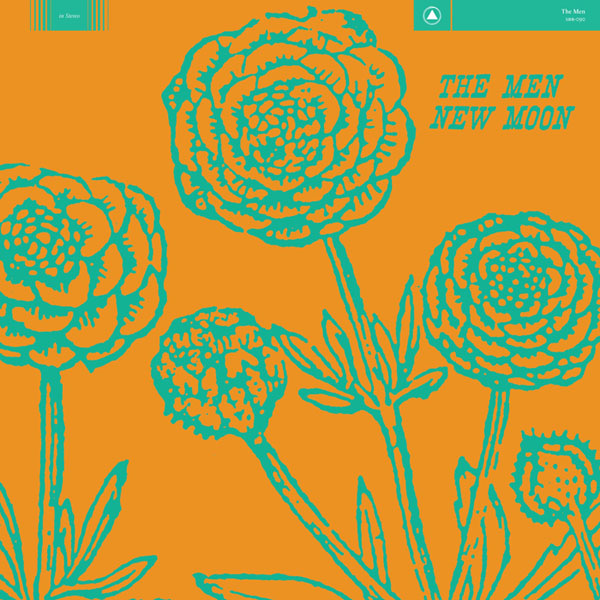
Via Time Out New York: a preview of The Men at Bowery Ballroom tonight. As I indicate in the piece, their 2012 album, Open Your Heart, has been a serious grower for me; if I'd spent a little more time with it, I'm pretty sure it would've ended up on my top 10 list.  I've been savoring the latest Men LP, New Moon, as well. For starters, how could you resist "Half Angel Half Light" or "I Saw Her Face"? I look forward to really getting to the bottom of this one.

Wednesday, February 20, 2013

DFSBP archives: Steve Lacy


I stumbled across the photo above while doing some cleaning the other day. It was taken on June 21, 2000, in the control room at the former location of WKCR, located in Riverside Church. On the left is me, age 21; on the right is Steve Lacy.

In retrospect, the regular DJ gig I held for a couple years during college was a dream. I had regular access to that incredible LP library (and to a listening audience that appreciated it); I got to learn firsthand from master broadcaster/scholar/educators such as Phil Schaap and Ben Young; and best of all, I got to interview various heroes on air, including Rashied Ali and Grachan Moncur III.

I was ecstatic to land the Lacy conversation. I remember seeing him play a few months before this: a concert with Mal Waldron at Lincoln Center's Duets on the Hudson series. I knew that the Lacy/Waldron duo would be coming to Iridium that same June, so I hung around after the show, introduced myself to Steve as a WKCR DJ, and asked if I could set up an interview in conjunction with the run. He said sure. I worked out the details with his manager, and on the appointed day, he walked up to the entrance of Riverside Church, dressed spiffily and looking a little overheated. His friendly smile put me at ease. I recall him asking for a beer, which we procured. We talked and played various Steve Lacy records on air for roughly 1.5 hours; you can listen to the program below. (You should be able to stream via the players or download by clicking on "Part 1" and "Part 2.") Some of the musical selections are included in the broadcast; you'll find a couple of the others in the Spotify playlist that follows. The opening track, which kicked off the broadcast, was "Four in One" from Reflections.

Steve, of course, sounds fantastically wise. I sound green, awkward, sometimes ill-informed. (I'm still kicking myself 12-odd years on for mispronouncing "communiqué," and for not realizing it was an English word!) If I could meet him again, I would thank him for his patience with me on that day. I apologize for the poor volume balance; you might need to adjust your levels during the portions when Steve is speaking. I chose a quieter transfer over one that would distort.

Steve Lacy - WKCR - I
Steve Lacy - WKCR - II

Click the links to download the show in MP3 form, or stream the two sections via the Streampad player at the bottom of the page—they're items 4 and 5 on the playlist. [Update, 5/15/14: Streampad doesn't seem to be acknowledging these tracks at the moment, so simply clicking the links above is probably your best bet for accessing the files.]


(Note: If you enjoy this interview, do let me know via the comments or e-mail. I have a bunch of others that I could transfer and post.)

Spotify:

Tuesday, February 12, 2013

Rolling up their sleeves: Suffocation and the pleasures of death-metal conservatism


One of the chief constants throughout my listening life has been death metal. I first got into the style in roughly 1993, via Morbid Angel, whose masterpiece, Covenant, turns 20 in a few months. For a long time, I maintained a sort of mental hierarchy re: death metal as a whole, which went something like: "There's Morbid, and then there's everyone else." While I still adore that band, and worship their inspired, wildly erratic take on the subgenre, my perspective on death metal has changed a lot throughout the past two decades. These days, I seem to be more interested in consistency and longevity, a kind of dogged devotion to craft, than anything else. Bands that once seemed workmanlike now appear remarkable. Several times over the past few years, I've found myself off on one of my extreme listening jags, so immersed in, enamored of and acclimated to the work of a single death-metal band that I can barely stand to hear a note of anything else. In late 2011, it was all about first Obituary, then Immolation; last summer, it was Cannibal Corpse; currently, it's Suffocation.

I'm pretty sure I first heard this band on the 1993 Roadrunner comp At Death's Door II, a landmark purchase for me at the time, the album that introduced me to staples of my extreme-metal listening diet both then (Disincarnate, Fear Factory) and more recently (Cynic, Gorguts). I'm pretty sure, as well, that the Suffocation track in question ("Prelude to Repulsion," from their 1993 sophomore LP, Breeding the Spawn) didn't make much of an impression. It's only in recent years that I've developed an obsession with Suffocation. Blood Oath, from 2009, piqued my interest in a major way, but it's the brand-new Pinnacle of Bedlam that's really sent me over the top.

The MetalSucks review of this album is dead-on and highly recommended. I can definitely relate to the initial skepticism that Sammy O'Hagar cops to in that write-up. For those not up to speed, here's the gist: There's been a bit of drama/upheaval in the Suffocation camp over the past year or so. Drummer Mike Smith, a staple of the Long Island band's lineup since their 1990 demo (and a musician whom Heavy Metal Be-Bop readers might remember from the Damión Reid installment), left the band on bad terms last year. Then, the news dropped that vocalist Frank Mullen, a charter member and one of death metal's most charismatic frontmen, would no longer be a permanent part of the band's touring incarnation. (Suffocation played with a fill-in growler at last summer's Obscene Extreme fest.)

That Pinnacle of Bedlam is extraordinarily good—one of the finest LPs, and maybe even the finest LP, that Suffocation has released—tells you something about the way this band operates, and tangentially about the M.O. shared by the truly great veteran death metal acts, including the aforementioned Immolation, Cannibal Corpse and Obituary. With help from Spotify, I've been binging on the Suffocation discography over the past week or so—seven full-lengths (including Pinnacle) and two EPs—and what really stands out is the steadiness, the determination with which this band has progressed. As with, say, Immolation, you won't find any wild departures in the Suffocation discography; you'll find a band laying out a primitive yet competent blueprint on its early releases—compare these two bands' seminal releases, Dawn of Possession and Human Waste, respectively, which came out within a few months of one another in 1991—and slowly but surely honing that into something truly fearsome, absolutely airtight. There are no accidents in the Suffocation discography, just a gradual perfection of a craft, namely death metal marked by fiendishly complex yet ever-headbangable riffage, assaultively growl-barked vocals and the juxtaposition of jackhammer blastbeats and churning, mosh-commanding breakdowns. It's a style so iconic that if one is showing up late to the Suffocation party, as I did, it can be easy to mistake them for a generic death-metal band. In reality, they wrote much of the blueprint for a certain subcategory of the genre and have proceeded to cling to that blueprint like Super Glue. Pinnacle of Bedlam is, then, simply their latest, greatest dispatch. There's no real need to play-by-play it (though, for those that might be concerned, I will specify that Smith's replacement, Dave Culross, absolutely smokes here); it's an effing Suffocation record, and it's worthy of their legacy, which is saying a ton. Overall, it feels a bit speedier, more technical, more straight-up overwhelming than its predecessor, Blood Oath, for those keeping track. From a more general perspective, though, this is the key takeaway: If you enjoy Suffocation as much as I do, Pinnacle of Bedlam will make you ridiculously happy, as it has me.

I mentioned Morbid Angel above, and they're relevant to this discussion mainly as a counterexample. In 1989's Altars of Madness, they released one of death metal's indisputable early benchmarks. The next two records saw the band straining against the style's essential underground-ness, seeing how far they could push the, for lack of a better term, professionalism of the style, and in the process, arriving at what I consider to be the single greatest death-metal album of all time (not to mention my favorite metal album, full stop): 1993's Covenant. But as anyone who read their interviews around that time could tell you, Morbid Angel was never content to be just a death metal band. They spoke with arrogant indifference re: "the scene," and in a way, they had earned the right to. Band mastermind Trey Azagthoth was, and as far as I'm concerned, still is, one of the great oddball visionaries of contemporary rock-based artistry, a guy who has seemed to draw more inspiration over the years from video games and motivational speakers than he has from other music, let alone from a narrowly defined subgenre such as death metal. It's that kind of outside-the-box thinking that makes possible a masterpiece like Covenant—and its flawed but still excellent follow-up, 1995's Domination—but that also breeds a kind of precarious eclecticism. Longtime DFSBP readers might recall me tying myself in knots trying to defend Morbid Angel's widely reviled, industrial-leaning 2011 comeback LP. As with any gonzo departure of that nature, the true test of its value is whether or not the record's allure outlasts the controversy that it incites, and the truth of the matter is that, for me, the record in question (Illud Divinum Insanus) has not measured up in that regard. After my initial flurry of probably meta-contrarian interest—i.e., born more out of hating on the haters than out of my own genuine positive feeling toward what I was hearing—I haven't felt the desire to spin the thing a single time.

I've meandered way off course here, but I promise there's a Suffocation-related point mixed in with all this. And that point is this: There is no Covenant in the Suffocation discography—no genre-transcending ultra-masterpiece—but by the same token, there is also no Illud Divinum Insanus—no pointlessly baffling head-scratcher. As with the Immolation catalog, what you get listening to the Suffocation oeuvre front-to-back is a respectable but not-quite-there early phase followed by an unbroken string of staggering rippers. In other words, once these bands have found their respective zones, they've stayed right dead in the center of them, making small tweaks but not seeming to feel any great need to change up the formula, to attempt experiments or departures—hence what I said above re: workmanlike-ness, a certain humble craftsmanship that, in my listening experience anyway, seems to thrive as strongly in death metal as it does anywhere else in contemporary music. (To my ears, Suffocation really hit its stride, which persists to this day, on its third LP, 1995's Pierced from Within; my recall of the Immolation catalog isn't super-fresh at the moment, but I seem to remember that their own third LP, 1999's Failures for Gods, marked the beginning of their all-killer phase.)

Sure, there's deviation within the Suffocation catalog from 1995 until now. Some of that has to do with personnel. Much like Cannibal Corpse, Suffocation has shuffled members frequently over a 25-year existence. Among the current lineup, Mullen is the only consistent original member, with guitarist Terrance Hobbs coming in a close second; as far as I know, only these two have appeared on every Suffocation release. Guitarist Guy Marchais apparently cofounded the band, but he had departed by the time of the demo and wouldn't record with them until 2004's Souls to Deny (an LP that marked the band's return after a five-year hiatus); Smith, meanwhile, didn't play on Pierced from Within or the next Suffocation release, ’98's Despise the Sun EP. All this is inside baseball, though. For the non–nerdily obsessive, the point is that Suffocation has maintained a certain monolithic quality level for the better part of the past two decades. To these ears, the Cannibal Corpse discography has been spottier—I'd maintain that they peaked on 1994's The Bleeding and then again with 2006's Kill, and haven't looked back—but the principle is the same: In a sense these bands are tried-and-true brands as much as they are artistic entities. Personnel changes; production styles change (you can especially hear that in the Suffocation discography; spin Pierced from Within alongside Suffocation's absolutely massive-sounding self-titled 2006 record for a quick lesson in how drastically the recorded presentation of extreme metal has shifted over time). But the core aesthetic is unwavering. Fans of bands like Suffocation, Cannibal Corpse and Immolation don't need to worry about their heroes fancying a surprise, an experiment, a departure. Sure, you'll get the odd quasi-curveball: an instrumental track from Cannibal, the occasional clean-toned guitar passage / whispered-not-growled vocal from Immolation, a ballad-like intro from Suffocation (e.g., on the mindblowingly good "Sullen Days" from Pinnacle of Bedlam). But what you won't get is the album-length WTF moment.

On paper, this might seem tedious, but in practice, speaking from a fan's perspective, it's actually pretty damn delightful. You know these bands are going to slay, both on record and onstage. (I haven't caught Immolation yet—can't wait for this in June—though I can vouch for the live awesomeness of both Cannibal Corpse and Suffocation, the latter of whom I saw at Maryland Deathfest last year.) In that sense, they're critic-proof. An outsider might roll their eyes at yet another Cannibal Corpse, Immolation or Suffocation record, but as long as these bands are recording, there will never come a time when the die-hards will not rabidly swarm one of these releases, record-industry downfall be damned. It seems like a silly stat to point out, but I couldn't help but be impressed by the whopping 56 Amazon reviews, most of them raves, for Suffocation's Souls to Deny. What that number tells you is that there is a real audience for this stuff, that fans appreciate consistency, that so-called artistic evolution can sometimes be overrated. Sometimes, you just want a band that delivers. There's something touching about this sort of closed-circuit artist-audience relationship. I'm sure it exists in other subgenres too—perhaps in the jam-band scene, another sphere regarded by "the outside world" with indifference or outright scorn, but one that enjoys serious, unwavering fan support.

It's this relationship, upheld year-in, year-out—and in the case of veteran bands like Suffocation, decade-in, decade-out—that keeps me coming back to death metal, 20 years after I first discovered it. The kind of longevity these bands embody isn't an empty one; it isn't mere "hanging around." Sure, just like any other genre, death metal has its wild aberrances—those acts like, say, Gorguts or Death, who successfully attempt some insanely ambitious stylistic makeover, as well as your Morbid Angels, who clip the hurdle as they're attempting to leap over it—much as it has its sticks-in-the-mud. I won't name names, but I can think of a handful of death-metal bands who have been around just about as long as Suffocation and who don't interest me in the slightest. Yes, Suffocation may be reading from a recipe at this point, but the recipe yields something absolutely delicious—it's no longer novel, but nor, if you have a taste for it, does it ever really get old. Death metal may not embody the media-friendly sexiness of black metal—the latter's often tedious trappings of supposed real-life anguish, its absurd/enthralling pageantry, its deliberately taxing lo-fi-ness/experimentalism; as is probably clear, I've never really warmed up to that subgenre. But what death metal offers, at its best, is the rolling up of sleeves. Vein-popping virtuosity applied to pure baroque artistry. Hyper-ambitiousness within a formally conservative framework. Craft. Sweat. Head-down devotion. It makes me so happy.

/////

Here's a quick Suffocation sampler, touching on all five albums from the new Pinnacle of Bedlam back through 1995's Pierced from Within. If you like what you hear, I recommend giving each of these records a good, concerted listen. Effigy of the Forgotten and Breeding the Spawn—from ’91 and ’93, respectively—have their primitive charms as well. (Interestingly, the band has made a habit of re-recording tracks from the subpar-sounding Breeding throughout their later career, a practice that seems to tie into my impression of them as perfectionist craftsmen; Pinnacle concludes with one of these: "Beginning of Sorrow.")

/////

P.S. Here's a great new interview with Terrance Hobbs, via Phil Freeman at Burning Ambulance.

Friday, February 01, 2013

Recently


*A review of the new second installment of the Miles Davis Bootleg Series, via Pitchfork. The infinitely drawn-out MD archival endeavor—it's reached near-absurd proportions, but I never get tired of it. I'm always grateful for the excuse to view a particular micro-phase, in this case that of the Lost Quintet, under the microscope. I'd heard the Antibes sets here years ago, but how wonderful that they're now on the official record, and that Live in Europe 1969 paves the way for new music from Wayne Shorter, who plays at Carnegie Hall tonight—here's my TONY preview.

*The ninth Heavy Metal Be-Bop interview, with once and apparently future Black Flag guitarist Greg Ginn, via Invisible Oranges (abridged) and heavymetalbebop.com (full-on). I'd like to thank Greg for making the time and new IO editor Fred Pessaro for helping me get this monster transcribed. I hope to have HMB No. 10 live before too, too long.

*Speaking of jazz and metal, or proto-jazz/metal, I can't recommend Bill Bruford's autobiography—which I finally made time for over the holidays—highly enough. A good-humored, but also sobering treatise on how to live a self-indulgent artistic life and stay afloat, barely. Jammed with golden anecdotes and wry wisdom; an idiosyncratic, yet hyper-meticulous reflection on a career punctuated by landmark music-making.

*David Virelles and Continuum are at the Vanguard through this Sunday, 2/3. Anyone catch last night's late set, with the Threadgill guest appearance? Dying to know how that went.

*Lastly: Thank you to the awesome Buke and Gase for helping my band realize a longtime dream.

Thursday, January 24, 2013

Continuum, live


By this point, you've likely heard about—and, hopefully, heard—David Virelles's Continuum, which turned up on my 2012 best-jazz list, as well as in a bunch of other year-end round-ups. The band from the record—plus saxist Roman Filiu Friday–Sunday and another very special guest on Thursday—is playing the Vanguard starting next Tuesday, 1/29, and I can't wait. Here, via TONY, is my preview of the run.

Sunday, January 13, 2013

Radical convention: Winter Jazzfest 2013


Some quick thoughts about Winter Jazzfest 2013, which is wrapping up as I type this in the wee hours of Sunday, 1/13. This is by no means intended as any sort of comprehensive review of the fest—I'm sure we'll read many smart ones in the coming days—but merely as a distillation of my own (very enjoyable) experience of the event. Some from-the-field impressions can be found on my Twitter page.

I heard a lot of, for lack of a better term, high-tech music at WJF 2013: groups that used samples, groups that focused on proggish, daredevil precision, groups that nodded to funk, hip-hop and electronica, groups that foregrounded their now-ness, their distance from a conventional notion of what jazz is. I enjoyed several of these groups very much; I look forward to hearing more from, e.g., Marcus Strickland's Twi-Life (trombonist Frank Lacy was the MVP here) and Rafiq Bhatia's group.

But my favorite sets at the festival had nothing to do with any of that. They were unadorned, acoustic, lacking in any particular eye-catching hook. They were just about sensitive, in-the-moment interaction; they were about listening; they represented very different aesthetics, but they all, in one way or another, conformed to some relatively well-established, historically proven way of playing jazz.

1) The trio of pianist Kris Davis, bassist Eric Revis and drummer Andrew Cyrille (pictured above) at Zinc Bar on Friday. An extraordinarily sensitive set, that built from a hush to a subtle dance then back to a hush. It seems silly to say that the appeal here was the sound, but that's the only way I can think to put it. All three players were considering the sounds they were producing in relation to the sounds the others were producing. It's an obvious idea, but less commonly illustrated in practice than you'd think. Cyrille, master of timbre and touch dictated the pace (unhurried) and the focus level (extreme), but no one was really the star; or in another sense, everyone was. It was free jazz, but without any of the chest-thumping or catharsis. It was "out," but it was not self-consciously weird. It moved along as it pleased, but with real narrative intrigue. I would love to hear this band again soon. This is a moment for Andrew Cyrille: last year's Bill McHenry and David Virelles records, for example—the first of which Revis also appears on. I very much look forward to seeing Cyrille w/ Virelles at the Vanguard at the end of the month, and hopefully w/ Ethan Iverson, Tim Berne and Sam Newsome at Smalls the week before. (He's also playing a free big-band show at Lincoln Center next Thursday!)

2) The quartet of reedist Andrew D'Angelo, trumpeter Kirk Knuffke, bassist Ben Street and drummer Nasheet Waits, known collectively as Merger, at Culture Project on Saturday. On Twitter, I pegged what this band was playing as freebop. I'm not sure if that's the correct term, but I'm referring to a sort of inside/outside thing, part vanguard mid-’60s Blue Note, part late ’50s / early ’60s Ornette, part ’90s downtown. Jazzy, but also abstract, noise-embracing. Each player has an extremely distinctive voice on their respective instrument, and all those voices came through b/c each player made it his business to complement his bandmates' voices. Again, a "duh" idea, but to see it really happening, live, is special. Super-quiet moments, like a minutely detailed unaccompanied Knuffke solo, and aggressive ones, where D'Angelo was frothing in post-Zorn fashion. The rhythm section knew what to do with all of it, and that didn't necessarily mean rise up and meet the frontline; it just meant, "Find what's complementary, even if it's counterintuitive." Nasheet Waits is a poet of his instrument. He gets me closer to the bliss I get from primo Tony Williams than just about any other living drummer. The tempos are fluid, but the looseness does not signify slackness. There's such authority, whether the beat is explicit or left in the rearview. Nice thematic material in this set too. Merger needs to make a record, probably a live one.

3) The quartet of reedist Don Byron, pianist Aruán Ortiz, bassist Cameron Brown and drummer Rudy Royston at Le Poisson Rouge on Friday. I don't know Don Byron's work very well, but I do know that he has a penchant for the conceptual hook, the project devoted to a specific historical repertoire or genre, the kind of thing artists such as Dave Douglas and Ken Vandermark have often engaged in. Nothing against that approach, but this set was so, so not that. I didn't get to see the full performance, but what I did see was capital-J Jazz. Long solos, band swinging incredibly hard, each musician playing with serious flair and flash. No sense of "We need to get past this fossilized format." No. Merely a sense that what we need to do is play our asses off in a well-established mode, a mode that's well-established because it works. This was probably the most conventional set I saw all weekend, and interestingly, because of the context described at the top of this post, it also felt like one of the most radical. (Honorable mention in a similar vein: James Carter's Organ Trio at LPR on Saturday.)

P.S. Almost exactly 10 years ago, I interviewed Andrew Cyrille and wrote this profile.

Wednesday, January 09, 2013

Winter Jazzfest // Barry Altschul


Via Time Out New York, here's a preview of five promising sets at this coming weekend's Winter Jazzfest.

/////

Also, a very happy 70th b-day to Mr. Barry Altschul. (Dig Harris Eisenstadt's Q&A with the man over at Destination: Out.) I can't wait to check out the new 3dom Factor CD; that band sounded great at Roulette last night, as did Altschul's reunited BRAHMA trio.

It's been a real trip and a pleasure getting to know Altschul's playing in the present tense over the past few years. When I first started checking him out on record, around 2000, he didn't seem to be performing much, so my aural picture of his playing was that skittery, high-pitched style you hear on Dave Holland's Conference of the Birds. When I heard him a couple years back with Jon Irabagon—I think it was the Foxy release party at Cornelia Street Café—I couldn't believe how fat and forceful he sounded. The same was true of last night's performance. He really smacks the kit, revels in the booming, woody tones of the drums and the bash of the cymbals. And the Beaver Harris–inspired "ragtime to no time" principle that Eisenstadt discusses was in full effect at Roulette; you'll see few other drummers who not only execute this full spectrum convincingly but appear to be having a total blast no matter what mode they're playing in. Altschul is a radiant performer; see him if you have the chance.